Lawrence Wood Flooring has done wood-flooring in Amesbury for more than 20 years, sanding, repairing and laying hardwood in homes on the Massachusetts side of the state line. Most of the floors we see here are red oak strip flooring, maple or old softwood boards that have lived through decades of radiators, rugs and furniture. Each one gets read for what it is before a machine touches it.
That reading covers the species, the finish already on the boards, how many sandings the floor has taken and whether anything is hiding under old carpet. Where the house is a two- or three-family, we work one floor at a time so the people on the other floor keep living in the building. Anything that needs another trade gets flagged before work begins, not discovered halfway through.
From there the job is quoted in writing, room by room, with stain samples laid on your own boards before anyone commits to a color. Owners and landlords both get the same itemized estimate, which matters when a rental unit is involved.
Floor Work on the Massachusetts Side of the Line
Amesbury sits along the northern banks of the Merrimack River, and its northern edge is the state line itself: South Hampton, New Hampshire, borders the city to the north. The line has not always been where it is now. Newton, New Hampshire, was set off from Amesbury in 1741, when the border between the two colonies was adjusted, so a piece of what was once Amesbury now answers to a different state.
For a homeowner, that history has a practical edge. A house a few streets from the line can have neighbors whose floors fall under New Hampshire law, while the floor in your own living room is a Massachusetts job from the first sanding pass to the last coat. We plan Amesbury work around the Massachusetts side, and we do not borrow habits from across the border.
Which State’s Rules Apply to an Amesbury Floor Job
The short answer is Massachusetts, every time the house is in Amesbury. The Massachusetts rules that touch floor work here include the lead-safe renovation regulation at 454 CMR 22.00, the State Sanitary Code at 105 CMR 410 for rental housing, and the home-improvement contractor statute, M.G.L. c.142A. We name them so you know which framework a job is planned under, not to suggest every floor triggers all three.
Finishes are the one place the line barely matters. The coating VOC limits on the two sides match each other for varnish, sealer and lacquer, so the finish we choose for an Amesbury floor is picked for wear, sheen level and drying time rather than for which state you live in.
Painted Surfaces Before the Sander
Lead questions come up often in Amesbury because so much of the housing is old. We check the build year first, then look at painted baseboards, shoe molding, stair risers and any floor that was painted at some point. If a surface is suspect, the sanding plan changes before the drum sander comes off the truck, and we tell you how and why.
Looking for wood-flooring closer to Londonderry? See Londonderry Wood-Flooring.
Refinishing Floors in Amesbury’s Older Houses
Of Amesbury’s 7,923 housing units, 2,825 were built in 1939 or earlier, according to the Census Bureau’s 2024 five-year American Community Survey. That is a large share of houses carrying floors laid long before modern finishes, and many have been sanded, waxed or covered more than once since. Refinishing them well depends on knowing what is under the top layer.
Pine, Oak and Old Finishes
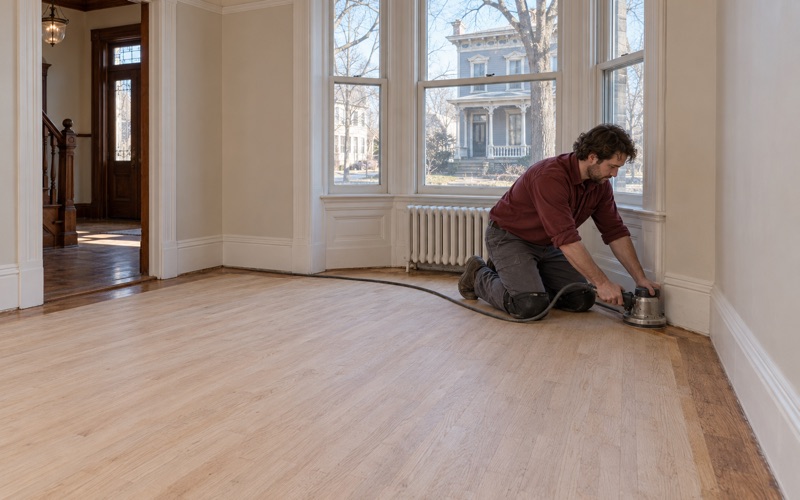
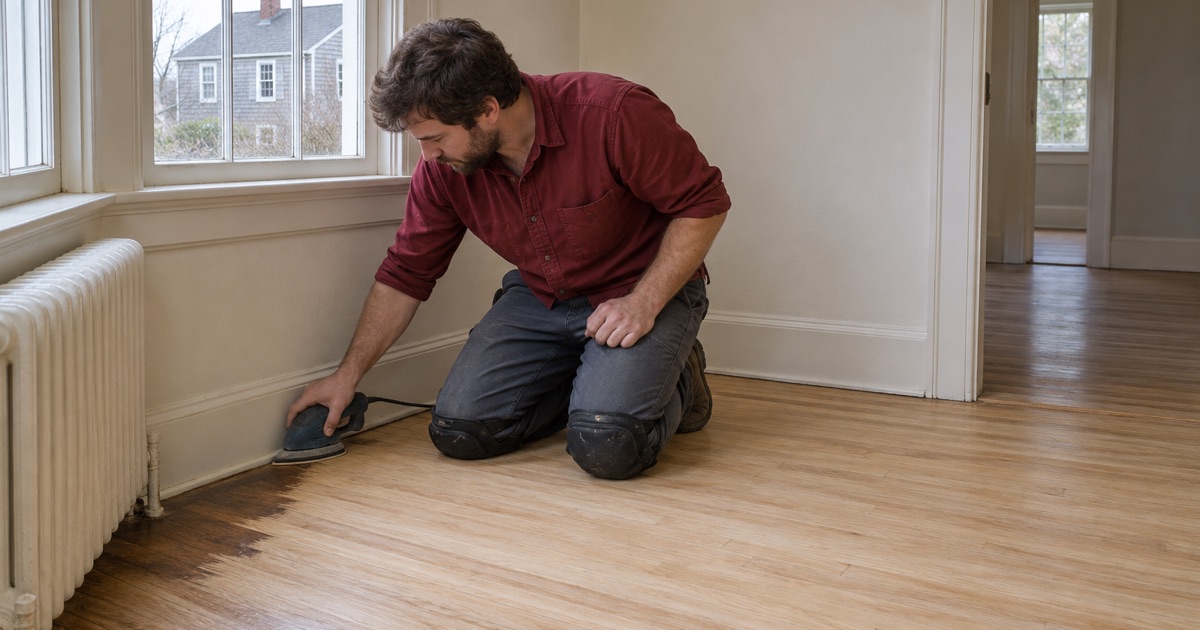
The older floors we open up here tend to be oak strip, maple or softwood, and the softwood floors need a different hand. Eastern white pine and heart pine dent and dish under the drum sander pressure that suits red oak, so we run a gentler grit sequence and lean on the orbital sander where the boards are soft. The goal is a flat, even surface without taking off wood the floor cannot spare.
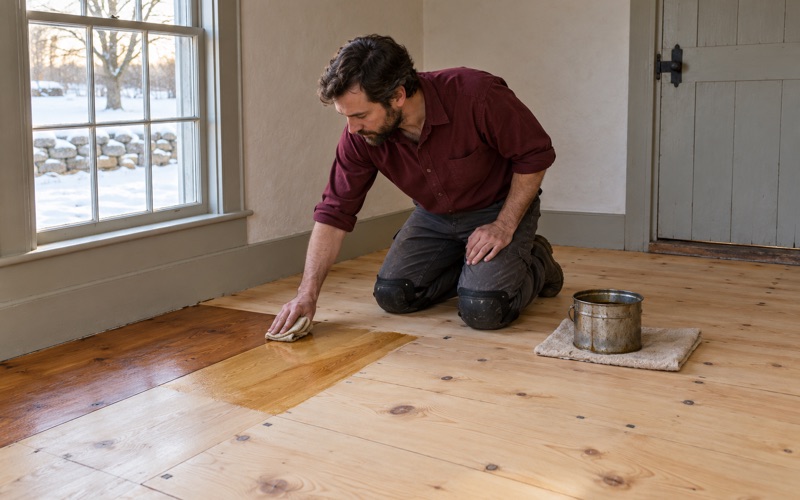
Old finishes tell their own story. A shellac finish with wax residue on top will gum up sandpaper, and an orange oak floor from decades of ambered coatings often needs a decision about how far back to take the color. We lay stain samples on your floor, in your own light, so that choice is made on the real wood.
Radiator Holes, Tile and Glue
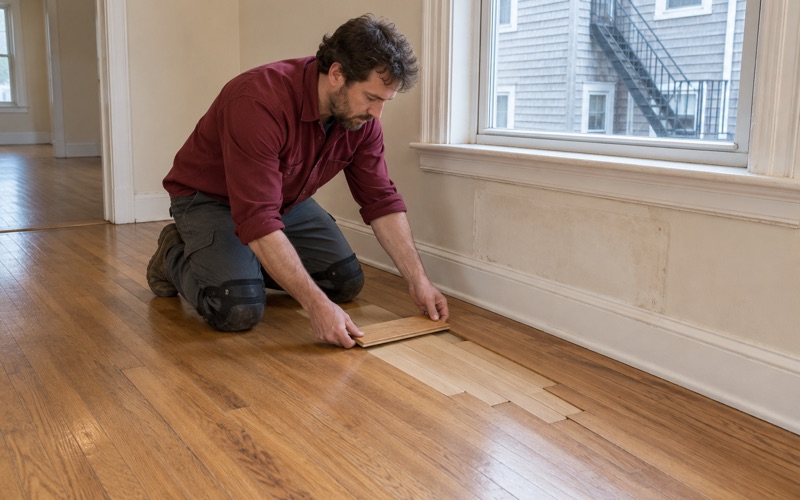
Where radiators and their pipes have come out of an older house, the floor is left with holes and cut boards. We patch those with matching boards woven into the existing floor rather than a square plug that reads as a repair from across the room. The same weave-in repair handles boards lost to pet urine stains or deep water stains.
Pulling up carpet or linoleum sometimes reveals carpet glue, linoleum glue or black mastic. Black mastic and the vinyl asbestos tile it often held are identified, not sanded, and the work stops until the right trade has handled them. Bouncy floors and sloping floors get the same honesty: we read them, and structural work at the joist or subfloor level is referred out rather than sanded over.
Floors in Amesbury Townhouses and Apartments
The other large group of Amesbury floors sits in attached houses and apartment buildings. The same Census survey counts 835 one-unit attached houses in the city and 1,560 units in buildings of ten to forty-nine units. Floors in these homes can be site-finished solid hardwood, prefinished boards or engineered flooring, and each calls for a different approach.
Engineered Floors and Upstairs Units
An engineered wear layer can only take so many sandings, so we measure it before promising a full refinish; a thin one may be a screen and recoat job instead. In an upstairs unit, impact noise is the neighbor’s concern as much as yours, and acoustic underlayment choices are talked through against what your building’s condominium documents say. We read those documents with you rather than guessing at a number.
Water From Above
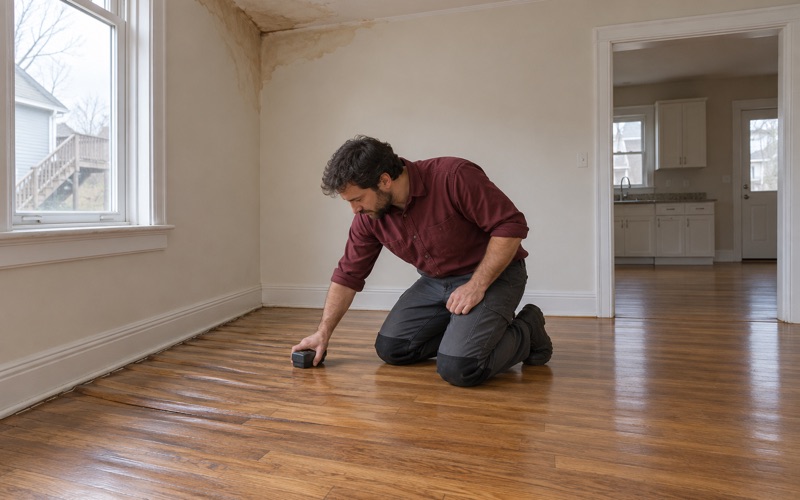
Shared buildings bring shared water. When a unit upstairs overflows, a pipe bursts or a basement takes on water, we trace the source, dry the area and read the boards with a moisture meter before replacing anything. Cupping, crowning and buckling each say something different about where the moisture came from, and replacing boards before the subfloor is dry only repeats the damage.
For an insurance claim, we document the water damage room by room for the adjuster, with photos and readings tied to each space. That record makes the conversation about what gets replaced, and what can be sanded and saved, a lot shorter.
Rental Turnovers
In the Census count, 2,382 of Amesbury’s 7,586 occupied homes are rented, or 31.4 percent, and most of those rentals are in two-family and larger buildings. For landlords, we schedule floor work between tenancies around the move-out and move-in dates, so the unit is not sitting empty longer than it has to.
When a landlord deducts floor damage from a security deposit, the Massachusetts security deposit statute, M.G.L. c.186 s.15B, expects written evidence such as an estimate. Our estimates are itemized and written for exactly that use, separating damage from normal wear line by line.
Planning a Floor Project in Amesbury
A good floor project starts with a walk-through of every room on the quote. We look for traffic lanes, sun fade near windows, board gapping, winter gaps that close up again in summer, and signs of powderpost beetle or old house borer in older softwood. Each of those changes either the price or the plan, so we would rather find them at the estimate than on day two.
Sanding, Dust and Finish Choices
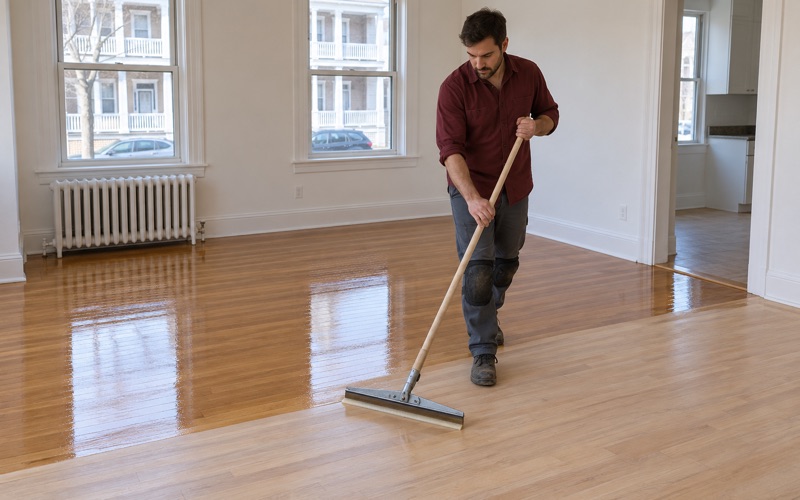
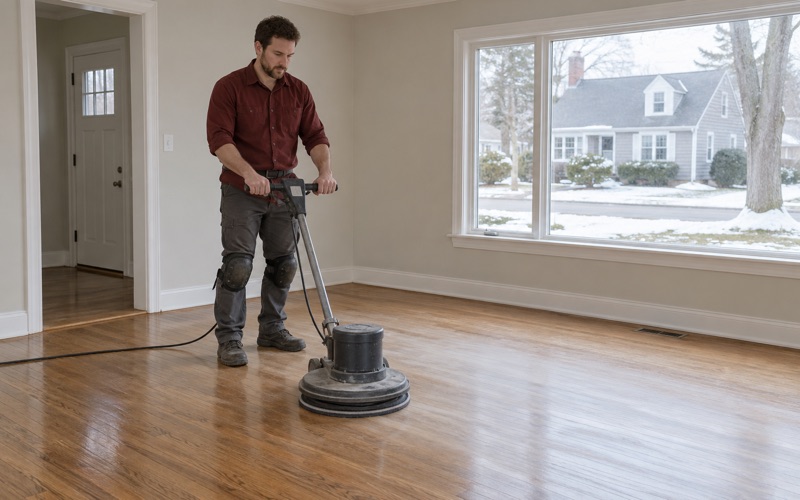
For a full refinish we sand with dustless sanding equipment tied to a HEPA vacuum, which keeps most fine dust out of the rest of the house. If you want a stain, we can water pop the grain first so the color goes on deeper and more even. Finish choices run from waterborne polyurethane, which dries fast and stays clear, to oil-modified polyurethane, which ambers over time, to hardwax oil for a low-sheen, repairable surface.
Sheen level matters as much as the product. Satin and matte hide traffic wear and dust better than gloss in a busy home, and we will show you the difference on a sample board.
Stairs, Thresholds and Trim
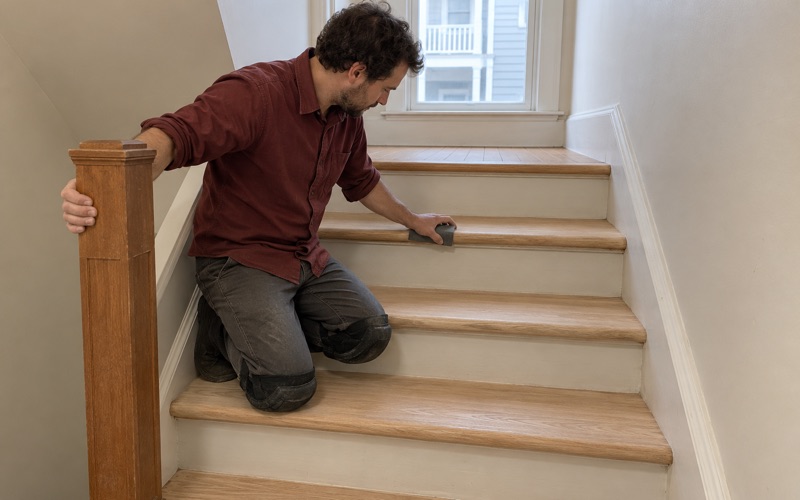
Stairs are quoted tread by tread, because a staircase is not priced by the square foot. Worn stair treads and stair nosing can be sanded and refinished if there is enough wood left; if not, a retread puts new treads over the old stringers. Painted stair risers are checked the same way as any painted surface before we sand near them.
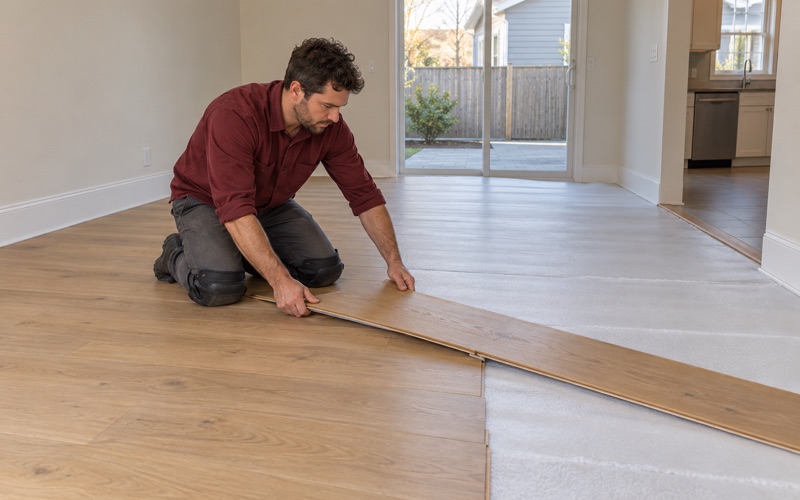
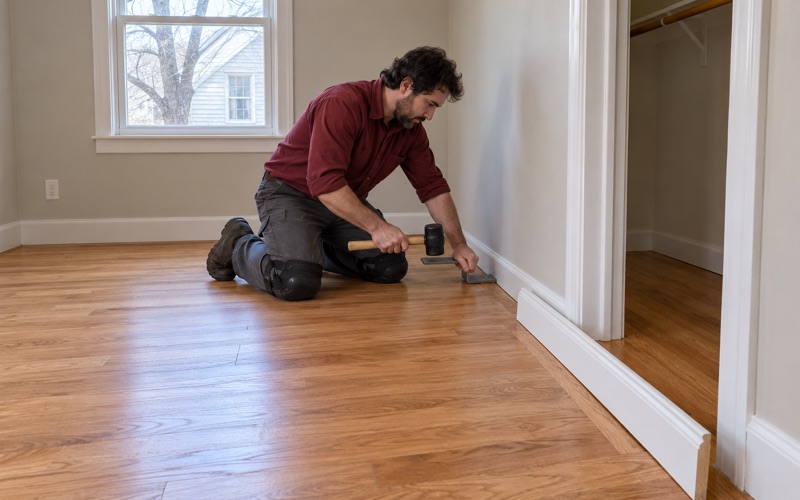
Where a new floor meets an old one, we fit a reducer or threshold and replace the quarter round so the transition looks planned. On new installs we leave the expansion gap the NWFA Installation Guidelines call for and let the boards go through acclimation before nailing.
New Floors and Timing
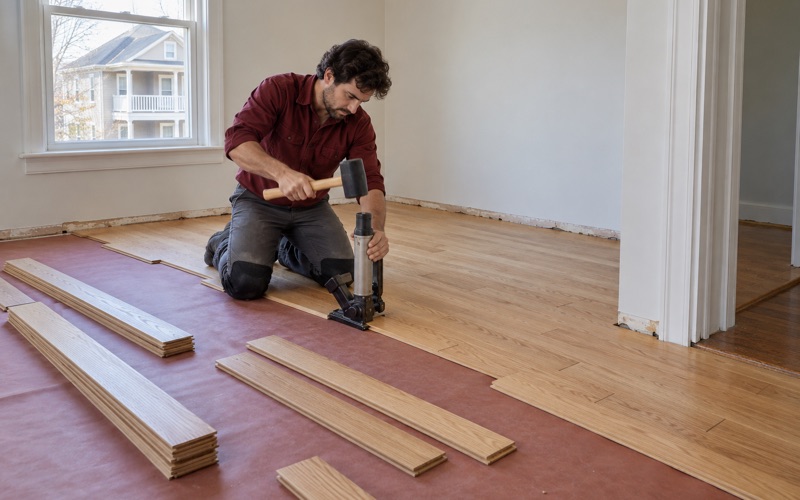
When a room needs new wood rather than a refinish, we install solid hardwood tongue and groove with flooring cleats or flooring staples over a sound subfloor, or engineered flooring where the space or the building calls for it. Below grade, we read moisture and plan a vapor retarder before engineered boards go down, and solid hardwood is usually the wrong choice there.
Timing is the last piece of planning. A typical refinish needs the rooms cleared, a few days of sanding and coating, and drying time before furniture returns, and we set those dates with you at the estimate. Rental work is booked against the lease dates, and owner-occupied work around how you live in the house.
- 20+ Years on Wood Floors
- Itemized Written Estimates
- Old Pine and Oak Work