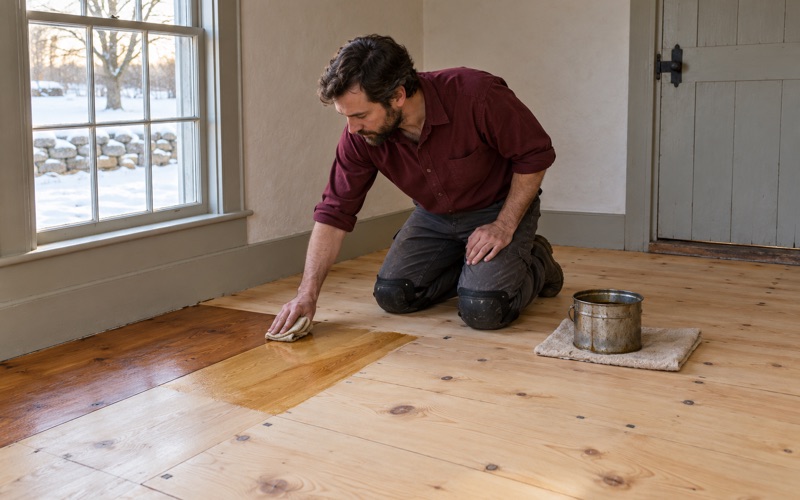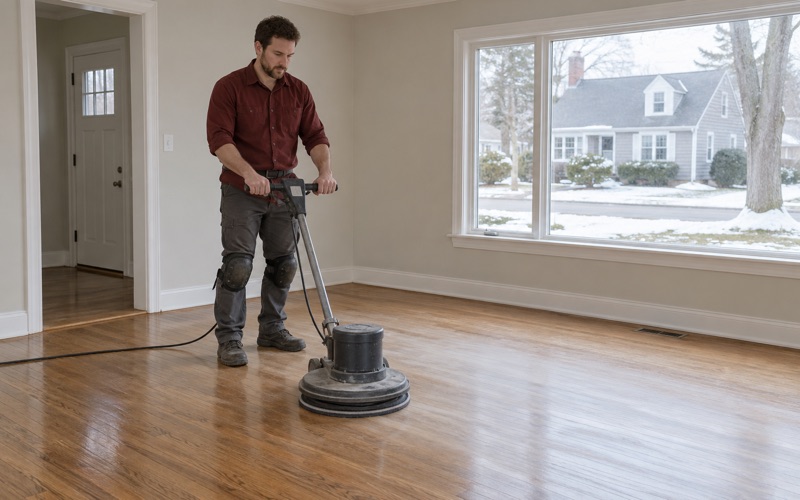
Lawrence Wood Flooring has spent more than 20 years on wood flooring in Beverly, sanding, repairing and laying floors in houses that were framed long before anyone sold a prefinished plank. We refinish worn boards, weave in replacements, rebuild stairs and install new solid hardwood, and we start each job by reading what the floor is made of and how it has been treated.
That reading matters more in an older city than in a newer suburb. A floor may carry wax residue over shellac, a layer of linoleum glue from a kitchen remodel, or a patch where a radiator once stood, and each of those changes the sanding plan. We would rather spend an hour on that reading than an afternoon fixing a floor sanded the wrong way.
Before we quote, we walk the rooms, take moisture meter readings and lay stain samples on your own floor so you can judge the color in your own light. The estimate comes back itemized and in writing, so you can see what each room and repair costs.
Floors in the Fish Flake Hill Houses on Front Street
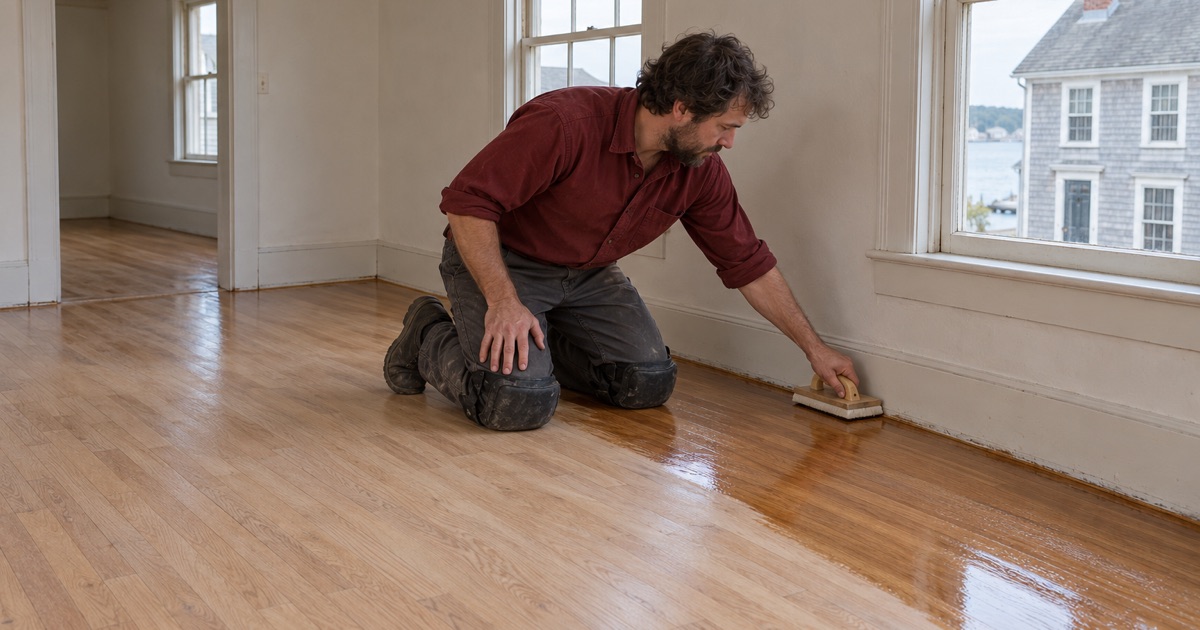
Beverly’s oldest waterfront neighborhood is on the National Register of Historic Places as the Fish Flake Hill Historic District. It was listed on October 26, 1971, and its boundary was enlarged on June 26, 1986. The district runs along both sides of Front Street between Cabot and Bartlett Streets and takes in 152 properties on 35 acres.
Captains’ Houses From the Mid-18th Century
The houses date from the middle of the 18th century on and are Colonial and Federal in style. Sixteen of them have been documented as associated with ship captains who were active in the American Revolutionary War. The name itself comes from the flakes, the fish-drying tables of the drying yards that stood on this ground until the late 19th century. For a floor contractor, that history means houses that have been lived in, altered and repaired for well over two centuries.
What We Look For Before Touching a Board
In a house of this age we do not assume what the floor is. A room may hold boards from several eras, laid over each other or patched side by side, and the way to know is to look at the edges, the fasteners and the underside where we can reach it. Cut nails, face nailing and mixed board widths each tell us something about how the floor was laid and repaired. We also check exposed boards and joists for signs of powderpost beetle or old house borer.
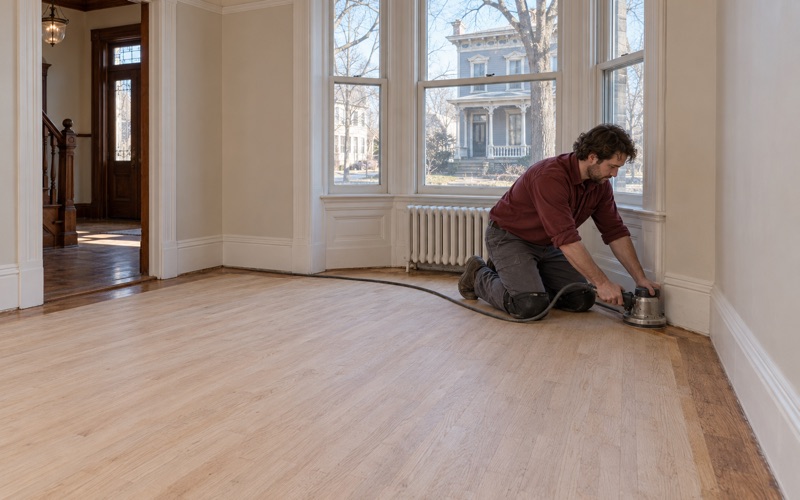
A floor in a house this old may already have been sanded more than once, so the wood left above the tongue and groove is one of the first things we measure. Where little remains, a full sanding is the wrong answer, and we talk through a screen and recoat or a careful single pass instead.
What the National Register Listing Means
The National Register listing is an honor for the district as a whole, and it does not by itself put an interior floor project in front of a review board. Whether a particular Beverly address also falls under a local historic district is a question for the Beverly Historic District Commission, which works under the city’s Historic Districts Ordinance adopted on January 8, 2003. We would rather you ask the commission directly than rely on our reading of it.
Looking for wood-flooring closer to Melrose? See Melrose Wood-Flooring.
Refinishing Old Floors Across Beverly’s Pre-War Housing
Fish Flake Hill is one cluster of old houses, but it is not the whole story. Of Beverly’s 17,630 homes, 6,240 were built in 1939 or earlier, which is 35.4 percent of the city’s housing in the Census Bureau’s 2024 five-year American Community Survey. The city also has a few First Period landmarks, among them the John Balch House from about 1679, the John Hale House from about 1694 and the Exercise Conant House from 1695.
Pine and Old Oak Need Different Handling
Older floors in this housing are not one material. We find red oak strip flooring, white oak, maple and softwood flooring such as eastern white pine or southern yellow pine, sometimes in the same house. Pine dents and gouges under a drum sander far more easily than oak, so we keep the pressure low, step through the grit sequence with care and finish with an orbital sander where the grain asks for it.
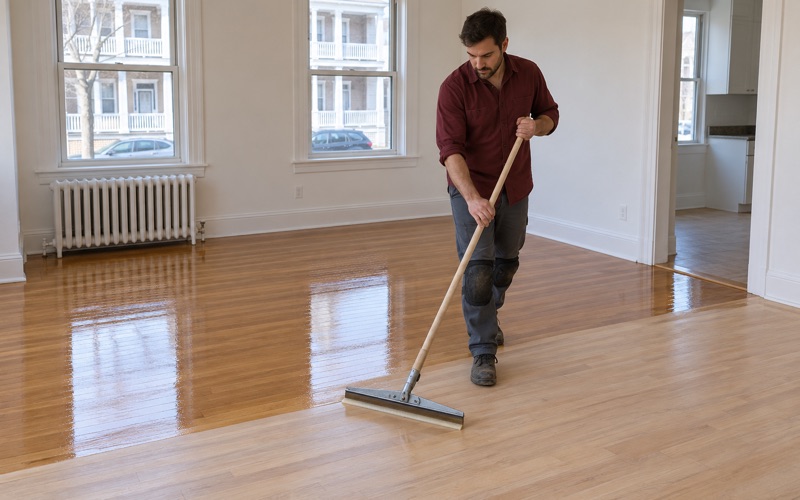
Orange oak is the other common complaint. A finish that has ambered for decades can be sanded back to bare wood, and from there we can apply a waterborne polyurethane that stays closer to the natural color, an oil-modified polyurethane with more warmth, or a hardwax oil. We settle the sheen level with you, and the finishes we use are chosen to stay within the coating VOC limits for varnish, sealer and lacquer.
Lead, Old Tile and Mastic Come First
Massachusetts runs its own lead-safe renovation rules for homes built before 1978, so we confirm the build year and check painted surfaces such as baseboards, stair risers and thresholds before any sanding starts. With more than a third of the city’s homes older than 1940, that check is routine for us here. Dustless sanding with HEPA vacuum collection keeps the job cleaner, but it is not a substitute for the lead check.
Old resilient tile is a second reason we stop. A kitchen or back hall may have vinyl asbestos tile or black mastic under a later floor covering, and we do not sand either one. We identify what is there, stop the job until the right trade has handled it, and then come back for the wood underneath.
Radiator Holes and Deep Stains
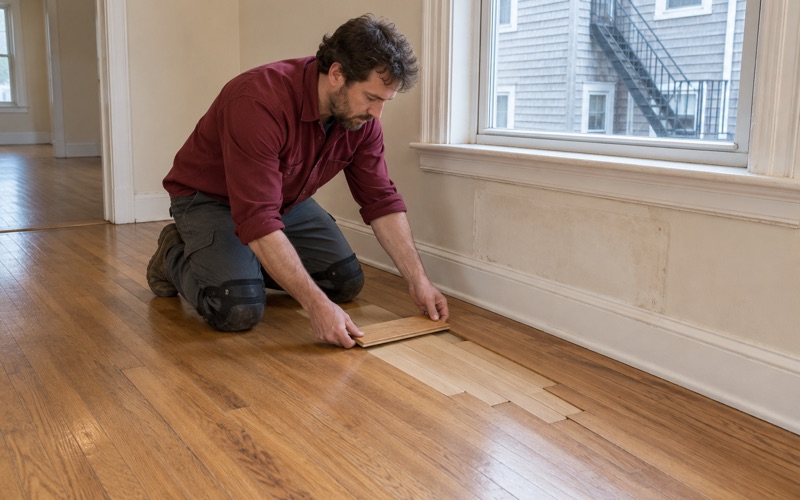
Where radiators and their pipes have come out of an older house, the floor is left with holes and cut boards. We patch those spots with matching boards woven into the floor so the repair follows the existing layout, rather than dropping in a square plug that shows from across the room. The same weave-in repair handles pet urine stains and water stains that run too deep to sand out.
Floors in Beverly’s Three- and Four-Unit Buildings
Beverly’s housing is not only single-family. The same Census survey counts 2,202 homes in buildings of three or four units, and 1,696 renter households live in them. Across the city, 60.1 percent of households own their homes and the rest rent, so we plan floor work for owners and landlords alike.
One Unit at a Time
In a three- or four-unit building we work one unit at a time, so the people on the other floors keep living there while we sand. Dust control, the order of rooms and the hours we run equipment are planned around the building, and we talk through access to shared halls and stairs before the first day.
Turnovers Between Tenants
For landlords, we schedule rental floors between tenancies, working back from the move-out and move-in dates. Our estimates are itemized and written, the kind of record Massachusetts requires before a tenant can be charged for floor damage. Traffic lanes, sun fade and board gapping are noted room by room, so the condition at turnover is on paper.
Underlayment in Upstairs Units
When a new floor goes into an upper unit, impact noise is what the neighbors below care about. If the building is a condominium, we weigh the acoustic underlayment and flooring choice against what the building’s own condominium documents say instead of guessing at a standard. We do not quote a sound rating, because that is for the documents and the association to settle.
Stairs and Common Halls
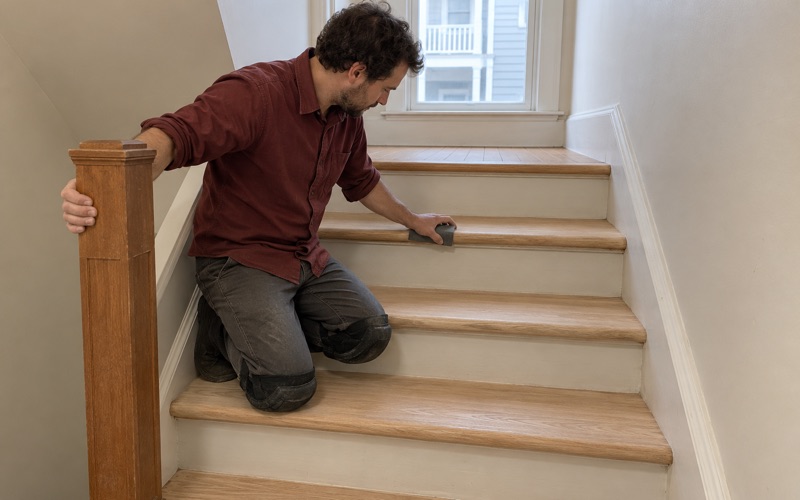
Front and back stairs often take the hardest wear in an older multi-unit building. We price stair treads, risers and nosing tread by tread, and a worn staircase can be sanded and refinished or fitted with a retread where the original treads are too thin to sand again. Work on a shared stair is scheduled so tenants keep a way in and out.
Planning a Floor Project in Beverly
Moisture, Acclimation and Water Damage
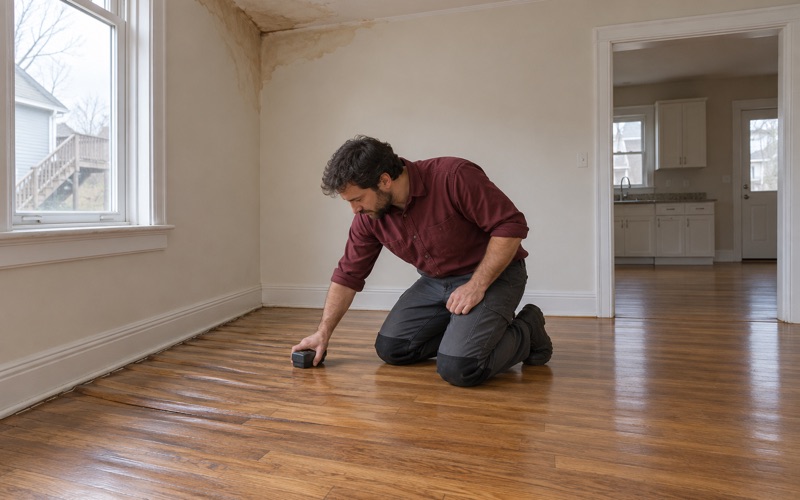
Whatever the house, we read the subfloor and the boards with a moisture meter before we sand or install, and new flooring is given time for acclimation before it goes down. Cupping, crowning and buckling usually trace back to water, whether from a unit upstairs, a burst pipe or a damp lower level, and we find and dry the source before any board is replaced. Where an insurer is involved, we document water-damaged floors room by room for the adjuster.
Bouncy or Sloping Floors
A bouncy floor or a sloping floor in an old house is something we read rather than sand over. If the cause sits in a joist or the framing below, we say so plainly and refer the structural work out before we refinish anything on top of it.
New Floors in Old Rooms
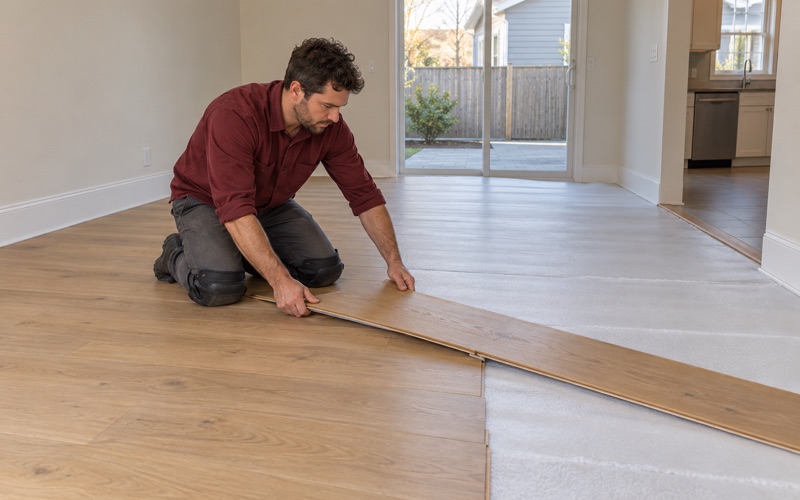
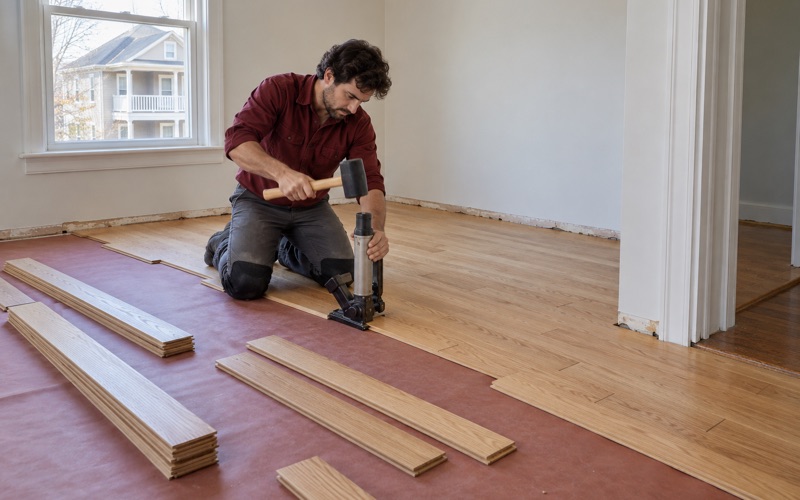
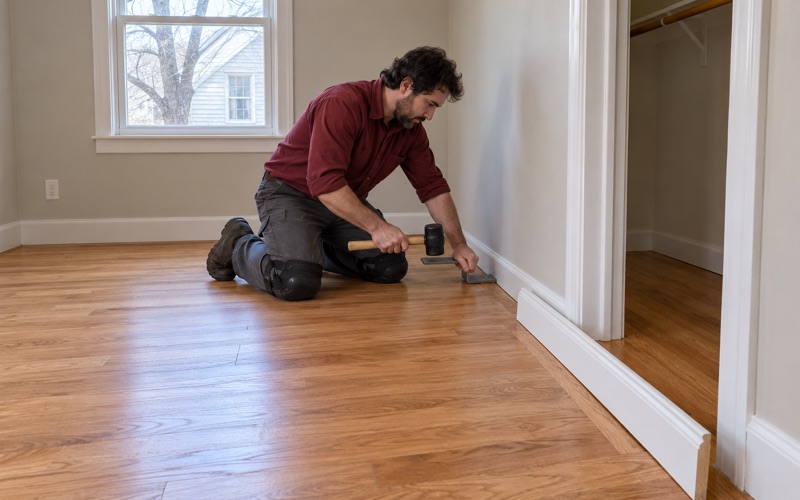
Not every project is a refinish. Where a room needs new wood, we talk through solid hardwood that can be site-finished to match the rest of the house against a prefinished or engineered floor, and what the engineered wear layer means for future sanding. We leave the expansion gap the NWFA Installation Guidelines call for and finish the edges with quarter round, a reducer or a threshold where the new floor meets the old.
Matching new boards to an old floor is mostly a question of width, species and color. We source boards as close as we can to what is already there, and where the match will never be exact, we say so before work starts rather than after.
What to Have Ready for the First Visit
It helps to know roughly when the house was built, which rooms are in play and whether any carpet pad, tack strip or older tile still covers part of the floor. If the house sits in Fish Flake Hill, the Beverly Center Historic District or another National Register area, tell us at the first visit so we can plan around its age from the start. From there, we set out the work, the order of rooms and the finish choices in one written estimate you can keep.
- 20+ Years on Wood Floors
- Itemized Written Estimates
- Old Pine and Oak Work