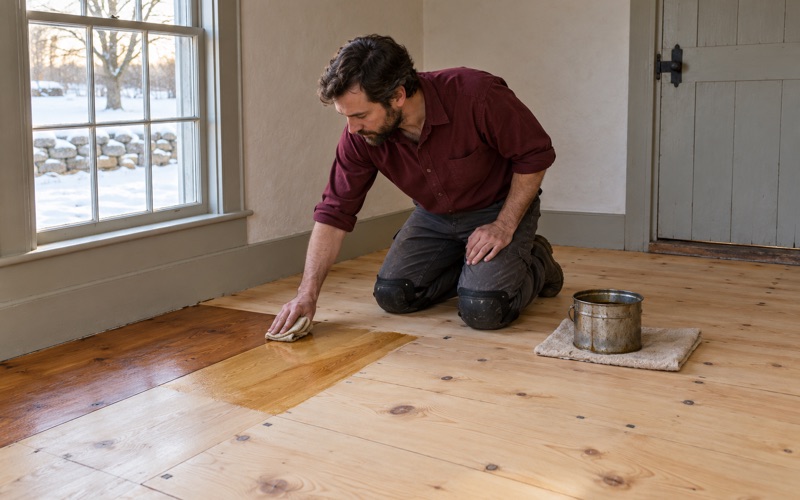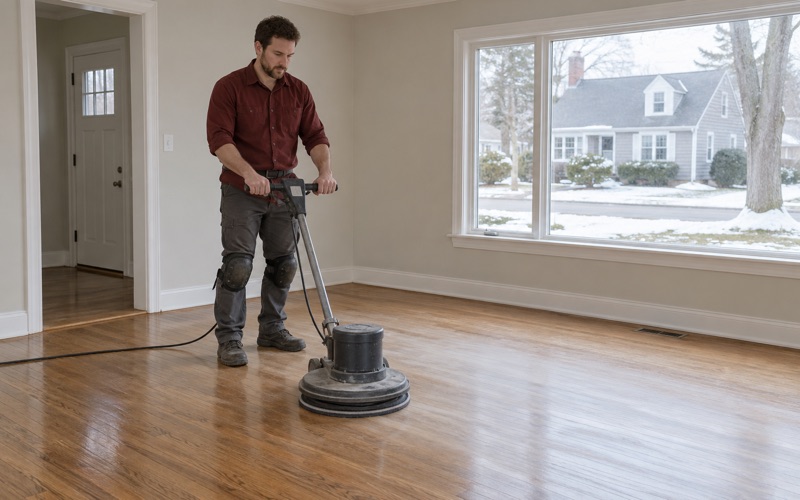
Lawrence Wood Flooring brings more than 20 years of wood-flooring work to Boxford homeowners, from a single water-stained board to a full sand and refinish across every room on a floor. We start each job by reading what the existing floor still has to give: how much wood sits above the tongue and groove, what finish is on it now, and whether the boards are moving with the season or because of something underneath.
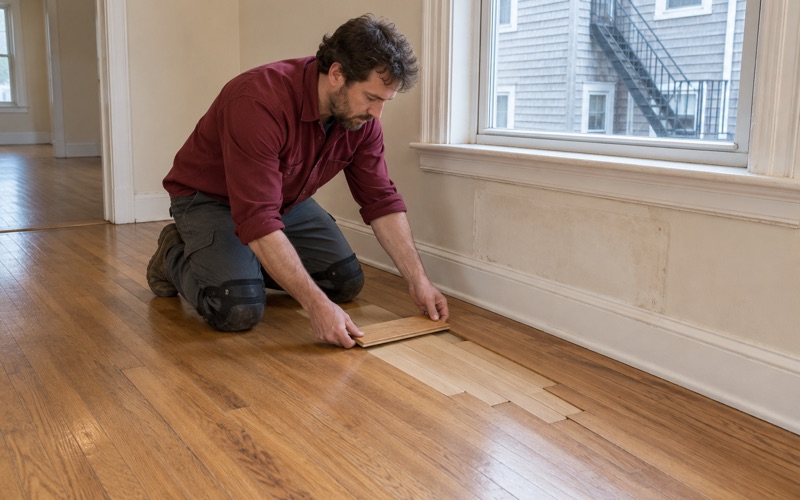
That reading decides most of what follows. A floor with plenty of wear left can be sanded and finished, a tired but sound finish can often take a screen and recoat, and a damaged area can be cut out and woven in with matching boards instead of being torn up wall to wall. We would rather save sound wood than replace it, and we tell you plainly when saving it is not the better choice.
You get an itemized written estimate before any work begins, with stairs priced tread by tread and repairs listed separately from refinishing. Stain samples go down on your own floor, in your own light, so the color you pick is the color you live with.
Repair First: Boxford’s Village Historic Districts and the Floors Inside Them
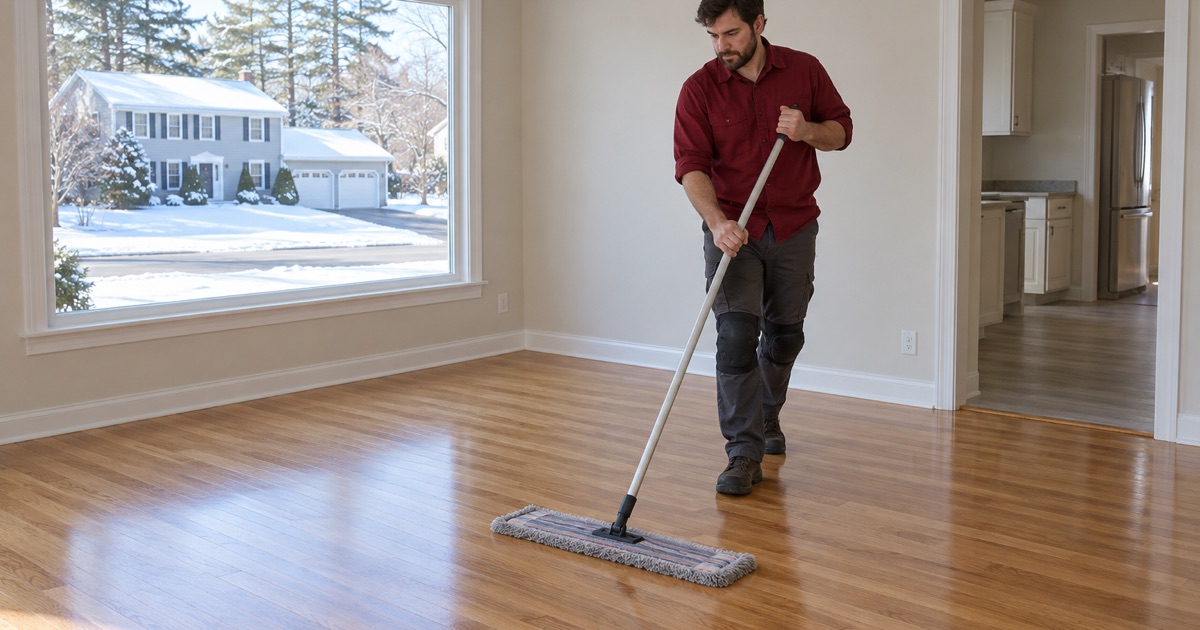
Boxford has two village historic districts, and the town’s Historic Districts Design Guidelines, revised January 2007, are stricter than most. They say original materials and features shall be kept and not removed or altered, and that if a replacement is necessary it should match the original in material and design. Deteriorated architectural features should be repaired rather than replaced whenever possible.
The guidelines go further than many towns do. They call vinyl-clad and aluminum windows inappropriate in a historic district, and every paint color needs the Commission’s approval in advance. That approval requires a paint stirrer painted with the actual sample and labeled with the manufacturer, paint name, finish and number.
What the Guidelines Cover, and What They Do Not
Those guidelines are about the outside of buildings. The Boxford Historic Districts Commission reviews proposed exterior construction, alteration, repairs and demolition within the districts, and interior floors sit outside that review. Nothing in the guidelines tells a homeowner what to do with the boards in a front parlor.
Some owners in the districts choose to carry the same thinking indoors anyway. If the clapboards and windows are being kept and repaired, it can feel wrong to rip out a floor that has been walked on for generations, and that choice is entirely yours. When you make it, we work the way the guidelines ask for on an exterior: keep what is sound, repair what is failing, and match anything that has to be replaced.
The Two Districts
The Boxford Village Historic District runs along Main Street and Topsfield Road, with sections of Middleton Road, Elm Street, Depot Road and Cross Street, and mixes Colonial and Greek Revival houses. The Howe Village Historic District sits on Route 97, Ipswich Road, with houses built between about 1750 and 1850. Both were listed on the National Register of Historic Places in 1973.
In houses of that age we assume nothing about what is underfoot. A floor may be softwood laid by an early owner, a later hardwood put down over the first boards, or a patchwork of both. We find out by looking at a floor register opening, a closet or a threshold edge before we quote.
Repair Methods That Keep an Old Floor
Old pine and other softwood flooring dents and sands differently from oak, so we choose the grit sequence and sander pressure for the softer wood rather than running it like a red oak strip floor. Where a radiator or its pipes once came through, we patch the holes with matching boards woven into the existing courses instead of dropping in a square plug. Boards split around cut nails or damaged by powderpost beetle or old house borer are assessed one at a time, and only the ones that cannot be saved are replaced.
Shellac finish and wax residue turn up on older floors, and both affect what can go on top. We test the existing finish before choosing between waterborne polyurethane, oil-modified polyurethane or a hardwax oil. Some old floors are better served by a light screen and recoat than by a full sanding that takes away wood they cannot spare.
Looking for wood-flooring closer to Wilmington? See Wilmington Wood-Flooring.
Refinishing Boxford’s 1980s and 1990s Homes
The village districts hold only a small share of the town’s houses. According to the 2024 American Community Survey five-year estimates for the town, 639 of Boxford’s 2,889 homes were built in the 1980s and 461 in the 1990s, so those two decades account for 1,100 homes, or 38.1 percent. Only 9.5 percent of the town’s housing was built before 1940.
The town’s housing is 88.7 percent detached, and 94.9 percent of Boxford households own their homes. That shapes the work we are usually asked for here: an owner planning a refinish meant to last for years, in a house they intend to keep living in.
What a 30- or 40-Year-Old Floor Usually Needs
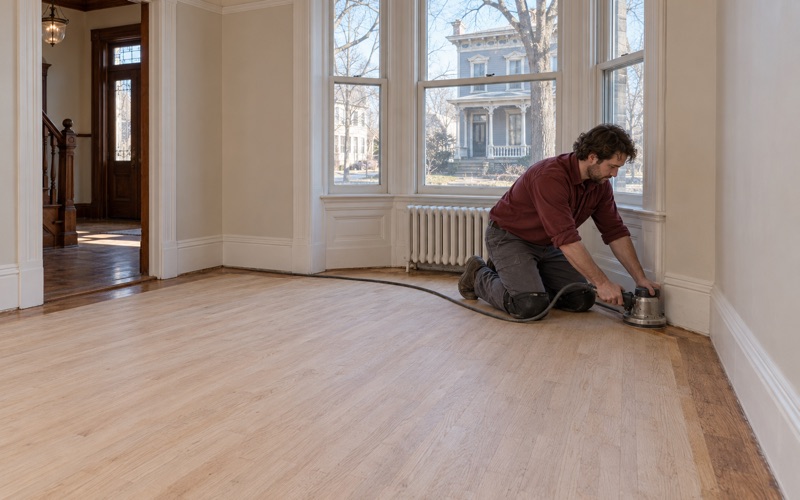
Floors from those decades are commonly red oak strip, white oak or maple, many of them site-finished and some prefinished. After 30 or 40 years they tend to show traffic lanes from the kitchen to the back door, sun fade near windows, pet urine stains and the orange oak tone that older oil-based finishes take on as they age. A full sanding with a drum sander, plus an orbital sander for the edges, takes the floor back to bare wood so a new color or a clearer finish can go on.
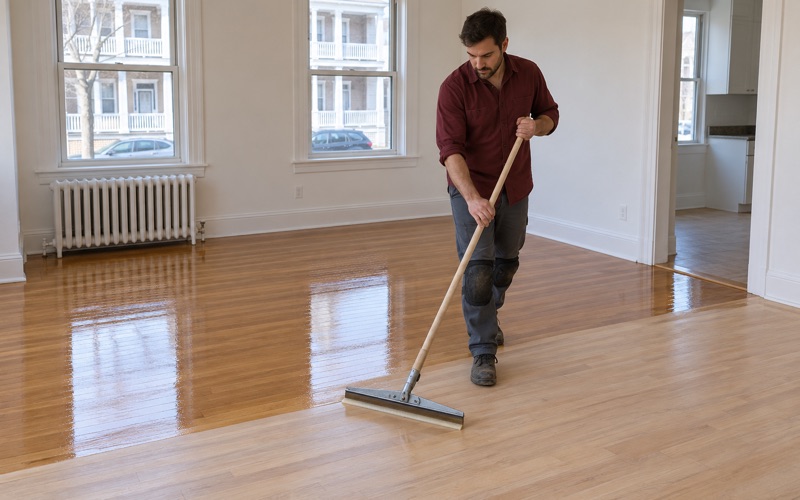
Not every floor needs that much. If the finish is worn but the wood beneath it is clean, a screen and recoat restores the surface with far less disruption, and we will tell you which one your floor calls for. On full refinishes we use dustless sanding with HEPA vacuum collection, which keeps the rest of a lived-in house cleaner while the work goes on.
Prefinished and Engineered Floors
Some homes from the period, and many renovations since, have prefinished solid hardwood or engineered flooring. An engineered wear layer can be thin, so before any sanding we check how much wood sits above the core. A floor without enough to spare gets a recoat or targeted board replacement instead, and a factory finish is tested for adhesion before a site-applied coat goes over it.
Seasonal Movement
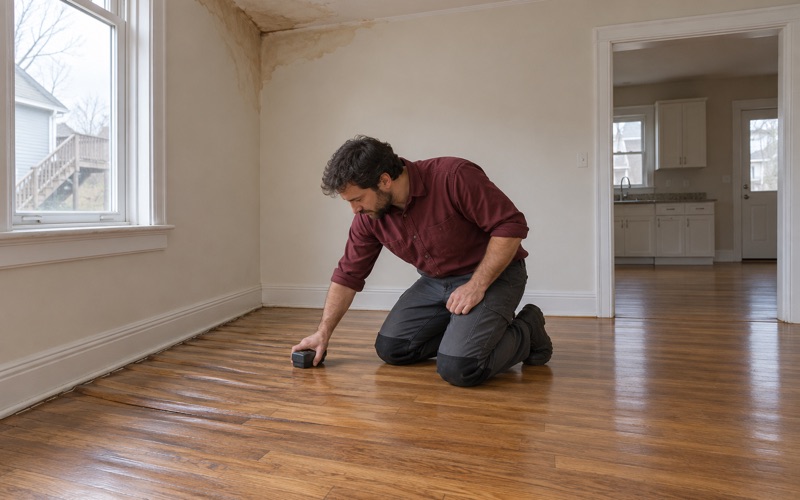
Boxford sits in the National Weather Service’s Western Essex forecast zone, and a heated New England house dries out every winter. That is when winter gaps open between boards, and they usually close again as indoor humidity returns. Cupping, crowning or buckling is a different matter, because it points to moisture, and we trace it with a moisture meter before deciding on any repair or sanding.
East Boxford and West Boxford Floor Projects
Boxford divides into two villages, Boxford Village, commonly called East Boxford, and West Boxford Village. Projects in both run from a single room to a whole house. In East Boxford Village, the Holyoke-French House, built around 1760 and now a Boxford Historical Society museum, shows how far back some of the village’s houses go.
Water Damage and Moisture
When water reaches a floor, from a bathroom above, a burst pipe or dampness coming up from below grade, we trace where it came from first. We dry the area and read the boards with a moisture meter before replacing anything, because boards put back over wet wood fail again. If an insurance claim is involved, we document the damage room by room for the adjuster.
Water stains that have turned black usually run deep into the wood, while lighter stains often sand out. We show you which is which before committing to board replacement, so you are not paying to replace boards that would have refinished.
Bouncy, Sloping and Structural Concerns
A bouncy floor or a sloping floor can come from a tired subfloor, a joist problem or a house that has settled over its lifetime. We read what the floor is telling us, and when the cause is structural we refer that work to the right trade. Sanding over a structural problem only hides it until it comes back.
Old Coverings, Lead and Asbestos
Older rooms sometimes hide resilient tile under carpet, with black mastic or linoleum glue beneath it. We identify those layers rather than sanding them, because vinyl asbestos tile and some mastics need a qualified trade, and our work stops until that trade is done. Carpet glue, tack strip and carpet pad are more routine and come up with the old carpet.
Massachusetts runs its own lead-safe renovation rules for homes built before 1978, and 51.3 percent of Boxford’s homes were built before 1980. We check the build year and look for painted surfaces before any sanding begins, including paint on stair risers, trim and old floor borders.
Planning a Floor Project in Boxford
Planning starts with a visit. We look at the floor, the finish and the rooms around it, then write up an itemized estimate that separates sanding, repairs, stairs and finish so you can see what each part costs.
Choosing Color and Finish
Stain samples go down on a section of your actual floor, and we leave them so you can see them in morning and evening light. Pine and maple take stain unevenly, so on those species we may suggest water popping, a clear finish or a natural tone instead of a dark color. Sheen level matters as much as color, since a satin finish hides everyday wear better than a gloss.
The finishes we use fit the coating VOC limits on both sides of the state line, which match each other for varnish, sealer and lacquer. Waterborne polyurethane dries clear and fast, oil-modified polyurethane deepens the wood’s tone, and hardwax oil soaks in and is easy to touch up later.
Stairs and Transitions
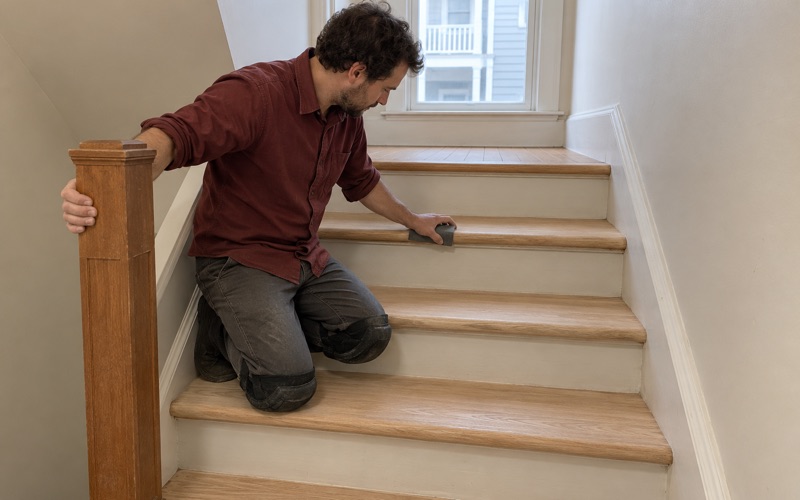
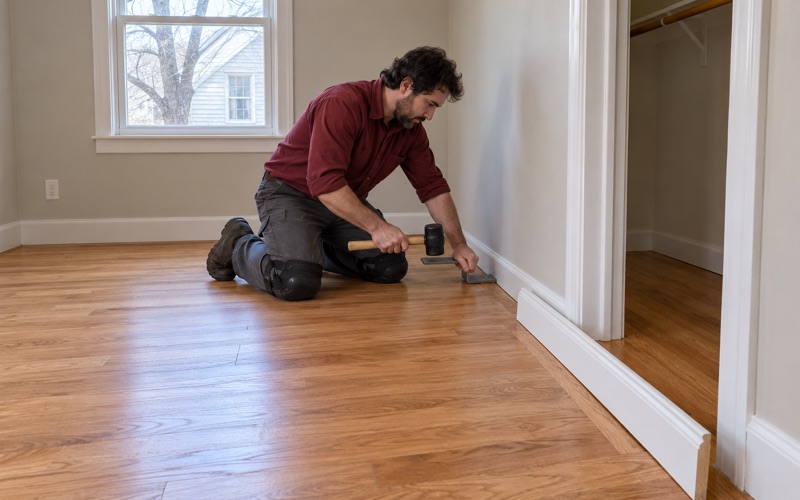
A staircase is not priced by the square foot, so ours are quoted tread by tread. Stair treads, stair nosing and stair risers each get their own line, along with any retread work where an old stair is being covered with new hardwood. Reducers, thresholds and quarter round are matched or replaced so the finished floor meets the rooms around it cleanly.
Living in the House During the Work
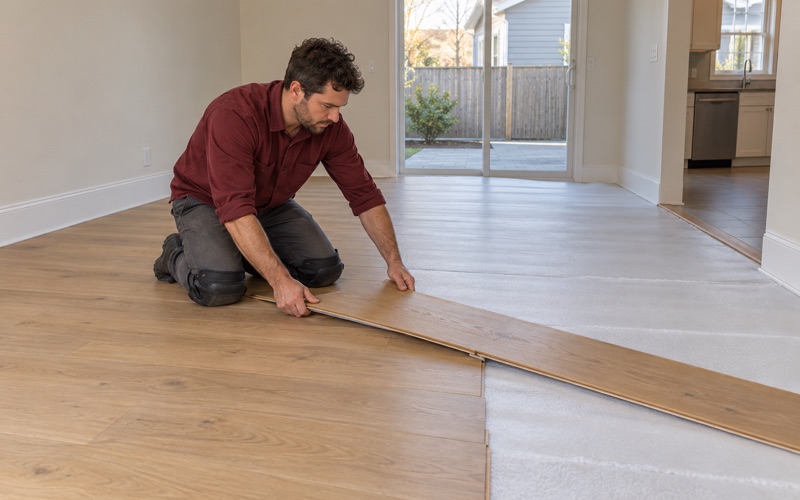
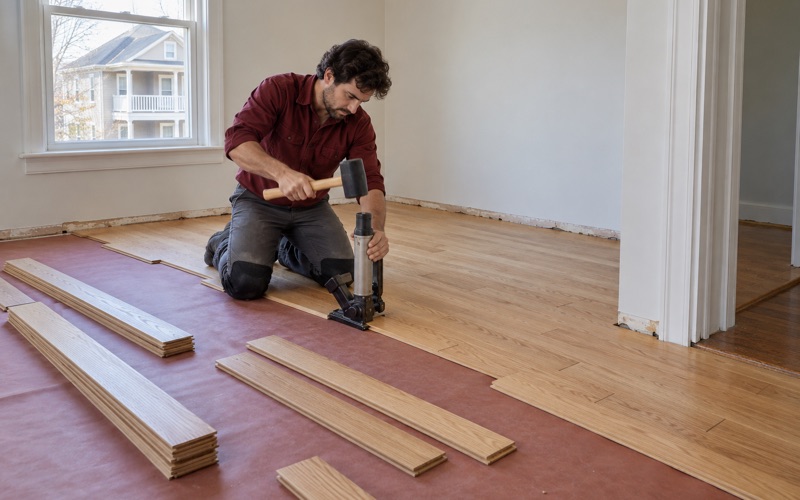
Many of our projects happen with the owners still living at home. We plan the order of rooms so a kitchen or bedroom stays usable as long as possible, and we explain drying and curing times for the finish you choose before the first coat goes on. If you are adding new flooring, acclimation, a vapor retarder where it belongs and the right expansion gap at the walls are part of the plan from the start.
- 20+ Years on Wood Floors
- Itemized Written Estimates
- Old Pine and Oak Work