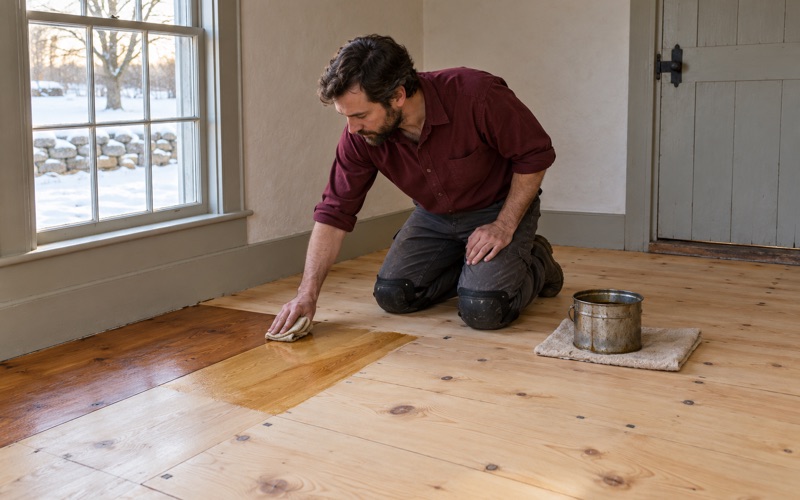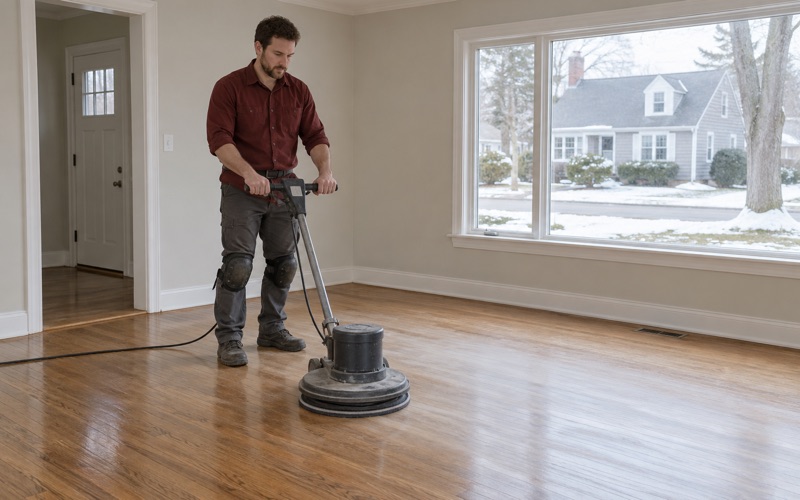
Lawrence Wood Flooring has handled wood-flooring in Danvers for homeowners and landlords throughout our 20+ years in the trade, and a large part of that work happens inside houses with real age on them. We refinish worn oak and pine, weave in replacement boards, rebuild stairs and lay new solid hardwood or engineered floors. Every job starts with a walk through the rooms to learn what the floor is made of, what finish is on it and what it is sitting on.
Older houses raise questions a newer subdivision rarely does. Owners ask whether pulling up a floor counts as tearing down part of a historic building, whether the finish under the rug is shellac or polyurethane, and whether the painted trim at the baseboards needs special handling. We answer the floor questions directly, and we are plain about the ones that belong to the town.
The sections below cover how we approach floors in the town’s oldest houses, in the large group of homes built after World War II, and in rooms where water or age has done real damage. The last section explains what to expect once you call.
Floor Work in Older Danvers Houses and the Demolition Delay By-law
Danvers rewrote the rules that decide when an old building gets a second look before it comes down. Chapter XXIX of the town by-laws, as amended at the May 18, 2026 Town Meeting, reaches any building or landmark built in whole or in part in 1925 or earlier that stands outside the local historic districts. That is a wide net in a town where 25.4 percent of homes were built before 1940, according to the Census Bureau’s 2024 five-year American Community Survey.
What the By-law Treats as Demolition
The by-law defines removing a portion of a building as taking away a structural component such as exterior walls, roof systems, porches, foundations or footings. Replacing one of those parts with something that serves a substantially similar function does not count. When a building is found significant, the Danvers Preservation Commission advises the Building Commissioner, and demolition waits twelve months, or eighteen months for a building over 200 years old or one listed on the State or National Register.
The delay restarts if the property is sold while it is running, and fines reach up to $300 for each day in violation. Those are serious terms, which is why owners of older homes sometimes call us uneasy about a plain floor job.
Where Interior Floor Work Sits
The by-law defines the demolition permit it governs as one that authorizes the demolition of a building, excluding interior demolition. Tearing out a worn floor and relaying a new one inside the walls is a different category of work from removing a porch or a roof, and the text draws that line in its own words. What the floor job itself needs from the town is a question for the Town of Danvers Building Commissioner, and we would rather point you there than guess.
When a project in an older house also touches a porch, an exterior wall or a foundation, we suggest the owner speak with the town before anyone sets a start date. Our part of the job stays inside the rooms.
What We Find in the Oldest Houses
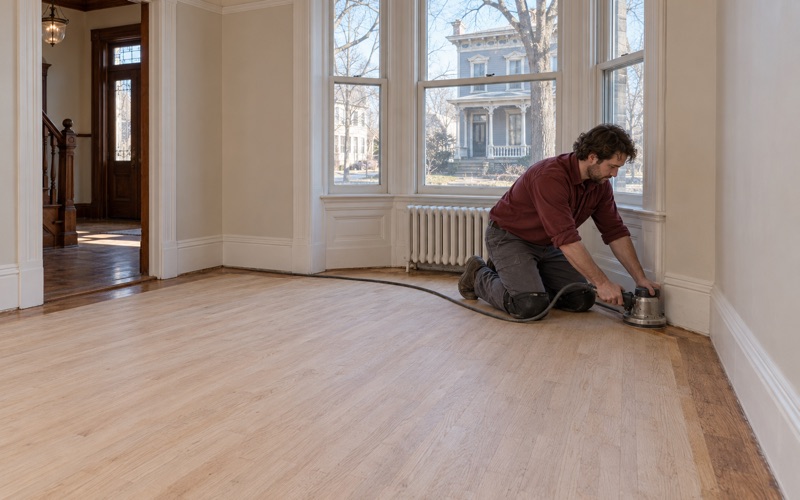
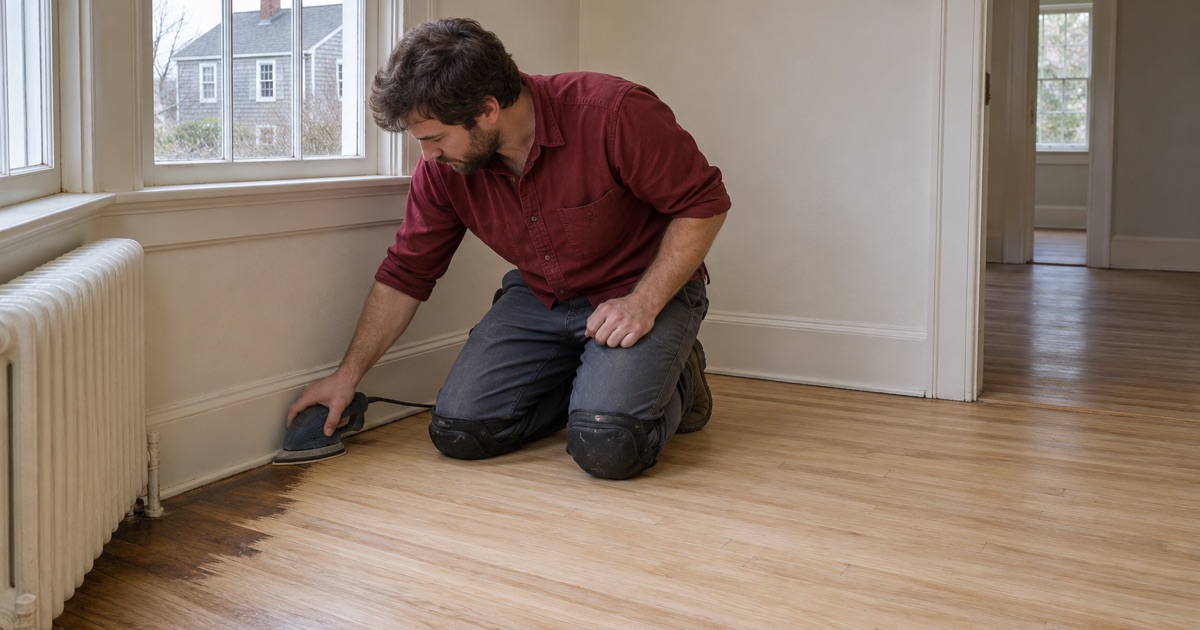
Houses from the 1920s and earlier can carry softwood flooring such as eastern white pine or southern yellow pine in kitchens, back halls and upper bedrooms, sometimes with red oak strip flooring laid later in the front rooms. Pine is softer than oak, so we sand it with a gentler grit sequence and lighter passes rather than treating it like a hardwood. Many of these floors also hold an old shellac finish or wax residue that has to come off cleanly before a modern coating will bond.
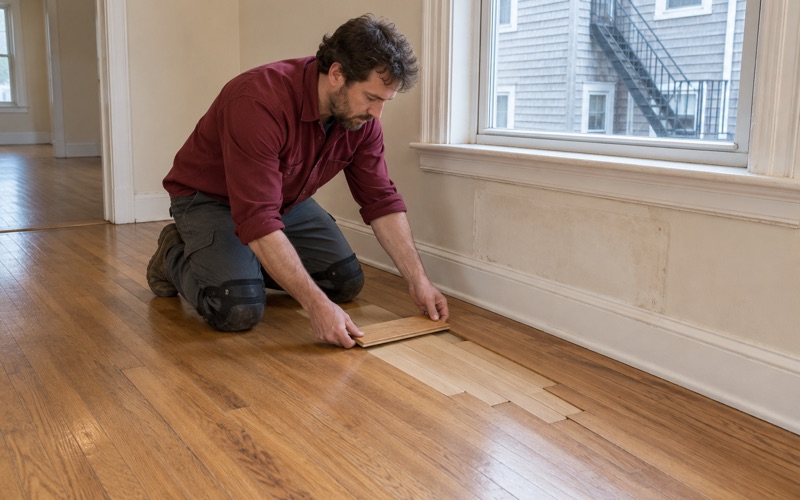
Where a radiator and its pipes once came up through the floor, we weave in matching boards instead of dropping in a square plug. Face-nailed boards held with cut nails get set and filled so the sander does not catch them. Signs of powderpost beetle or old house borer get pointed out before sanding, since fresh exit holes mean the wood needs attention first.
Looking for wood-flooring closer to Derry? See Wood-Flooring in Derry.
Refinishing Floors in Danvers’ 1950s and 1960s Houses
Danvers built a large share of its housing in the two decades after the war. The same Census survey counts 1,706 units from the 1950s and 2,223 from the 1960s, or 3,929 homes in all, together 34.1 percent of the town’s stock. Those houses were built well after the by-law’s 1925 cutoff, so the questions there are about the floor itself.
Red Oak Strip Under Old Carpet
Many homes of this era were finished with red oak strip flooring, and a good number spent decades under wall-to-wall carpet. When the carpet comes up, we pull the tack strip, scrape off carpet pad residue and any carpet glue, and fill the nail holes along the walls. The oak underneath is often in better shape than owners expect, though sun fade near the windows and traffic lanes down the hall usually show.
Winter gaps between boards in a heated house are normal seasonal movement, and we tell you which ones will close in summer. Wider board gapping that stays open all year gets a closer look before we fill anything.
Orange Oak and Choosing a New Color
Oil-modified polyurethane from past decades tends to amber, which is why so many floors from this period read as orange oak. A full sand to bare wood removes that tone, and water popping before stain helps the grain take color evenly. We then lay stain samples on your own floor so you can judge them in your own light before anything is committed.
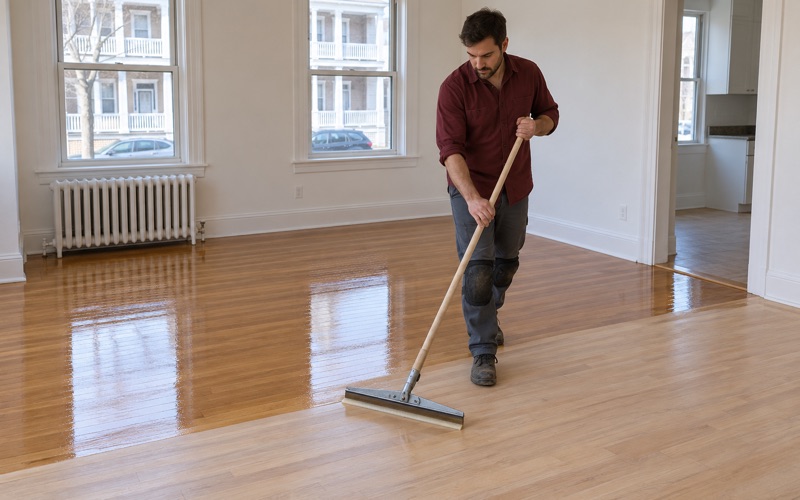
Waterborne polyurethane stays clearer over the years, while hardwax oil gives a lower sheen level and a softer look that is easy to touch up. We pick products that fit the coating VOC limits for varnish, sealer and lacquer, which line up on both sides of the state line.
Lead Paint and Old Tile Before Sanding
Any house built before 1978 falls under Massachusetts’ own lead-safe renovation rules, so we check the build year and look for painted surfaces in the room before a drum sander starts. Kitchens and back rooms from this era may also hide vinyl asbestos tile with black mastic underneath. We identify that layer rather than sanding it, and the work stops until the right trade has handled it.
Replacing Damaged Floors in an Older Danvers Home
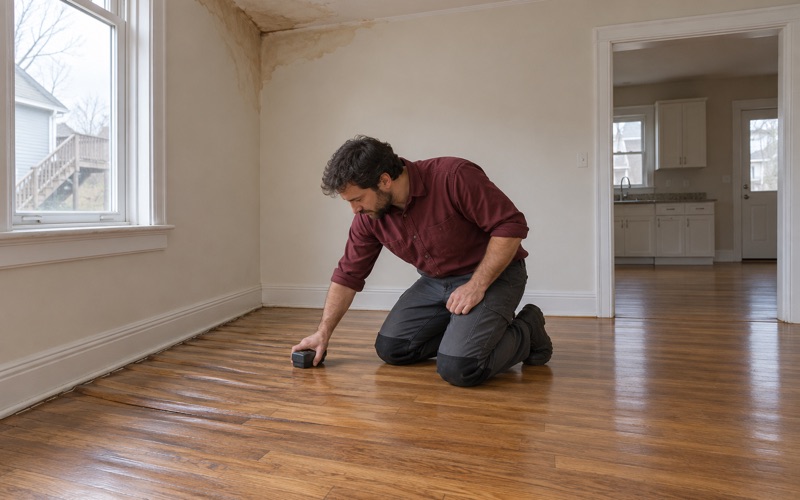
Some floors are past refinishing. Water from a burst pipe, a leak in the unit upstairs or moisture coming up from below grade can cause cupping, crowning or full buckling. Deep pet urine stains and black water stains can also run through the wood instead of sitting on its surface.
Drying and Reading the Wood First
We trace where the water came from, dry the area and read the boards and subfloor with a moisture meter before any board is replaced. Laying new wood over wet wood only moves the problem to next season. When an insurance claim is open, we document the damage room by room so the adjuster can see what happened in each space.
Weave-In Repairs and Board Replacement
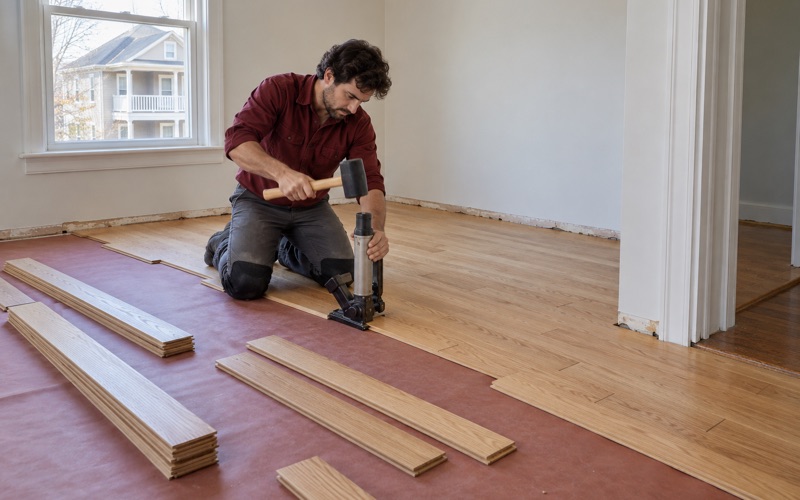
Where the damage is contained, we cut out the affected boards and weave in replacements so the joints stagger the way the original floor does. In an old pine floor that means finding boards of similar width and grain, and in oak it means matching species and cut. A weave-in repair finished along with the rest of the room disappears far better than a patch with straight seams.
Bouncy and Sloping Floors
A bouncy floor or a sloping floor in an older house is usually saying something about the joists or framing underneath. We tell you what we see, but structural work goes to the right contractor rather than being hidden under a fresh coat of finish. Once the framing is sound, we can flatten the subfloor where needed and put the finished floor back down.
Planning a Floor Project in Danvers
Most Danvers homes are lived in by their owners: 69.2 percent of occupied homes are owner-occupied, and 57.6 percent of all units are detached houses. The rest include two-family homes, small apartment buildings and condominiums, each with its own scheduling needs. Whether the house sits in Danversport, Tapleyville, Putnamville or Danvers Center, the planning starts the same way.
Working Around the People Who Live There
In a two-family house we take one floor at a time, so whoever lives on the other floor stays at home through the job. For landlords, we fit rental floors into the gap between the move-out and move-in dates. We also write itemized estimates, the kind Massachusetts expects before a landlord can charge a tenant for floor damage.
Condominium Units and Upstairs Floors
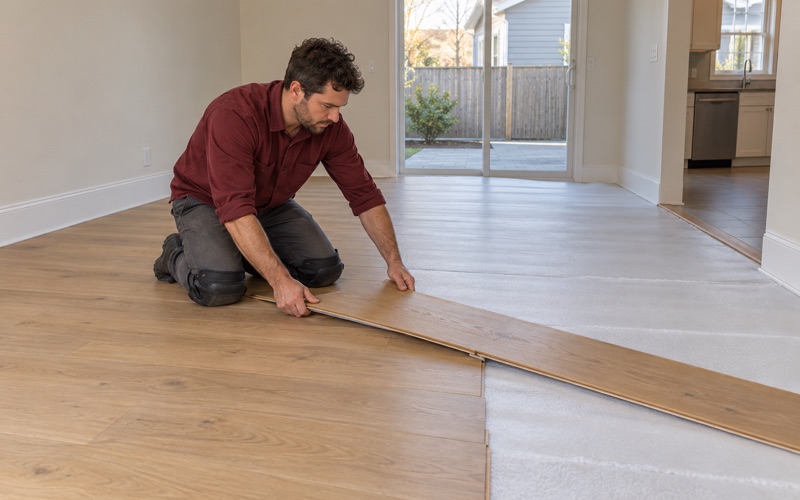
For an upstairs unit, the choice of floor and acoustic underlayment depends on what the building’s own condominium documents say about impact noise. We read those requirements through with you before you choose between engineered and solid hardwood. A prefinished floor and a site-finished floor also behave differently during installation, which matters when neighbors share the hallway.
Stairs, Acclimation and Timing
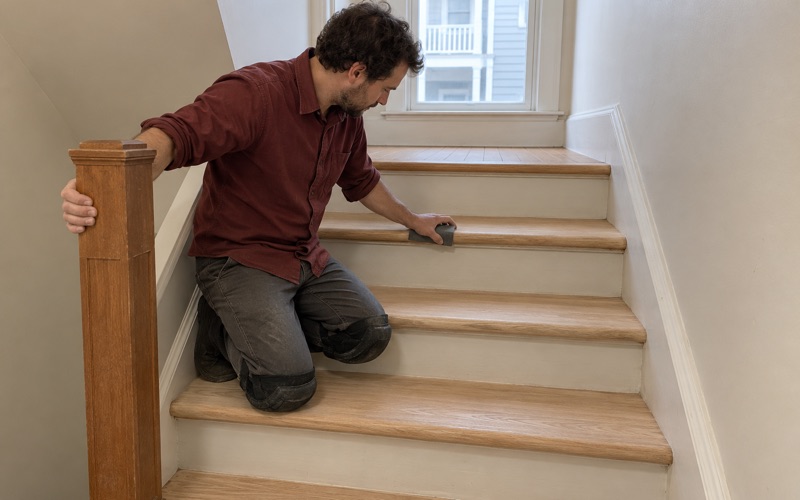
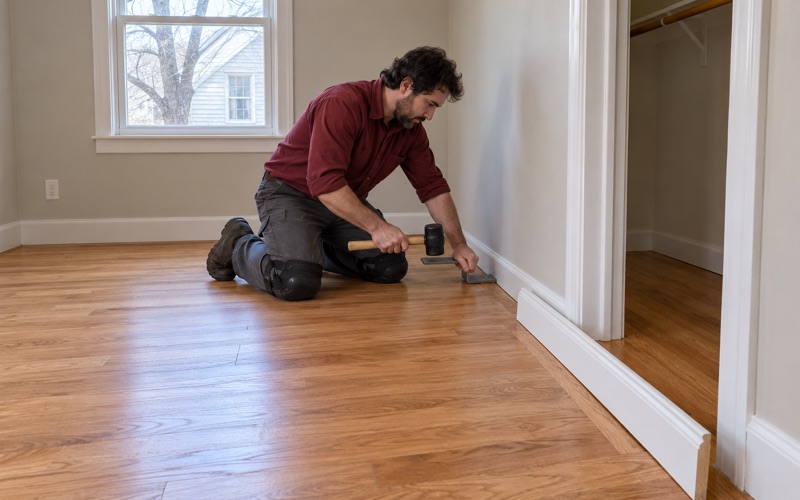
Stairs are quoted tread by tread, because a staircase with worn treads, scuffed risers and loose nosing is not priced by the square foot. New boards sit in the house to acclimate before installation, and we leave a proper expansion gap at the walls behind the baseboard or quarter round. Sanding runs with HEPA vacuum collection, and we plan finish coats around the weather so each coat dries as it should.
The town, originally known as Salem Village and settled in 1636, holds houses from many periods within a short drive of one another. That range is why we look at each floor on its own terms before we quote it.
- 20+ Years on Wood Floors
- Itemized Written Estimates
- Old Pine and Oak Work