
Lawrence Wood Flooring handles hardwood floor repair in Lawrence, MA, serving surrounding cities including Methuen, Andover, Haverhill, Lowell, Boxford. With 20+ years spent on old oak, maple and pine floors, we fix the damaged section and leave the rest of the floor alone, so a bad patch does not turn into a whole new floor.
Most floors we are called to repair have a single problem: a black stain by the back door, a ring of damage where a radiator stood, a few cracked boards, or a squeak that has been getting louder for years. The goal is a repair that disappears once the room is finished, not a square of new wood that everyone notices.
Every repair is quoted in writing, with the boards and patches listed separately from any refinishing. That lets you decide whether to refinish the whole room or fix the damage and wait.
Common Hardwood Floor Repairs
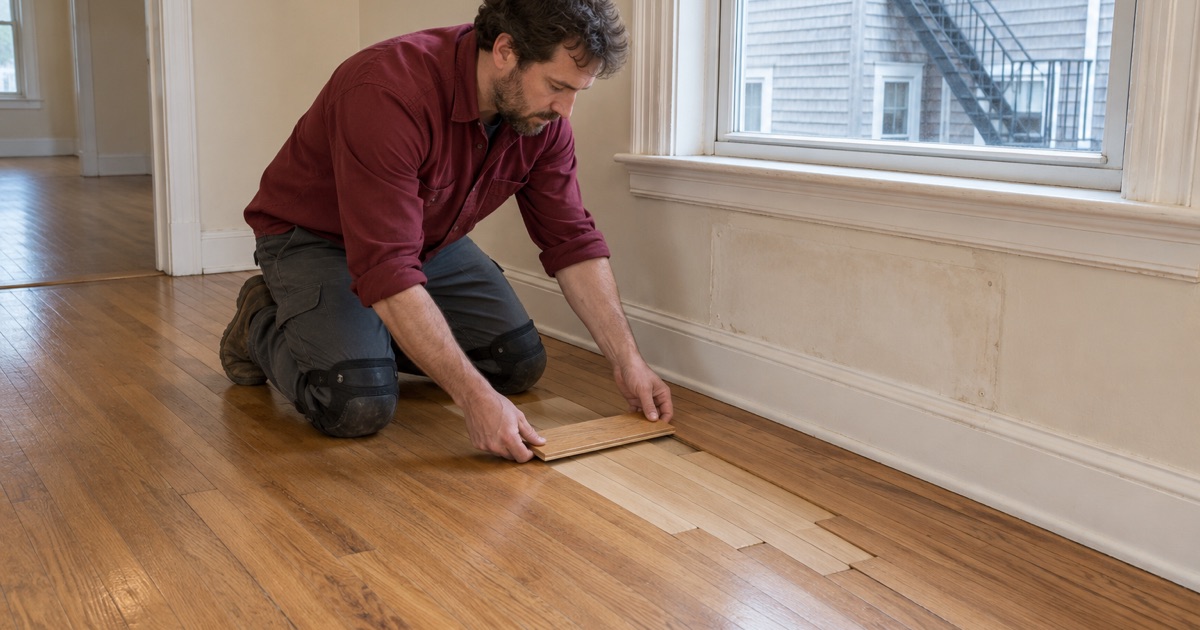
Replacing Stained, Cracked or Gouged Boards
Boards that are split, deeply gouged or stained through cannot be sanded back to clean wood. We cut them out without disturbing the boards around them, then fit new boards that lock into the neighboring tongue and groove.
The new boards are laid at staggered lengths so the joints fall the way the original floor’s joints do. A straight seam across the floor is what gives a patch away, and avoiding it is most of the skill in board replacement.
Black Pet Urine Stains
Pet urine stains start out gray and turn black as they soak into the wood. By the time they are black, the stain has usually reached the underside of the board and sometimes the subfloor.
We remove the stained boards, check the subfloor beneath for odor and soaking, seal or replace what is affected and then weave in new boards. Sanding over a black stain only makes it lighter for a few months before it shows through again.
Water Stains and Water-Damaged Sections
Gray water stains from a plant pot or a leaking window often sand out, while dark stains and boards that have cupped or split usually need replacement. Before anything is replaced, we read the area with a moisture meter, because new boards installed over wet wood will cup again. Larger leaks from a burst pipe or an upstairs unit are handled as water damage, with drying, readings and room-by-room documentation for the adjuster when there is a claim.
Radiator Removal Patches
When old radiators and their supply pipes are removed, they leave holes through the floor and an unfinished rectangle where the radiator sat. A glued-in square plug is the quick fix, and it shows from across the room.
We cut the area back to sound boards at varied lengths and weave matching boards into the floor. Once sanded and finished with the rest of the room, the patch reads as part of the original floor.
Squeaks, Popping and Loose Boards
Squeaks come from boards rubbing on loose nails or a subfloor that has separated from a joist. Where we can reach the underside from a basement, we refasten from below; otherwise we fasten from above with small fasteners that are set and filled. Boards with a broken tongue or groove are replaced, because no amount of nailing holds a board whose edge has split away.
Gaps Between Boards
Winter gaps open when heated air dries the wood and close again in humid summer, and filling them can crush board edges when the wood swells back. Permanent gaps are different, and we fill or slip in thin strips of matching wood where they are wide enough to need it.
Repairs on Older and Softwood Floors
Old Pine Floors
Eastern white pine, southern yellow pine and heart pine floors are common in older homes, and they wear differently from oak. Replacement boards for pine often have to come from reclaimed stock to match the width and age of the original.
We set raised nails, replace boards that have split along the grain and treat the soft wood gently when the repair is sanded in, so the patch does not end up lower than the floor around it.
Floors Held With Cut Nails
Many older floors were fastened with cut nails that have loosened over time. We reset or add fasteners where boards have lifted, and where a cut nail head has risen above the surface, we set it before any sanding so it does not tear the sandpaper or the floor.
Damage From Wood-Boring Insects
Small round exit holes and fine powder under a board can mean powderpost beetles or old house borer. We point out the signs and recommend that a pest professional confirm whether the activity is current before any boards are replaced.
Once the infestation has been dealt with, we remove damaged boards and check the framing we can see. Structural damage to joists is referred to a carpenter or engineer.
When the Problem Is Under the Floor
Bouncy and Spongy Floors
A bouncy floor usually means the subfloor or framing is flexing, not that the hardwood itself is damaged. We check the subfloor and fasteners and fix what is within the floor, but structural problems in the joists are referred out rather than hidden under new boards.
The tell is usually where the bounce sits. A soft spot in one area often traces to a single loose section of subfloor that can be refastened, while a whole room that shakes when someone walks across it points to framing that needs a carpenter’s eye.
Sloping Floors in Older Houses
Sloping floors in older homes, especially multi-family houses, are often the result of decades of settling. We tell you whether the slope affects the repair and whether it points to a structural concern before we patch anything.
Cupping, Crowning and Buckling
Cupping, crowning and buckling are moisture problems before they are floor problems. We trace the moisture source and let the floor dry before deciding which boards to replace, because many boards flatten once the cause is fixed.
Cupped boards have edges higher than their centers, which means the underside took on more moisture than the top. Crowned boards are the reverse, and they usually come from sanding a cupped floor flat before it dried. Buckling, where boards lift off the subfloor, is the most severe stage and almost always needs board replacement once the floor is dry.
How a Repair Is Matched and Finished
Matching Species, Width and Thickness
We identify the species, the board width and the thickness of the existing floor before sourcing replacements. Red oak strip flooring is easy to match, while older or wider boards may need reclaimed wood or custom milling.
Where the old floor runs under a wall or into a closet, we sometimes borrow boards from that hidden spot and use new wood there instead. Aged boards moved into the visible patch match the room far better than anything new, and the replacement in the closet is never seen.
Blending the Finish
New wood is lighter than wood that has aged under finish, so a repaired section often looks different at first. The best match comes from sanding and finishing the repair with the surrounding floor, and we use stain samples on the repaired area when the floor is stained.
Spot Repair or Full Refinish
A small repair can sometimes be finished on its own, but it rarely matches a worn floor around it perfectly. We give you both options in writing, so you can choose between a spot repair now and a full refinish later.
For landlords, a repair between tenants is often the better call than a full sanding, and we can write the estimate room by room so ordinary wear is kept separate from damage. For a house going on the market, refinishing the whole room after the repair usually gives the cleaner result in listing photos.
- 20+ Years on Wood Floors
- Itemized Written Estimates
- Old Pine and Oak Work