
Lawrence Wood Flooring repairs hardwood floor water damage in Lawrence, MA, serving surrounding cities including Methuen, Andover, Haverhill, Lowell, Boxford. After 20+ years of working on wood floors, we know that the most expensive mistake after a leak is ripping out or sanding boards before the floor has dried.
Water reaches a wood floor in a handful of ways: a leak from the apartment or condo above, a burst pipe in winter, a dishwasher or washing machine supply line, an ice dam pushing water through a ceiling, or a basement that took on water in a storm. Each one damages the floor differently, and the right repair starts with knowing where the water came from and how far it traveled.
We trace the water, read the floor with a moisture meter, wait for it to dry, and only then decide which boards are lost. Everything we find is documented room by room, so an adjuster, a landlord or a condo association has a clear record.
What Water Does to a Wood Floor
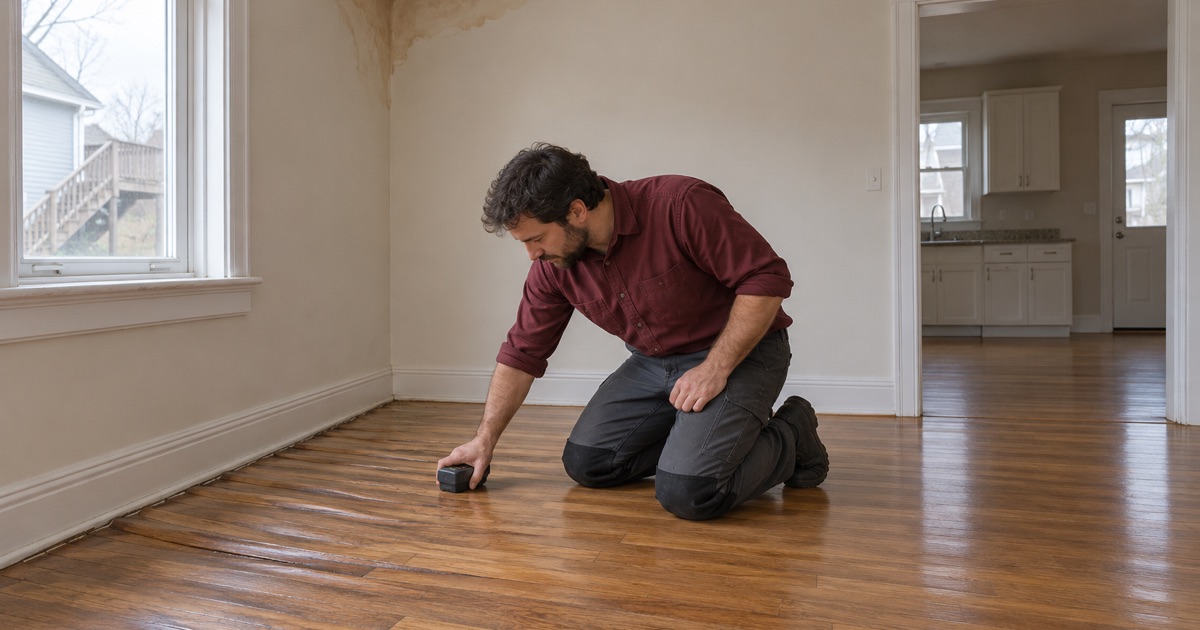
Cupping
Cupping is when the edges of each board rise higher than the center. It happens because the underside of the board has absorbed more moisture than the top, so the bottom swells and pushes the edges up.
Cupping is often reversible. Once the water source is stopped and the floor dries evenly, many cupped boards settle back down close to flat, which is why we measure first and decide later.
Crowning
Crowning is the opposite of cupping, with the center of each board higher than its edges. It usually happens when a cupped floor is sanded flat while it is still wet, and then the boards shrink back as they dry.
It is the main reason we never sand a water-damaged floor early. Sanding too soon turns a floor that would have recovered into one that has lost wood it cannot get back.
Buckling
Buckling is when boards swell so much that they lift off the subfloor, sometimes several inches. It usually follows a large volume of water or water that sat for days.
Buckled boards rarely go back down, and they often pull their fasteners loose. These sections are generally removed and replaced once the subfloor is dry.
Water Stains
Gray stains are usually in the finish or the top of the wood and can often be sanded out. Black stains mean water has reacted with the wood deeper in the board, and those boards are normally replaced.
Where the Water Comes From
A Leak From the Unit Upstairs
In two- and three-family houses and condo buildings, water from the unit above is one of the most common causes of floor damage. It may first show up as stained ceiling plaster, then as cupped boards in the room below.
We check the floor in the affected unit and the surrounding rooms, because water travels along joists and under boards farther than the ceiling stain suggests. That reading tells everyone how much floor is really involved.
Burst Pipes and Appliance Leaks
Pipes that freeze and burst, a failed dishwasher supply line or a washing machine hose can put a lot of water on a floor very quickly. The water often spreads under the boards along the tongue and groove, wetting a larger area than the visible puddle. Once the plumbing is fixed, we map the wet area with moisture readings so the repair covers everything that got wet, not only the boards that look damaged.
Wet Basements and Lower Levels
Wood below grade is closest to groundwater and to storm runoff, and a heavy storm can soak a finished basement floor. Solid hardwood in a basement is especially vulnerable to cupping and buckling.
Once the water source is addressed, we check the slab and the subfloor before any repair. When a basement floor is rebuilt, engineered hardwood over a vapor retarder is usually the more durable choice.
Ice Dams and Window Leaks
Water from ice dams or failed windows often enters at the edge of a room and runs along the wall. Damage can sit under baseboards and quarter round for weeks before it shows, so we pull trim where needed to see how far it reached.
How We Handle a Water-Damaged Floor
Finding the Extent of the Water
We start by mapping the moisture across the floor with a moisture meter, including the boards that look fine. Water travels under the surface, and the readings show where the floor is wet and how far the damage spreads.
Drying Before Any Repair
The floor has to come back to normal moisture levels before any boards are replaced or sanded. Depending on how wet the subfloor got, that can take days or weeks.
During that time, we take repeat readings and compare them against dry areas of the same floor. Large-scale water extraction and mold remediation belong to restoration specialists, and we recommend one when the situation calls for it.
Saving What Can Be Saved
Once the floor is dry, many boards that looked ruined have flattened enough to be sanded and refinished. We replace only the boards that are still cupped, buckled, split or stained through. Replacement boards are woven into the existing floor at staggered lengths, then the area is sanded and finished with the rest of the room so the repair blends in.
Checking the Subfloor
A subfloor that stayed wet can swell, delaminate or lose its grip on fasteners. We check it where boards come up and replace damaged sections before new boards go down, because a weak subfloor leads to squeaks and soft spots later.
Refinishing After the Repair
Once the boards are replaced and the floor is dry, the repaired area almost always needs to be sanded and finished with the surrounding floor. New boards are lighter than old ones, and a patch finished on its own stands out in raking light.
We usually recommend refinishing the full room, or at least running the finish to a natural break such as a doorway, so the repair is invisible. If the room was stained, we lay stain samples over the new and old boards together before choosing the final color.
Preventing the Next Round of Damage
Some water damage repeats because the cause was never fully fixed: a slow drip under a sink, a basement that floods every spring, a window flashing that still leaks. We point out anything we see that suggests the water will come back, so the new floor is not damaged by the same source.
Claims, Landlords and Condo Associations
Documentation for the Adjuster
An adjuster needs to know what was damaged, how badly and what the repair will cost. We document the floor room by room, with moisture readings, photos and an itemized estimate that separates repair from refinishing.
Taking photos and readings before anything is removed is what makes that record useful. Once boards are pulled and discarded, the evidence of how far the water traveled is gone, so we document the floor as we find it.
Rental Units and Tenants
In a rental, the landlord needs to know whether the damage came from a leak, a tenant or ordinary wear. We write estimates that keep those separate, which helps when the question of who pays comes up.
Where a tenant is still living in the unit, we plan the drying period and the repair around their schedule, and work one floor at a time in a two-family.
Condo Buildings and Upstairs Units
In a condo, the master deed and bylaws often say who is responsible for which parts of a floor. We document the damage clearly for each owner and the association, and leave the question of who pays to them and their insurers.
- 20+ Years on Wood Floors
- Itemized Written Estimates
- Old Pine and Oak Work