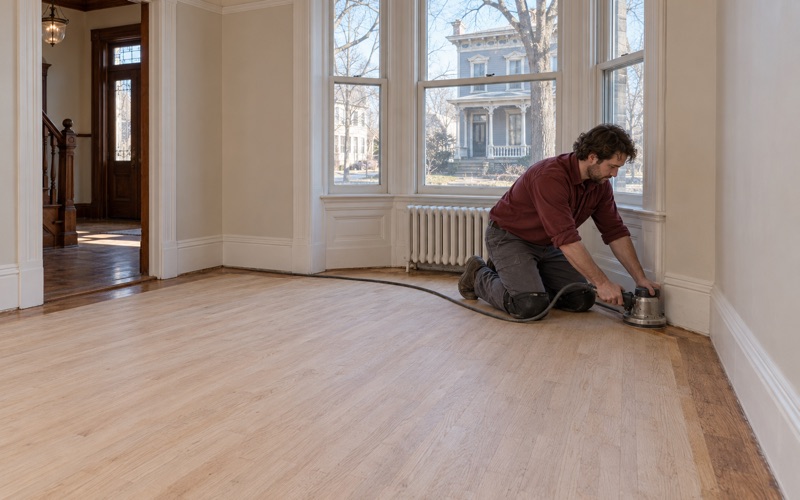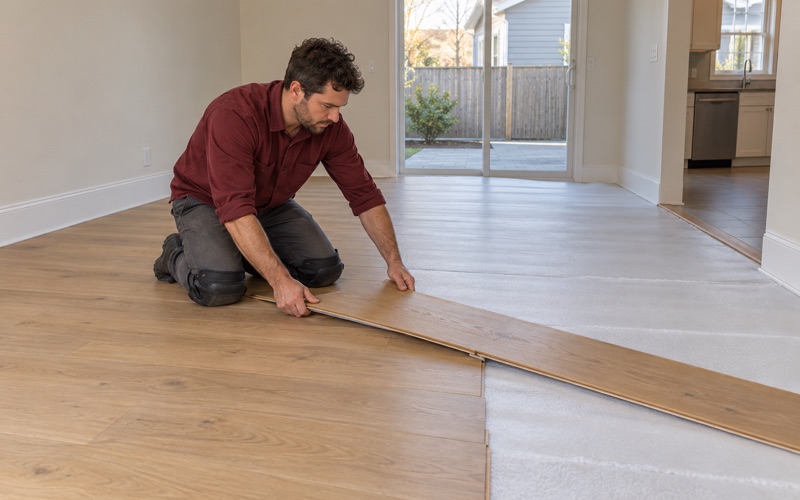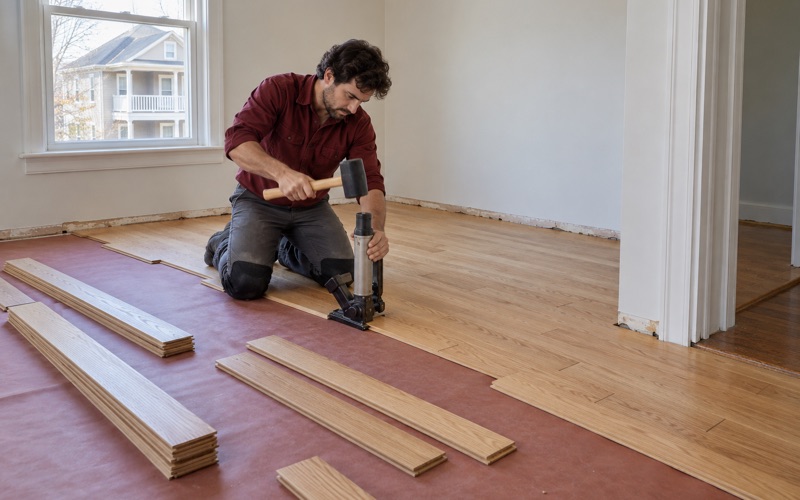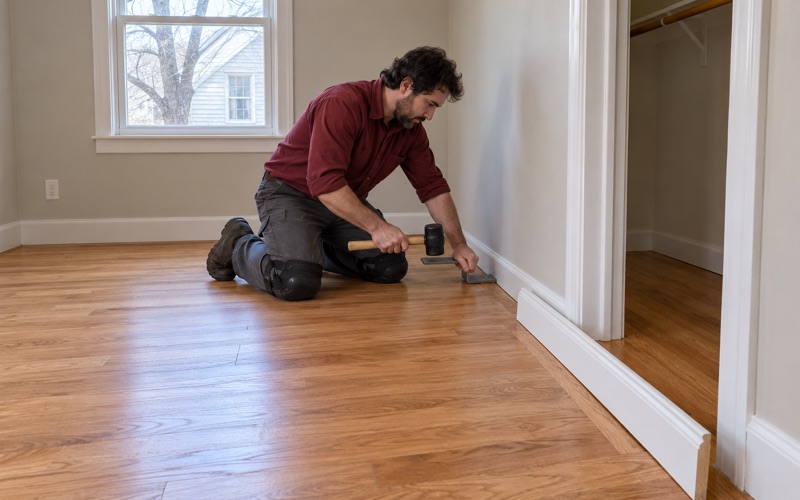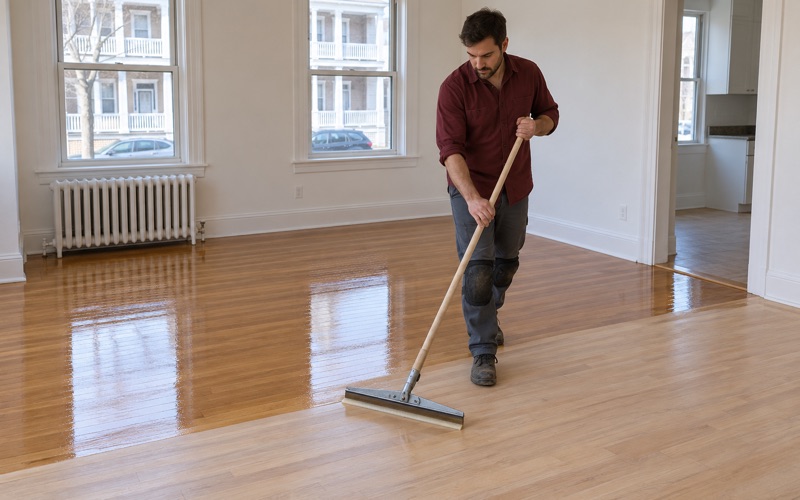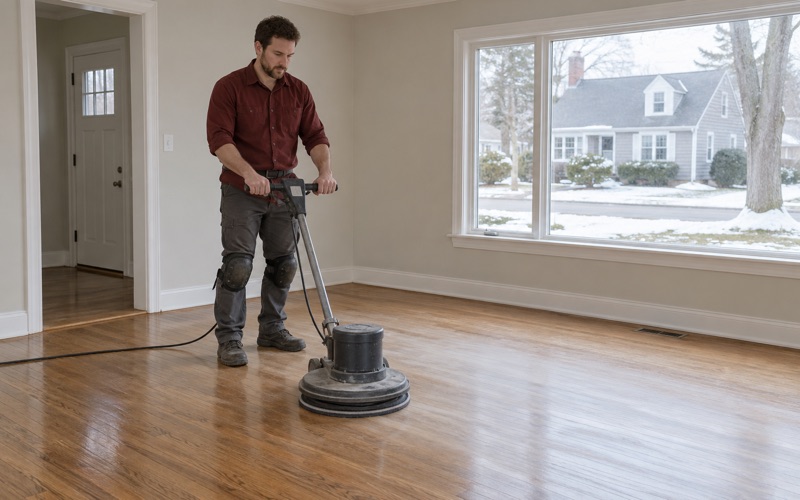
Lawrence Wood Flooring has brought more than 20 years of hands-on work to wood-flooring in Haverhill, and most of the floors we see here have already outlasted several owners. We refinish worn boards, weave in replacement pieces, rebuild stair treads, and lay new solid hardwood or engineered flooring where a room calls for it.
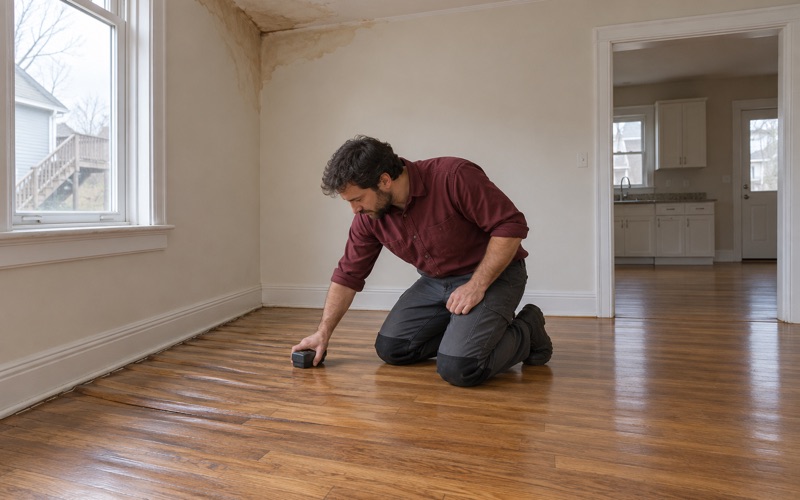
Every job begins with a walk-through rather than a square-foot price. We read the boards with a moisture meter, step across the rooms to feel for a bouncy floor or a sloping floor, and confirm the build year and any painted trim before any sanding is scheduled. Massachusetts keeps its own lead-safe renovation rules for homes built before 1978, so that check decides how dust is contained, not just which grit comes first.
The sections below cover what changes about floor work in this particular city: the kind of house most of it was built around, the older neighborhoods where those houses cluster, and the former industrial buildings people now call home.
Floors in Haverhill’s Shoe-Era Houses
Much of the city’s housing grew alongside its shoe trade. The Massachusetts Historical Commission’s survey of Haverhill puts the population at 15,106 in 1870 and 49,450 by 1915, and it calls the 1880s the largest economic expansion in the city’s history, with manufacturing employment climbing from 8,145 to 15,000 over that decade. By 1887 the city counted 383 shoe factories and related establishments, 170 of them actually making shoes. By the end of 1913, one tenth of the shoes produced in the United States were made here.
Workers, foremen and owners all needed somewhere to live, and the houses built for them are still a large share of what we refinish.
Gable-Front and T-Plan Homes
The survey describes the moderate house of that period as a gable-front form, usually two and a half stories, with T-plan variations common. In these houses the floors tend to change from room to room. A front parlor may carry narrow red oak strip flooring while the kitchen, back hall and upper bedrooms were laid in softwood, and the attic floor is often wide pine that was never meant to be seen. We treat each of those as its own job inside the same house.
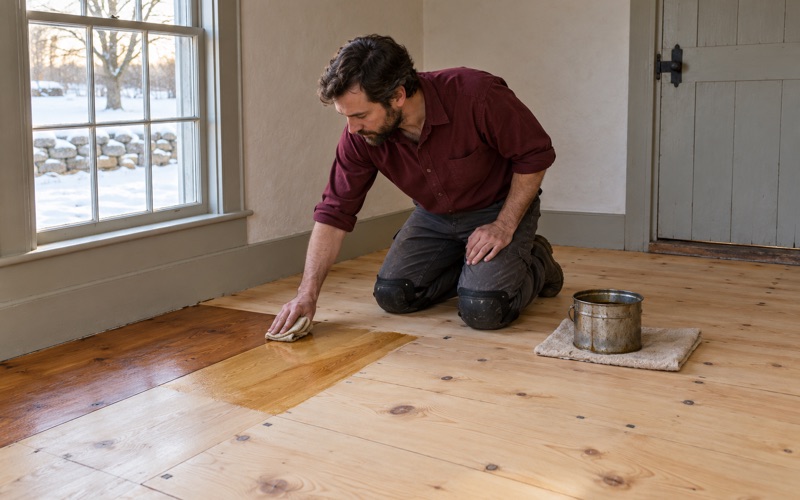
Pine and other softwood flooring dents under a drum sander far more easily than oak. On those rooms we lighten the passes, keep the grit sequence gentler, and accept that a century of character marks is part of the floor rather than something to grind out. Eastern white pine in particular will not take stain the way oak does, so we usually steer owners toward a clear coat or test the color first.
Foursquares From Later in the Period
Later in the boom, the survey notes, pyramidal-roofed foursquares became popular, most with side entries. Their floors are usually more consistent from room to room, but they share the wear patterns of every house this age: traffic lanes worn through the finish at doorways, gray water stains where a plant stood for years, and winter gaps that open between boards when the heat runs and close again in summer. Seasonal gapping on its own is normal movement, and we explain that before anyone pays to fill gaps that will reopen.
Radiator Holes and Old Repairs
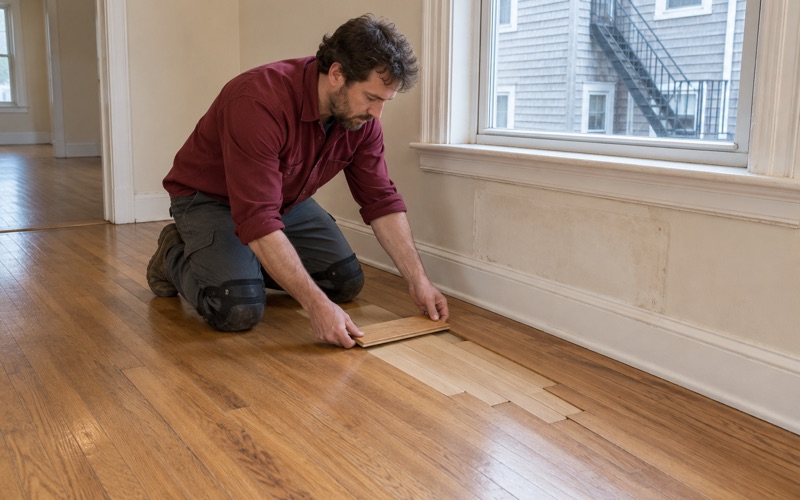
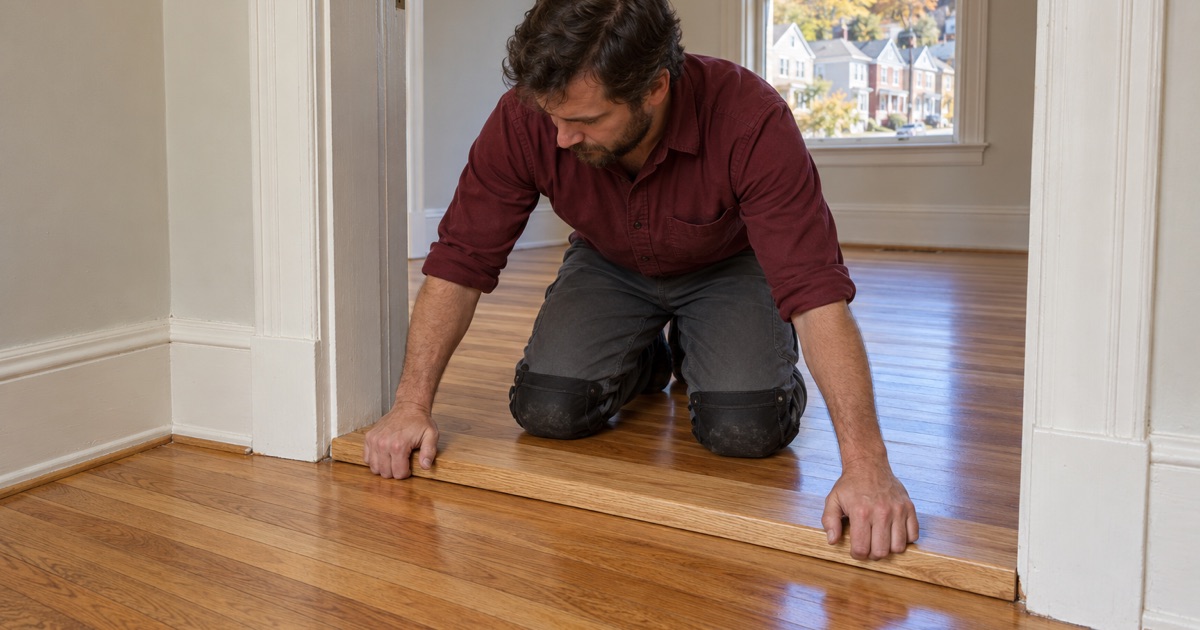
Houses from this era almost all had radiators, and many have since lost them. The holes left by the pipes are a common reason owners call us. We patch them with a weave-in repair, cutting out short lengths of the surrounding boards and lacing in matching wood so the patch follows the floor’s own pattern instead of sitting there as a square plug.
Looking for wood-flooring closer to Lowell? See Wood-Flooring in Lowell.
Bradford’s Older Houses South of the River
Bradford was its own town until January 1, 1897, when its western part was annexed to Haverhill. That history matters on a floor job, because the survey finds most of its inventoried examples of the gable-front, T-plan and foursquare houses in Bradford, along with a Dutch Colonial dated to 1913 and a large bungalow from 1914. If you live on the south side of the Merrimack, your house may well belong to that group.
Reading a House Before Sanding It
Across the whole city, the Census Bureau’s 2024 five-year estimates count 10,558 of 27,892 housing units as built in 1939 or earlier, or 37.9 percent. Floors that old have usually been sanded before, sometimes more than once, so the first thing we check is how much wood is left above the tongue. Where the top layer is thin, a screen and recoat may serve the floor better than another full sanding, and we will say so.
Old floors also carry layers. We regularly find wax residue, shellac finish, carpet glue, tack strip and carpet pad from earlier decades, and each needs its own removal method before any new finish will bond. Cut nails driven through the face of the board are common in the oldest rooms, and they have to be set below the surface before a sander crosses them.
Movement, Bounce and Pests
Cupping, crowning and outright buckling in an old house usually point to moisture rather than to the boards themselves, so we trace the source before we touch the surface. A floor that sags or bounces underfoot is read for what it is; if the cause is in the joists or the subfloor, we refer the structural work out rather than sanding over a problem. We also look for the small exit holes of powderpost beetle or old house borer in older softwood, because a floor with active insects needs a different plan.
Living in a Former Shoe or Leather Building
Not every older home in Haverhill was built as housing. Most of the large brick buildings downtown, the survey notes, are shoe factories dating from after the large fire of 1882, and some of the city’s industrial buildings have since been turned into residences. In the L. H. Hamel Leather Company Historic District, the Tilton, Essex Associates and Pentucket Associates buildings were converted to residences after the company began closing its operations in 1973.
Floor Work Inside a Converted Building
We do not assume what is under a converted unit’s finished floor. One renovation may have kept older wood, another may have laid new flooring over a fresh subfloor, and the only way to know is to look. We inspect the existing floor, check moisture, and confirm what kind of material we are working with before we quote anything.
The district’s history spans several building types: the oldest structure is a brick warehouse whose central portion dates to about 1886, and three concrete buildings on Essex Street went up between 1911 and 1916. Where a new wood or engineered floor will go over concrete, we test moisture first and choose a vapor retarder and installation method to suit, since solid hardwood nailed with flooring cleats needs a wood subfloor to hold them.
Condominium Documents and Noise Between Floors
In a multi-unit building, the floor you choose affects the household below you. Impact noise from footsteps travels through a hard floor far more than through carpet, and an association organized under M.G.L. c.183A may spell out flooring and underlayment requirements in its own documents. We read those documents with you and match the acoustic underlayment and flooring to what they ask for, instead of guessing at a rating.
Working Around Neighbors
Shared hallways, stairwells and quiet hours shape a schedule in a converted building. We use dustless sanding with a HEPA vacuum attached, plan finish coats so odor and drying time fall at reasonable hours, and protect common areas on the way in and out. Waterborne polyurethane is often the practical choice in a shared building because it dries faster and carries less odor than an oil-modified finish.
Planning a Floor Project in a Haverhill Home
About 37.2 percent of Haverhill households rent, and homes in two- to four-unit buildings account for 25.3 percent of the city’s housing units. That mix means a floor job here often involves an owner living above or below a tenant, or a landlord between tenancies.
Owners, Landlords and Two-Family Houses
In a two- or three-family house we work one floor at a time, so whoever lives on the other floor stays in the building while we finish. For rental units, we build the schedule around the move-out and move-in dates. The city’s Board of Health inspects each vacated rental unit and issues a certificate of fitness before it is occupied again. When a tenant has left damage, such as pet urine stains or deep gouges, we provide an itemized written estimate of the kind Massachusetts requires under M.G.L. c.186 s.15B before a tenant can be charged for it.
Old Tile and Finish Choices
If we pull up carpet or linoleum and find old resilient tile or black mastic underneath, we identify it rather than sanding it, and the job pauses until the right trade has dealt with it. For finishes, we choose products that meet coating VOC limits on both sides of the state line, which match each other for varnish, sealer and lacquer, whether that is a waterborne polyurethane, an oil-modified polyurethane or a hardwax oil.
Color, Stairs and Water Damage
We lay stain samples on your own boards and let you look at them in your own light, because older wood, and pine especially, takes color differently from a showroom sample. Many older oak floors have turned orange under decades of oil-based finish, and owners often want them lighter. Sanding removes the old ambered finish, and the new finish and sheen level then decide how much warmth returns.
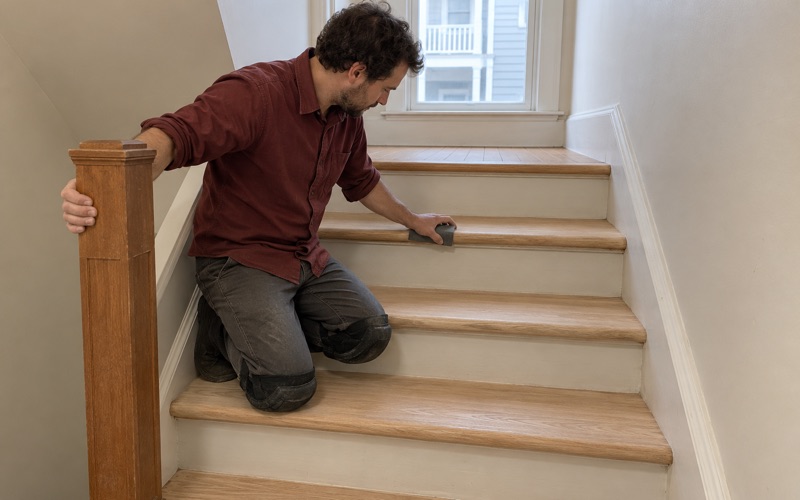
Staircases are quoted tread by tread, including the stair nosing and risers, since a stair is not priced by the square foot. When water is the problem, whether from the unit upstairs or a burst pipe, we trace it, dry the area, confirm readings with a moisture meter before replacing any boards, and document the damaged floors room by room for your insurance adjuster.
If you own or manage one of the shoe-era houses, a Bradford home or a unit in a converted building, we can walk the floors with you and lay out what each room needs before any work begins.
- 20+ Years on Wood Floors
- Itemized Written Estimates
- Old Pine and Oak Work