Lawrence Wood Flooring brings more than 20 years of wood-flooring in Ipswich and across the region to houses where the floor is often older than anything else in the room. We refinish, repair and patch existing boards, and we start every job by finding out what the house already has and what its paperwork says before a sander comes off the truck.
That second step matters more here than in most towns. Some Ipswich homeowners have signed a binding agreement that names features of the house they will not alter, and a floor crew that does not ask about it can create a problem the owner then has to answer for. We ask first, read what the owner can show us, and plan the work around it.
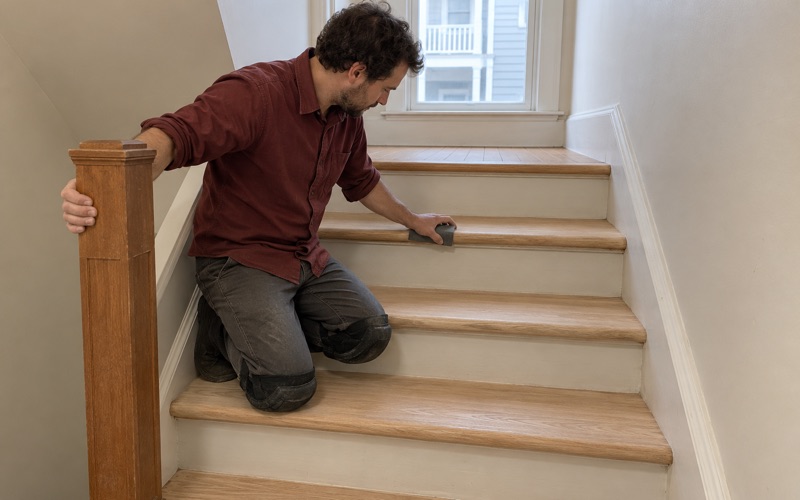
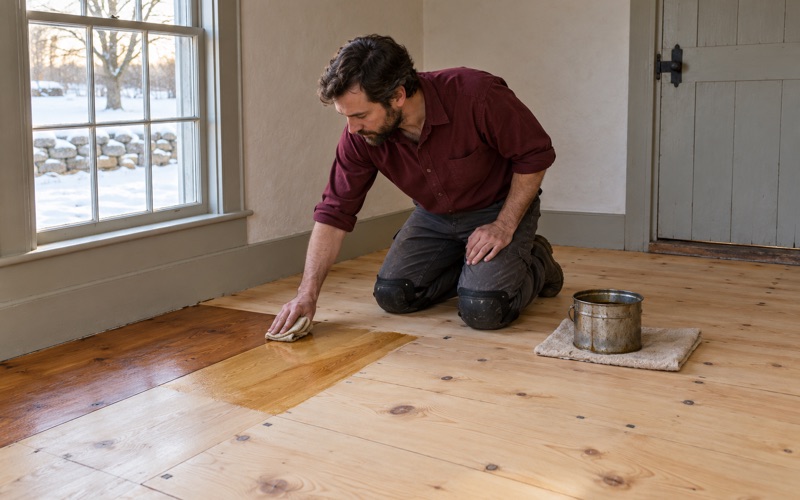
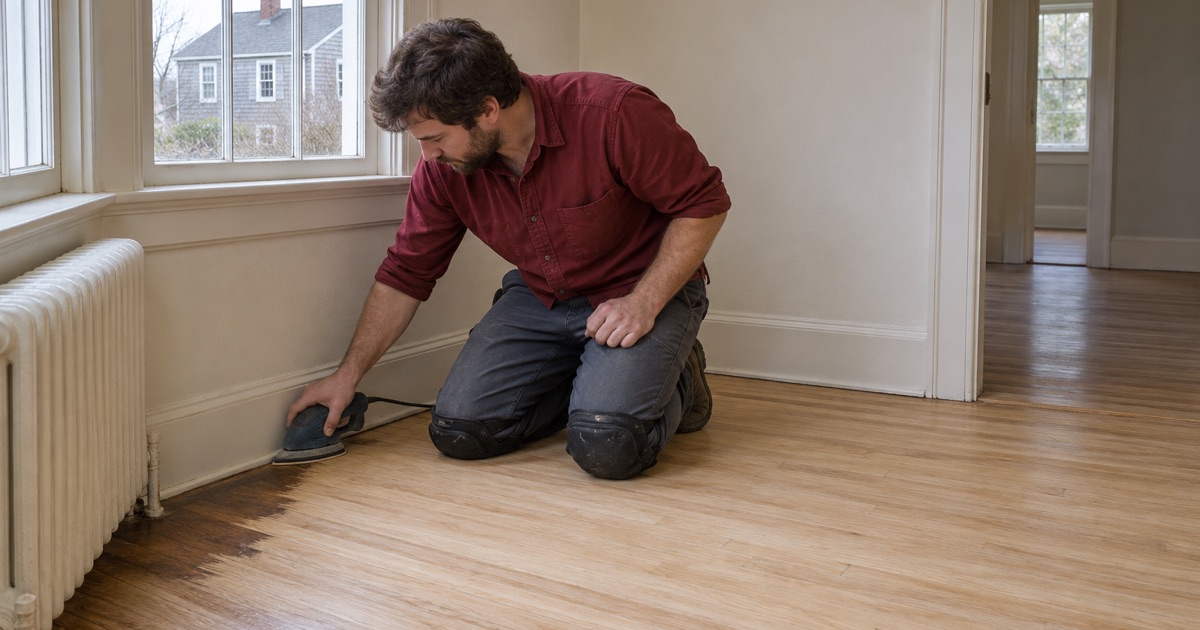
The rest of the job is familiar ground for us: softwood boards sanded with a lighter hand than oak, radiator holes woven in with matching boards, the build year and painted trim checked before any dust is raised, and stain samples laid on your own floor so you choose a color in your own light. Stairs are priced tread by tread, and every estimate comes to you itemized and in writing.
Old Floors Under an Ipswich Preservation Agreement
Ipswich took an unusual route to protecting its oldest houses. Since 1969 the Ipswich Historical Commission has run a voluntary program of binding Preservation Agreements with homeowners, meant to preserve each structure’s architecturally significant features. The commission’s 1975 report, Something To Preserve, describes the town turning to these agreements after it rejected efforts to set up a legal historic district.
So the protection here lives in a contract rather than a district map. More than 40 properties are listed under the program, and some of the agreements are administered by Historic New England, the Trustees of Reservations or the Trust for Public Land rather than by the commission itself. Each agreement is recorded at the Registry of Deeds and binds the town, the current owners and future owners until the year 2100.
Reading the Covenant Before Any Floor Work
Under an agreement, the homeowner agrees not to permit alterations to the designated interior or exterior features named in the covenant. The key word is designated. Which features a given covenant names is specific to that house, so we never assume an agreement does or does not reach the floors.
If you own a house under one of these agreements, or are buying one, we ask to see the recorded document before we quote. If interior features are designated, we read whether any flooring, stair or trim is among them, and where the language is unclear we pause and suggest you put the question to whoever administers your agreement before any board is sanded, replaced or patched.
How the Covenant Shapes the Plan
A covenant that leaves the floors alone still changes how we work around what it does protect. A designated staircase, paneled wall or fireplace surround next to the floor means tighter masking, edge work done by hand near protected trim, and a dustless sanding setup with a HEPA vacuum so fine dust does not settle into old surfaces.
Where a floor itself turns out to be designated, our default shifts from replacement toward conservation. That usually means cleaning and a light screen and recoat instead of a full sand, spot repairs instead of new runs of board, and a written record of what we touched so the owner has it on file.
Looking for wood-flooring closer to Beverly? See Wood-Flooring Services in Beverly.
Repairing Boards in Ipswich’s First Period Houses
Local preservationists credit Ipswich with 59 surviving First Period houses, more than any other town by their reckoning, and the source itself adds that the number depends on who is counting. The First Period of colonial American architecture runs from approximately 1626 through 1725. Named examples include the Shatswell Planters Cottage from around 1646 and the John Whipple House from around 1677.
Repair Before Replacement
In a house that old, we start from the assumption that every board we can keep is worth keeping. Whatever species a floor turns out to be, and in houses of this age the boards may have been replaced more than once, we identify it on site rather than guessing from the age of the frame. A loose board gets refastened, a split gets stabilized, and only a board that has truly failed is cut out.
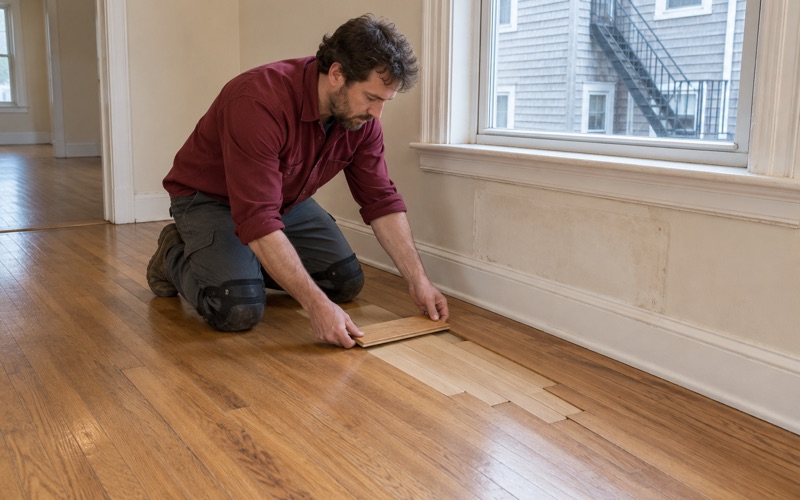
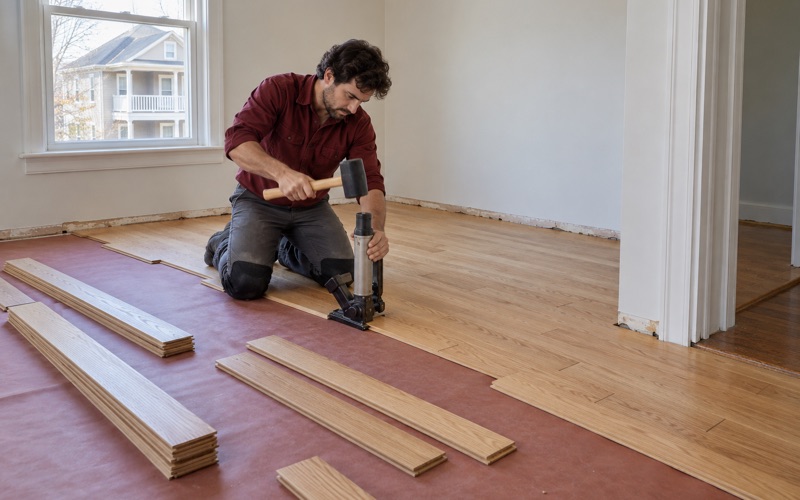
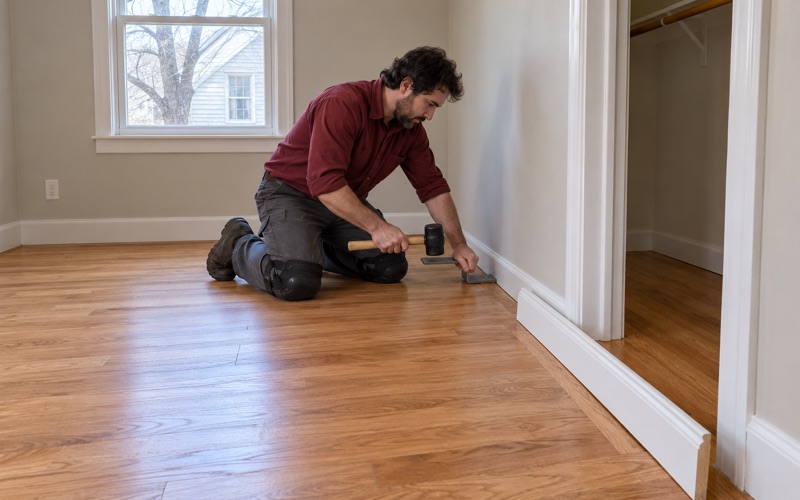
When a board does have to go, we look for replacement stock that matches its width, thickness, grain and color as closely as we can find, and we weave it into the surrounding run rather than dropping in a square patch. Old fasteners such as cut nails are noted and, where they are sound, worked around instead of pulled.
Softwood, Insects and Uneven Floors
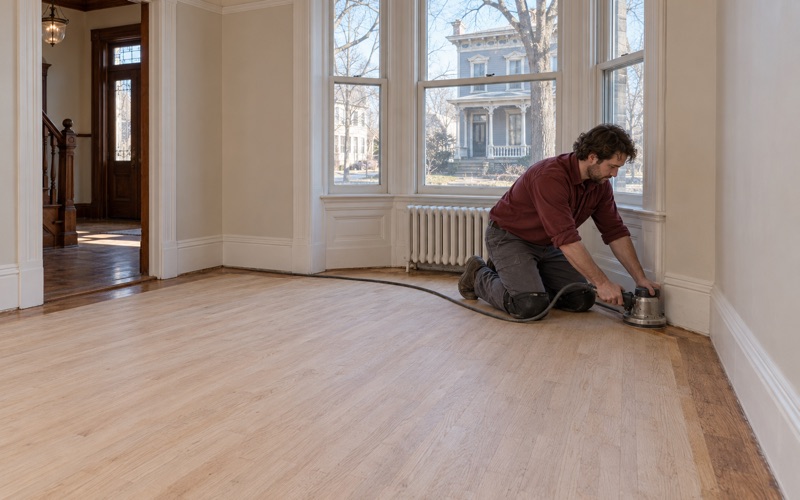
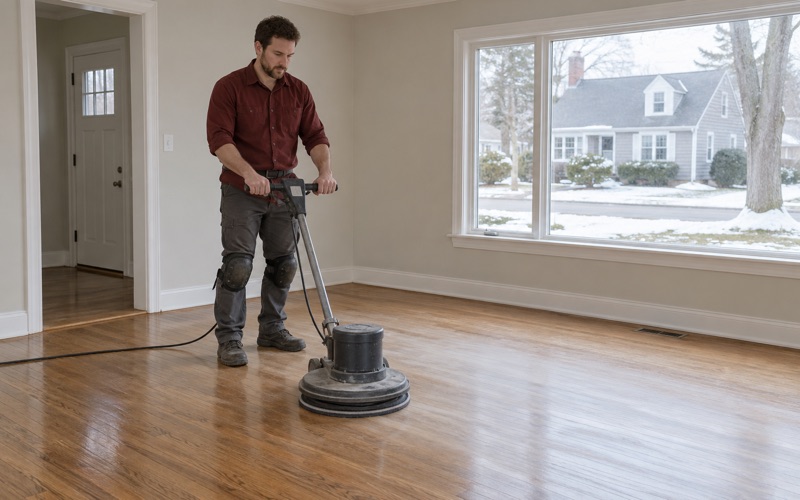
Wide softwood boards such as eastern white pine dent and sand away far faster than red oak strip flooring. We use a gentler grit sequence, keep the drum sander moving, and finish many old pine floors with an orbital sander so we take off finish and grime, not the character of the wood.
We also look for small exit holes and powdery frass that can point to powderpost beetle or old house borer activity, and we say so before sanding rather than finishing over it. A sloping floor or a bouncy floor in a centuries-old frame gets read for what it is, and anything structural at the joist level goes to the right trade rather than being sanded flat.
Refinishing Floors Across Ipswich’s Older Housing
First Period houses are the rare end of a much wider old stock. Of the 6,224 housing units in Ipswich, 1,761 were built in 1939 or earlier, or 28.3 percent, according to the Census Bureau’s 2024 five-year American Community Survey. Most of those homes are not under any agreement, but their floors raise many of the same questions.
On floors that have been in service this long, the usual wear shows up as traffic lanes through doorways, sun fade near sunny windows, water stains around old radiator spots and pet urine stains that have gone gray. Some sand out, some only lighten, and we tell you which is which before the job starts.
Lead and Old Coatings
Massachusetts runs its own lead-safe renovation rules for homes built before 1978, and 64.4 percent of Ipswich’s units were built before 1980. We confirm the build year and check painted baseboards, stair risers and thresholds before sanding, and we plan containment around what we find.
Old floors also carry old coatings. Wax residue and shellac finish gum up abrasives and have to come off with care, and where a kitchen or back room hides old resilient tile, we treat the tile and any black mastic under it as possible vinyl asbestos tile. We do not sand it; the work stops until the right trade has dealt with it.
Finishes and Color
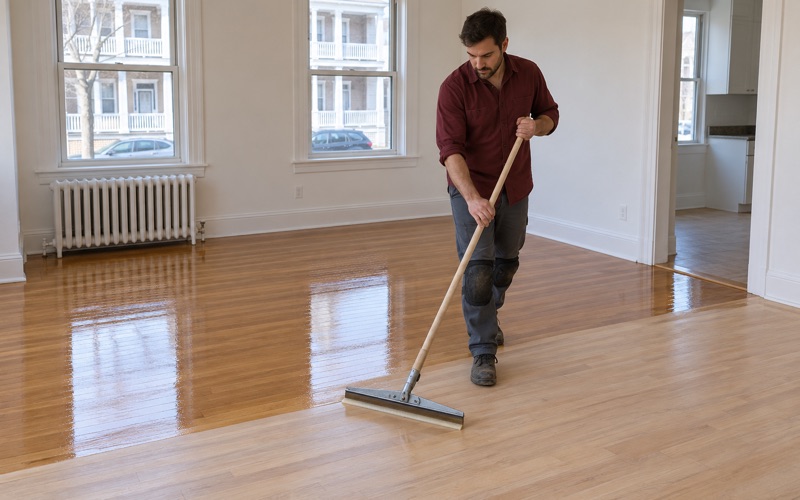
For the finish itself, we talk through waterborne polyurethane, oil-modified polyurethane and hardwax oil against how the room is used and how much sheen you want. Every product we choose fits the coating VOC limits that Massachusetts and New Hampshire hold to the same level for varnish, sealer and lacquer.
Color is chosen on the floor, not from a brochure. We lay stain samples on your own boards, often after water popping on a tighter-grained floor, and you look at them in your own daylight before anything goes down across the room.
Planning a Floor Project in Ipswich
Owners occupy 74.4 percent of Ipswich’s occupied homes, so in most homes the person deciding on the floor is the person who will live on it. Landlords and owners living in one unit of a multi-family house make up the rest, and the plan differs for each.
What We Need Before We Quote
Bring us the build year if you know it, any recorded Preservation Agreement on the house, and a note of what has been done to the floors before, such as carpet that came up, a past sanding, or a radiator that was removed. If there is carpet down now, we will want to lift a corner to see the tack strip, carpet pad and any carpet glue underneath.
Permit questions go to the Town of Ipswich building department, which governs the whole town and not just the village center. We point you there rather than answering on the town’s behalf, because the rules for a given job are theirs to state.
Estimates, Stairs and Scheduling
Every estimate is itemized and written, room by room, so you can see what is repair, what is refinishing and what is optional. Stairs are quoted separately by the tread, with risers and stair nosing listed on their own lines, because a staircase does not price by the square foot.
For landlords, that same written estimate is the kind of record Massachusetts requires before a tenant can be charged for floor damage. Rental floors can be scheduled into the gap between a move-out and a move-in, and in a two- or three-family house we work one floor at a time so the people on the other floors can stay put.
When Water Is the Reason You Called
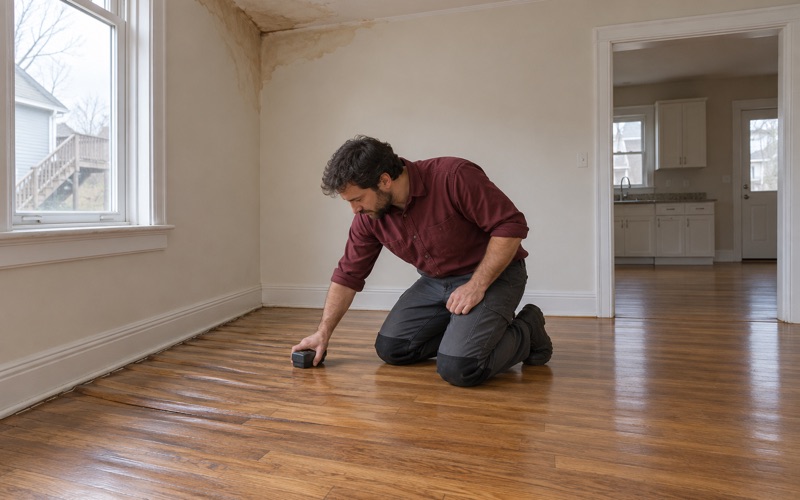
A burst pipe, a leak from the unit upstairs or a wet basement can leave cupping, crowning or buckling across old boards. We trace the source, dry the floor, and read it with a moisture meter before replacing anything, since an old board that looks lost will sometimes flatten as it dries.
If an insurance claim is involved, we document the damage room by room for the adjuster. In a house under a Preservation Agreement, that record also gives you something concrete to share with whoever administers the agreement before repairs begin.
Whether the house dates from the First Period or from the 1950s, the order of work stays the same. We read what the house and its paperwork say, keep what can be kept, and refinish the rest with the age of the wood in mind.
- 20+ Years on Wood Floors
- Itemized Written Estimates
- Old Pine and Oak Work