Lawrence Wood Flooring has spent 20+ years on wood-flooring in Londonderry and the towns around our base in Lawrence, and much of the work here comes from owners who have no plans to move. They want a floor that looks right again, holds up to another decade or two of daily use, and asks less of them to keep clean.
That might mean refinishing red oak strip flooring in a house bought decades ago, replacing worn carpet in a condominium with a floor that rolls cleanly under a walker or a chair, or sanding out the traffic lanes and sun fade in a townhouse living room. We quote it in writing, room by room, so you can see what each part costs before deciding what to do first.
Before a sander touches the floor we check the build year and look for painted surfaces, and we identify old resilient tile and black mastic instead of grinding through them. Stain samples go down on your own boards, in your own light, so the color you pick is the color you live with.
Londonderry’s Over-55 Housing and the Floors Inside It
Londonderry keeps a close count of its age-restricted housing. At a Planning Board meeting on June 12, 2019, the town planner reported 841 approved elderly housing units, about 10.9 percent of the town’s housing supply, and set that against a population that was 28.3 percent aged 55 or older. The same minutes record that the town had adopted AARP’s age-friendly program, which looks at how to make the community more age friendly.
The comparison matters because of how the ordinance works. Under it, the town would restrict new elderly units if their share of the housing supply exceeded the share of residents 55 and older, and in 2019 the units were still below that line. For us, the practical point is that a sizable share of the town’s homes was approved specifically for older residents, and those homes have floors with their own set of concerns.
From Nine Communities in 2014
The 2019 figure has an earlier reference point. The Londonderry Times reported in February 2014 that the town had nine 55-and-over communities, with 401 units built and 576 more proposed. Both counts are dated, and we do not quote a current one, but together they show that age-restricted housing has been a steady thread in Londonderry planning for years.
Planning has also come from the town itself. In November 2017 the Planning Board agenda listed a site plan for a 102-unit affordable apartment complex restricted to residents 62 and older at 30 Sanborn Road, with the Town of Londonderry named as owner. We have not seen how that application ended, so we mention it only as a sign of how seriously the town treats housing for older residents.
What That Means on the Floor
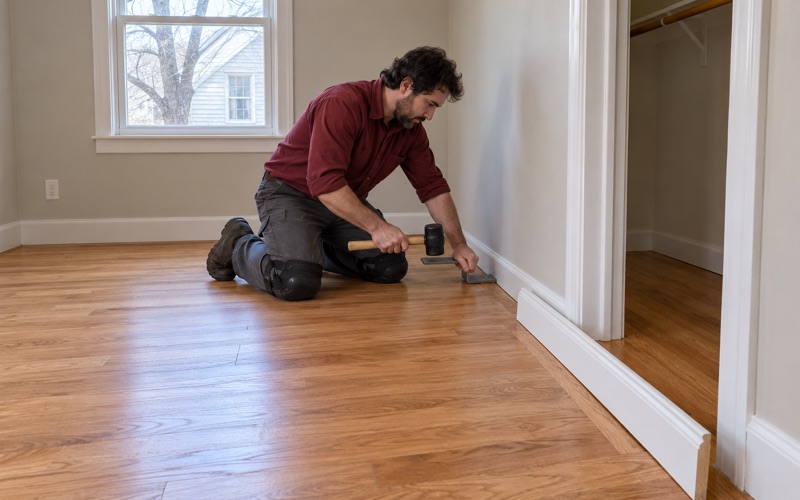
Over-55 condominiums and townhouses tend to share a few floor problems. Wall-to-wall carpet laid when the unit was new wears into paths, holds pet urine stains and catches the wheels of a rolling walker or office chair. Engineered or solid hardwood in a main living area picks up traffic lanes and sun fade, and transitions between rooms often carry a reducer or threshold that sits higher than an owner would like.
We plan these jobs around the people living there. The work can be split so one room stays usable while another is sanded or installed, and finish choices lean toward a lower sheen level that shows fewer scuffs and less glare. We make no health claims about any floor, but we do talk through height changes at doorways, slick finishes and loose boards before the quote is final.
Looking for wood-flooring closer to Peabody? See Wood-Flooring in Peabody.
Condo and Townhouse Floor Projects for Older Owners
Age-restricted communities in Londonderry include condominiums and attached townhouses, and census survey figures show how common shared-wall housing is in town: 1,185 one-unit attached houses, plus 418 owner households living in buildings of five to forty-nine units. Many of those homes sit inside an association with its own documents, and those documents often say something about flooring.
Reading the Association Documents First
Before we price a hard floor for an upper unit, we ask to see what the condominium documents say about underlayment, impact noise and approval. We read them alongside you and talk through acoustic underlayment and floor choices against what the building actually requires, rather than assuming. If the association wants a submission before work starts, our written estimate and product details give the board something concrete to review.
Carpet Out, Wood or Engineered In
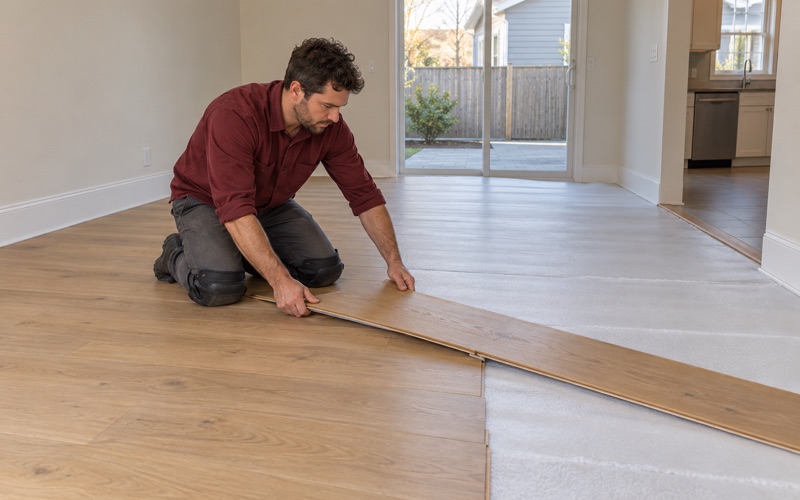
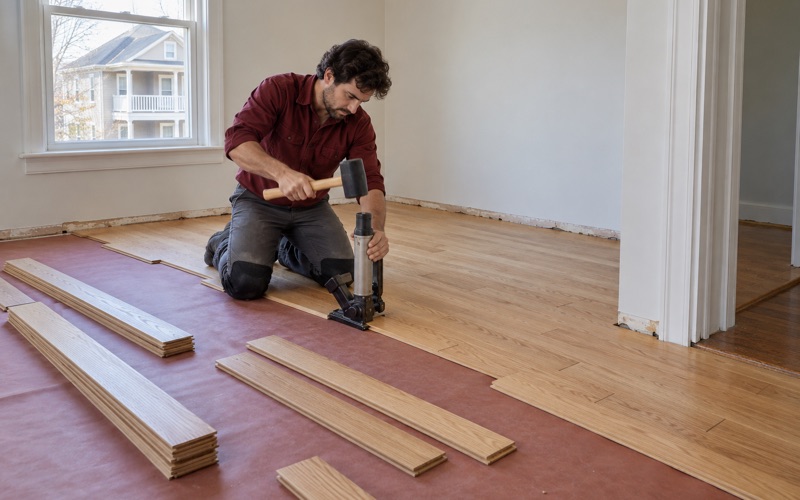
In age-restricted units, a replacement job often starts with carpet. Pulling it means removing the carpet pad and tack strip, then checking the subfloor for flatness and any old carpet glue before choosing between site-finished solid hardwood and a prefinished engineered floor. An engineered wear layer thick enough to sand later is worth weighing for an owner who expects to stay put.
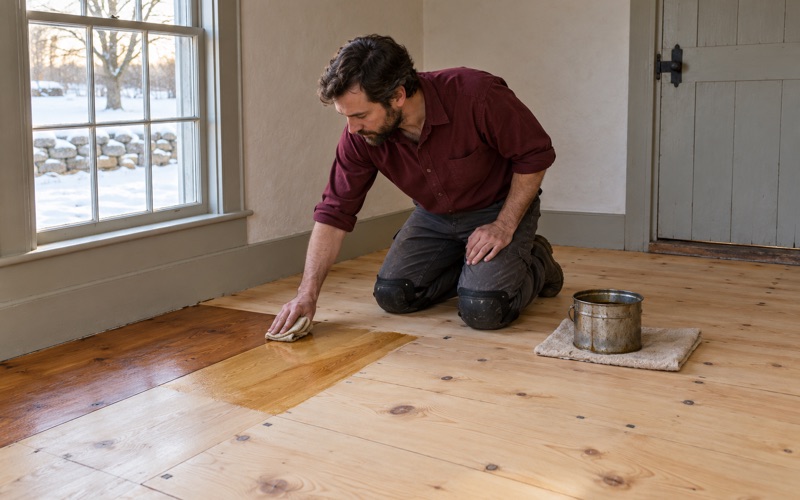
The finish matters as much as the boards. Waterborne polyurethane dries clear and gets a room back in use faster, while oil-modified polyurethane and hardwax oil each bring their own look and upkeep, and we lay stain samples on the actual floor so the decision is made in the unit’s own light. Because Londonderry sits across the state line from our base, we pick coatings that fit the VOC limits for varnish, sealer and lacquer on both sides, which match each other.
Stairs in Townhouses
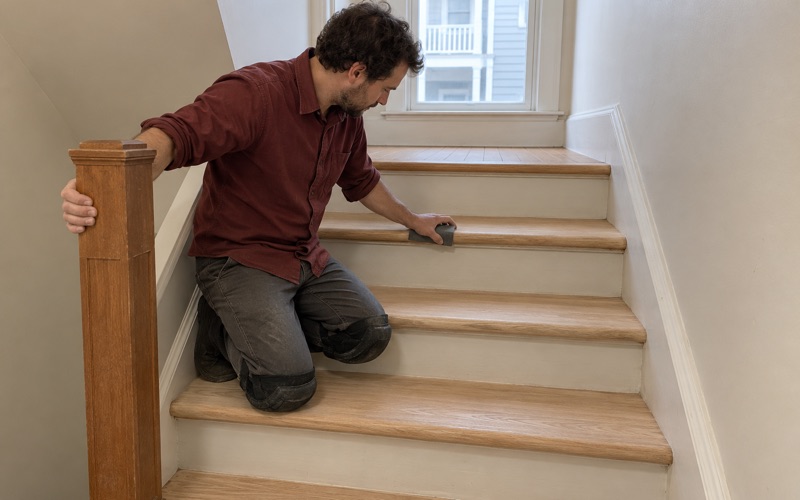
Many townhouses put a staircase between the living space and the bedrooms, and worn stair treads and stair nosing get used every day. We quote stairs tread by tread rather than by the square foot, whether the job is a refinish, a retread over the old stairs or new treads and risers.
Floors for Owners Planning to Stay
Outside the age-restricted communities, Londonderry is overwhelmingly a town of owners. Census survey figures put 85.6 percent of its occupied homes in owner hands, and 37.6 percent of its housing was built before 1980, with the 1970s the single largest decade. An owner who bought one of those houses years ago and means to stay faces a different decision than a buyer flipping it: refinish the original floors, or replace them for the years ahead.
Refinishing Original Oak
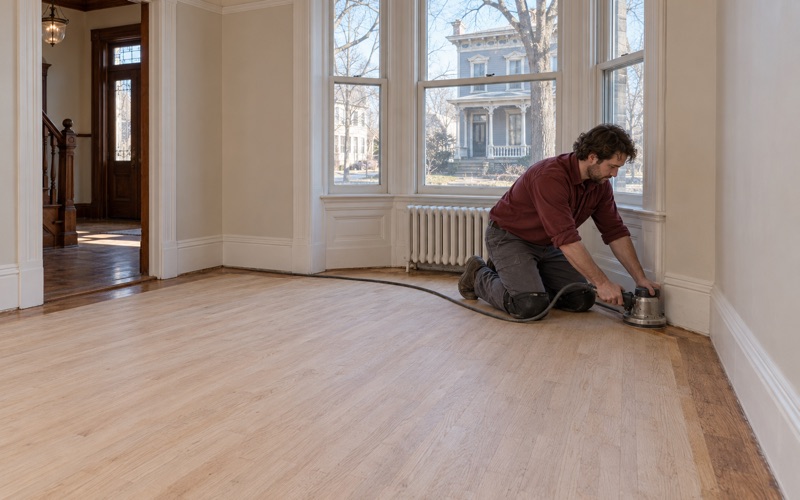
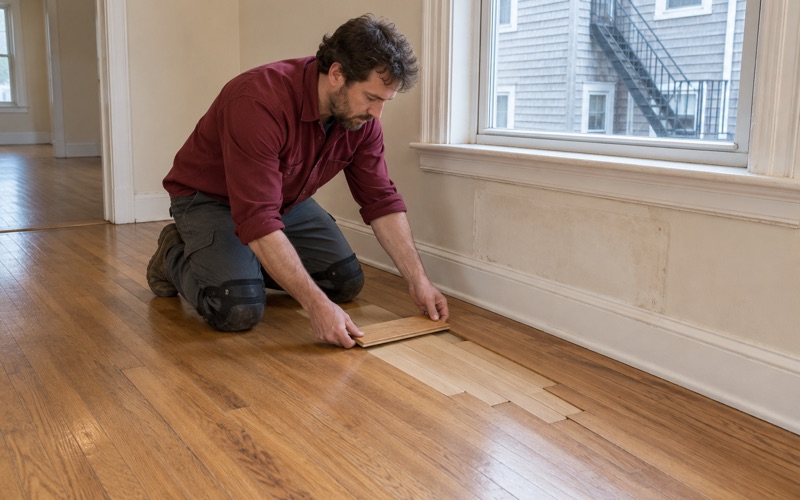
Houses from the 1970s and 1980s commonly have red oak strip flooring, sometimes hidden under carpet for decades. Under that carpet we often find board gapping, tack strip holes, water stains near doors and staple holes along the edges, and we sort out which can be sanded out and which call for a board replacement or weave-in repair. Where an earlier coat has turned to orange oak, a full sand with a proper grit sequence takes it back to bare wood.
Seasonal movement is part of living with wood here. Winter gaps that open between boards when the heat runs and close again in summer are normal, while cupping, crowning or buckling point to a moisture problem we track down first.
The 1978 Line and Old Tile
A house built before 1978 may carry lead paint on baseboards, thresholds or a painted floor border, so we confirm the build year and check painted surfaces before any sanding begins. That date line comes from the federal EPA RRP Rule, and it reaches a real share of Londonderry’s housing.
Kitchens and entries from those decades sometimes hold vinyl asbestos tile with black mastic underneath. We identify it rather than sand it, and if it needs to come up, the work stops until the right trade has handled it.
Floors That Bounce or Slope
A bouncy floor or a sloping floor in a long-owned house is worth reading before it is covered. We look at the subfloor and, where we can see them, the joists, and if the cause is structural we refer it out instead of sanding over it. Leveling transitions and removing an unneeded threshold can make a floor easier to live with, and that is a conversation we have at the estimate.
Planning a Floor Project in Londonderry, New Hampshire
Most jobs start with a visit to walk the rooms, look at the floor in daylight and talk through how you use the space. From there we write an itemized estimate that separates sanding, repairs, stairs, finish coats and any replacement, so you can do the work in stages if that suits your budget or schedule.
Living at Home During the Work
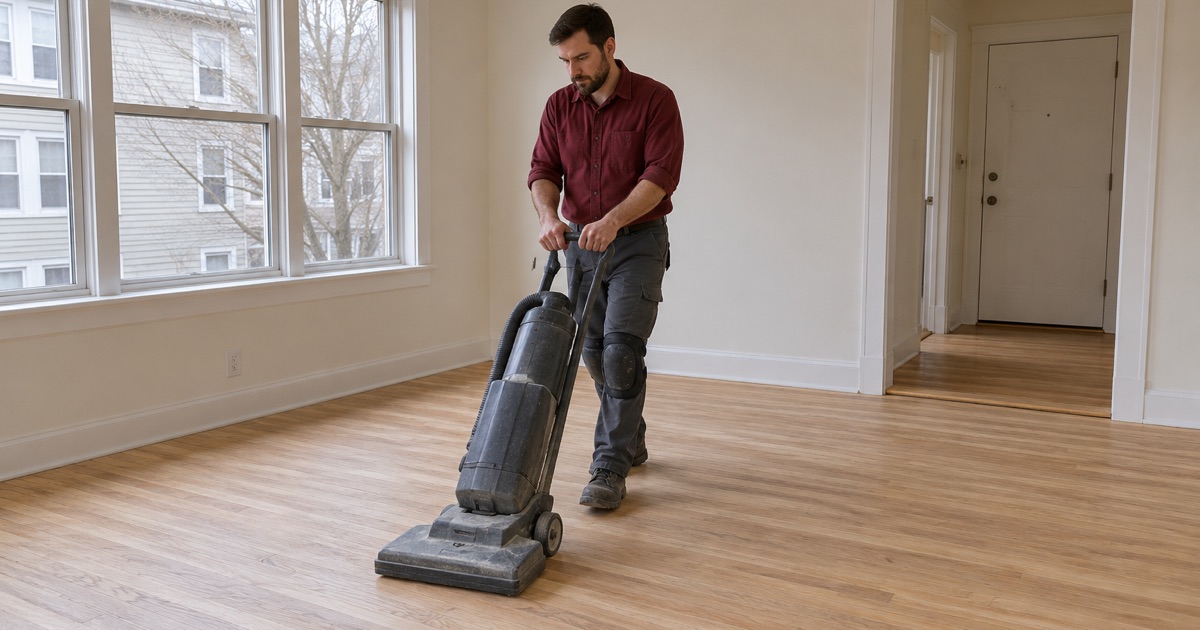
Owners who stay in the house during a refinish want to know where they can sit, sleep and eat. We sequence rooms so a path through the house stays open, use dustless sanding with a HEPA vacuum to keep dust down, and tell you plainly how long each coat needs before furniture goes back. For a screen and recoat on a floor that is only dull, the disruption is shorter still.
Water Damage and the Adjuster
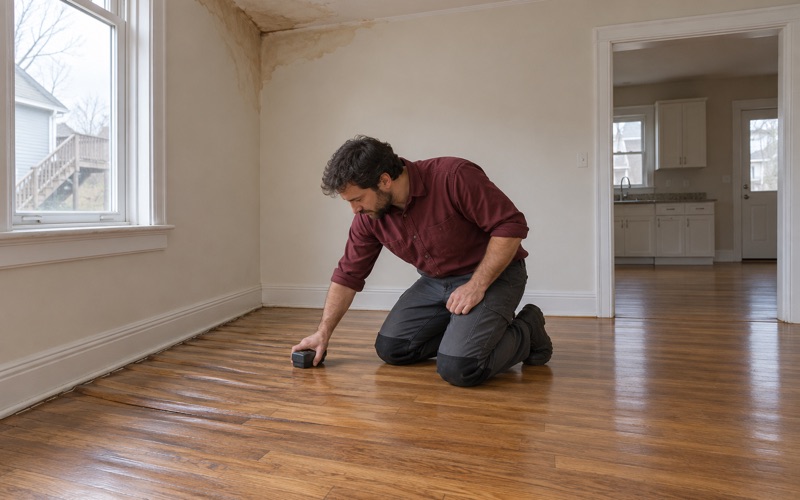
A leak from an upstairs unit, a burst pipe or a failed appliance line can soak a floor fast. We trace where the water came from, dry the area and confirm readings with a moisture meter before any board is replaced, and we document the damage room by room for your insurance adjuster.
Who Oversees Building Work in Town
Building and zoning questions in Londonderry go to the Town of Londonderry Building and Zoning Enforcement Division at 268B Mammoth Road. We do not speak for that office, so if your project goes beyond refinishing or replacing a floor, check with it or your association before work is scheduled.
Londonderry is known for its apple orchards, but our work here happens indoors, on the floors owners plan to keep living on. Whether yours needs a light recoat, a full sand or new boards, we will tell you what we see and what we would do first.
- 20+ Years on Wood Floors
- Itemized Written Estimates
- Old Pine and Oak Work