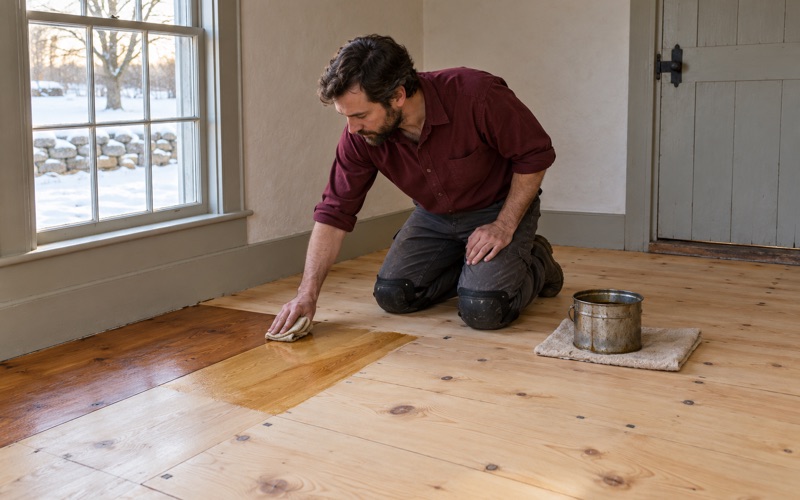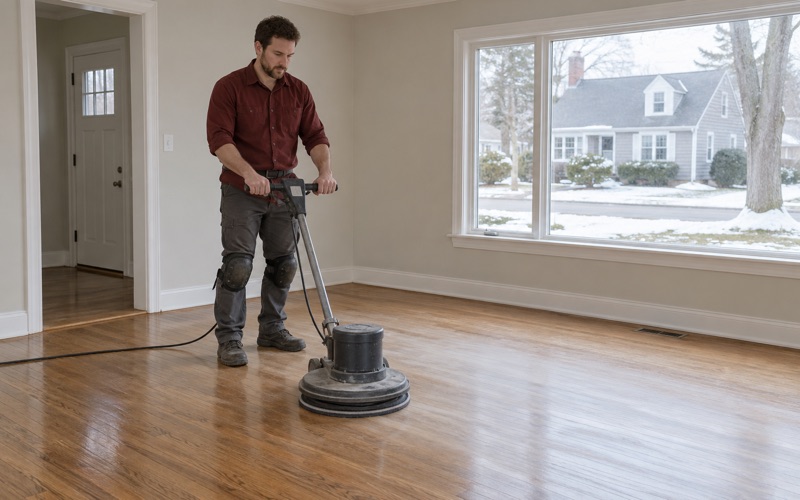
Lawrence Wood Flooring has spent more than 20 years on wood-flooring in Lowell and across the Merrimack Valley, and most of the floors we see in this city sit inside buildings with more than one front door. A stacked apartment changes the job: someone is usually living one ceiling away, a lease usually ends on a fixed day, and the person paying for the floor is often not the person who walks on it.
So we plan around the building instead of the room. We sand and coat one level while the household above or below carries on, we fit rental work into the gap between a move-out and a move-in, and we put every line of the estimate in writing so a landlord knows exactly what was done and why.
The floors themselves are usually old. Expect red oak strip in some units, softwood in others, layers of carpet glue or linoleum glue in a few, and radiator patches nearly everywhere. Below is how that work goes in a Lowell multi-family house.
Floors in Lowell’s Two-Deckers and Three-Deckers
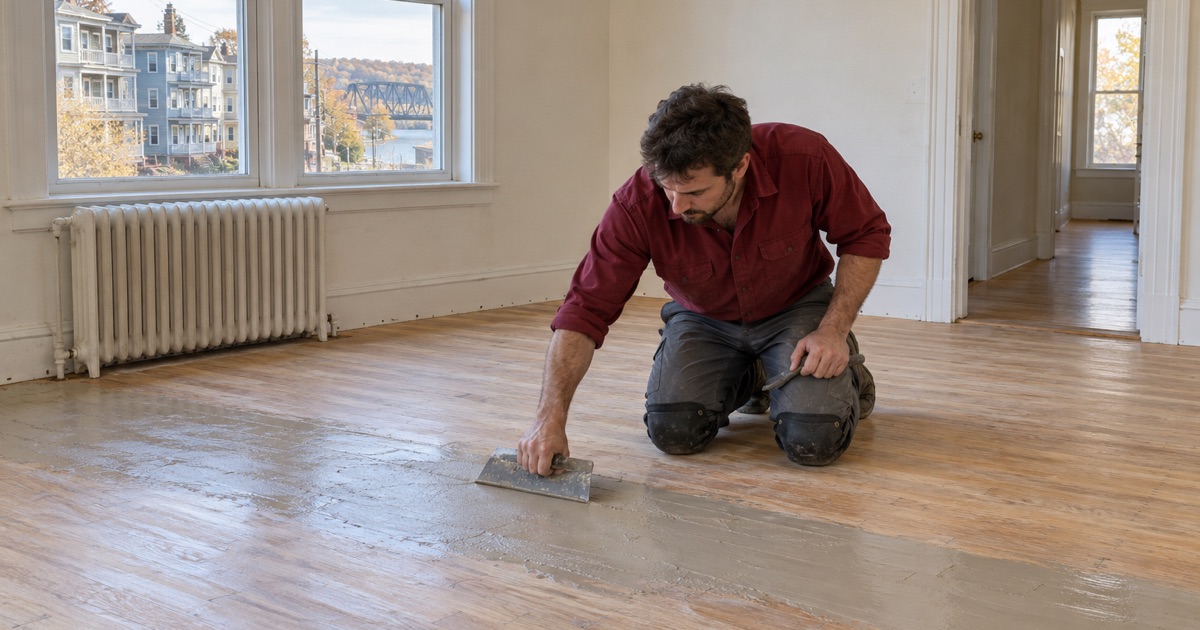
Lowell is a renter-majority city. Census figures for 2024 count 24,514 of 43,183 occupied homes as rented, which is 56.8 percent, and 8,372 of those renter households live in buildings with two to four units. Two-unit buildings make up 16.2 percent of the city’s housing, and three- or four-unit buildings another 10.4 percent. That is the stock we spend our time in.
What is under the carpet
In a stacked house built for working families, the flooring often varies floor by floor. One unit may have red oak strip flooring that only needs a sanding; the next may have eastern white pine or southern yellow pine that was painted, carpeted or covered in linoleum decades ago. We pull a corner, read the species, check the tongue and groove, and look at the nails before we quote, because cut nails and a softwood surface call for a different plan than a modern oak floor fastened with flooring cleats.
Carpet removal is often where a Lowell job starts. Under the carpet pad we pull tack strip and staples, scrape off what the old adhesive left behind, and only then see whether the boards are sound, stained or patched with plywood from an earlier repair.
Softwood is sanded differently
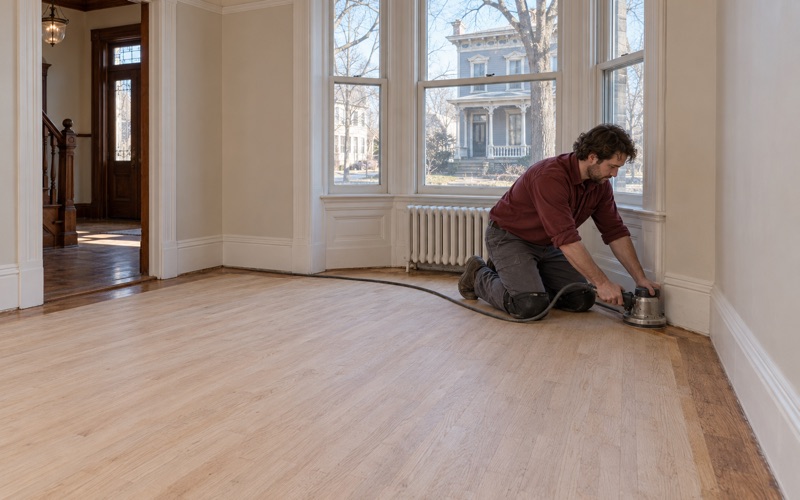
Pine dents and sands away quickly. We run a gentler grit sequence on softwood flooring, keep the drum sander moving, and finish more by hand around the old nail lines, so a floor that has already lost thickness keeps as much of its wear surface as possible. Where heavy traffic lanes have worn through to bare wood, we tell you plainly whether the boards will take another full sanding or whether a screen and recoat is the better call.
Radiator holes and patched boards
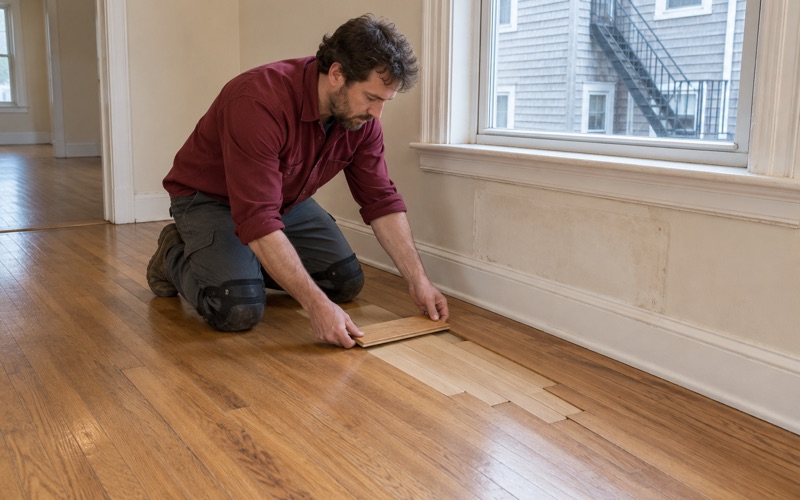
When steam radiators and their supply pipes come out, they leave rectangles and round holes behind. We patch those with matching boards woven into the existing rows rather than dropping in a square plug, so the repair follows the grain of the room instead of announcing itself.
Looking for wood-flooring closer to Boxford? See Wood-Flooring Services in Boxford.
Pawtucketville and Centralville: Wood-Frame Apartment Streets
The Massachusetts Historical Commission’s 1980 survey of Lowell describes the outlying centers across the Merrimack, at Pawtucketville and Centralville, as having well-preserved three-decker streetscapes by the early 20th century. The same report records 3- and 4-story wood-frame apartment houses built during the 1890s and early 20th century along the streets leading to the bridges into both neighborhoods, as well as downtown and along Gorham Street south of it.
Lowell’s eight neighborhoods are usually listed as the Acre, Back Central, Belvidere, Centralville, Downtown, Highlands, Pawtucketville and South Lowell. The stacked wood-frame buildings stand across several of them, apart from the larger Victorian houses the survey places in Belvidere and the Highlands.
Housing built in layers
According to that survey, after about 1885 to 1890 Lowell’s working-class housing widened to include cottages, modest side-hall houses and some two- and three-deckers, and two-deckers with bungalow details kept going up after 1915. Census figures show 19,693 of the city’s 44,850 housing units were built in 1939 or earlier. In practice that means we often find original boards, later repairs and a newer layer laid on top, sometimes all in the same apartment.
Older floors in these buildings sometimes still carry a shellac finish or decades of wax residue, both of which clog sandpaper and reject a modern polyurethane if they are not fully removed. We test the existing finish before choosing how to strip it.
Lead paint and old tile come first
Buildings this old predate 1978 by decades, so we check the build year and look for painted surfaces before any sander touches the floor. Massachusetts runs its own lead-safe renovation rules, and painted baseboards, thresholds and floor paint are exactly what we look for. We work with a HEPA vacuum and dustless sanding as standard. If we find old resilient tile, or the black mastic that held vinyl asbestos tile down, we stop and identify it rather than grinding through it, and the work waits until the right trade has dealt with it.
Floors that bounce or slope
A century of settling shows up as a bouncy floor or a sloping floor. We read the subfloor and the joist direction to tell whether a board problem is really a framing problem. If it is structural, we refer it out rather than sanding a level finish onto a floor that is still moving.
Turnovers, Students and Lowell Rentals
UMass Lowell is a large part of the rental picture here. Boston 25 News reported in November 2018 that about two-thirds of roughly 19,000 UMass Lowell students lived off campus, and that same month the Pawtucketville Citizens Council pressed the city to enforce its zoning definition of a housekeeping unit, which allows no more than three unrelated renters. The city council postponed any vote, and we have not seen how the question was settled. One landlord told the station that owners had spent heavily restoring homes that meet fire safety codes, and floors are a visible part of any restoration.
Working inside the lease calendar
Rental floors have a hard deadline. We schedule sanding, any stain and every coat of finish around the move-out and move-in dates you give us, and we tell you at the estimate stage how long the finish needs before furniture goes back in. When a unit turns over mid-semester, the same planning applies; the date drives the finish we recommend.
Estimates a landlord can use
Massachusetts expects an itemized list of damage, backed by written evidence such as estimates, before a landlord deducts floor repairs from a security deposit under M.G.L. c.186 s.15B. Our estimates are broken out line by line: board replacement, pet urine stains, water stains, gouges, and refinishing. That gives an owner a record that matches the condition of the room, not a single lump figure.
Recoat or full sanding
Not every turnover needs bare wood. If the finish is dull but intact, a screen and recoat can freshen a unit in far less time than a full sanding. Pet urine stains, deep water stains and gray boards are different: those need sanding, and some need board replacement, because a coat of finish over them only seals the damage in.
Choosing a finish for a rental
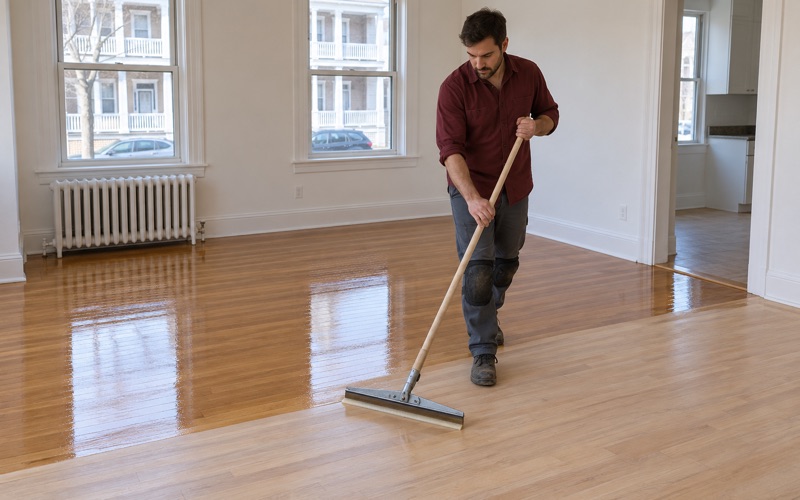
For busy units we usually talk through waterborne polyurethane and oil-modified polyurethane side by side, along with sheen level, since a lower sheen hides everyday scuffs better. Both are chosen within the coating VOC limits that apply in Massachusetts and New Hampshire alike.
Planning Floor Work in a Lowell Multi-Family House
Whether you own a two-decker you live in or a three-decker you rent out entirely, the order of operations matters more here than in a single-family home. A little planning keeps every household in the building comfortable.
One floor at a time
We work a single level while the other units stay occupied. Dust control, a clear path through the common hall and a predictable daily schedule mean the upstairs tenant can still get to work, and the downstairs owner can still cook dinner. If you are moving into one floor of a house you just bought, we can finish your unit first and leave the rented units for their own turnovers.
Water from upstairs
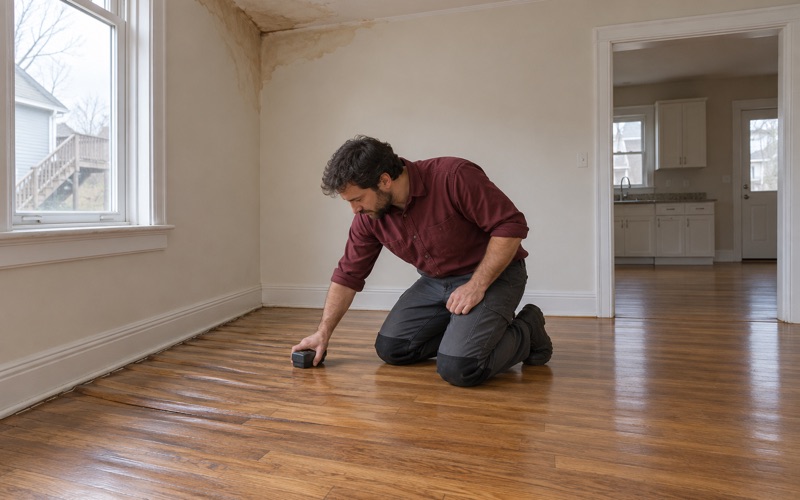
In a stacked building, a leak from the unit above, a burst pipe or a wet lower level often reaches a floor before anyone sees it. We trace the source, dry the area and take moisture meter readings before replacing any board, because cupping, crowning and buckling will come back if the wood is not dry. When insurance is involved, we document the damage room by room for the adjuster.
Sound between units and condo rules
When an upper unit is converted to a condominium, or an owner wants to replace carpet with wood, impact noise becomes a neighbor’s concern. We go over acoustic underlayment and flooring options against what the building’s own condominium documents allow before anything is ordered.
Winter gaps and summer swelling
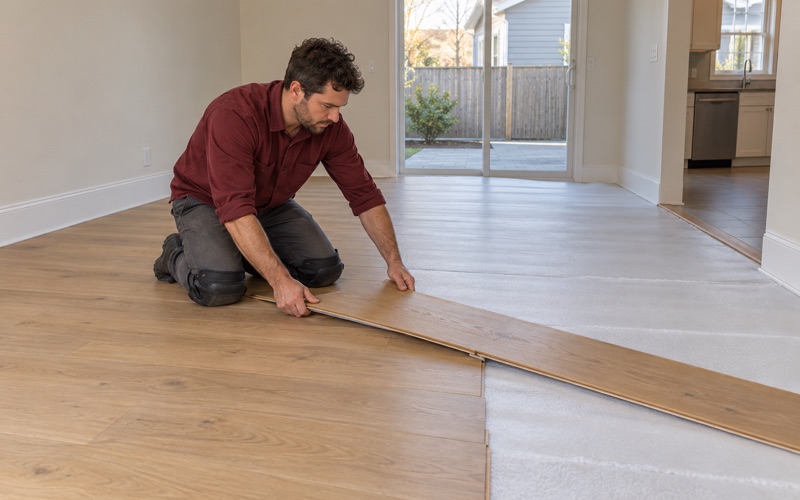
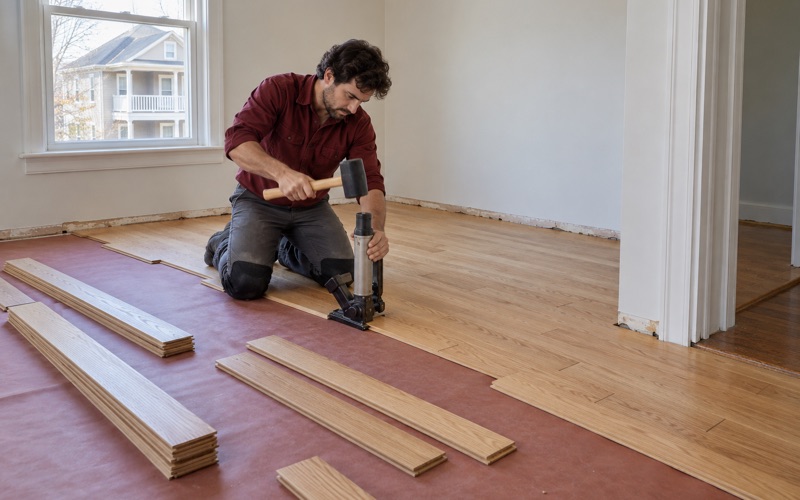
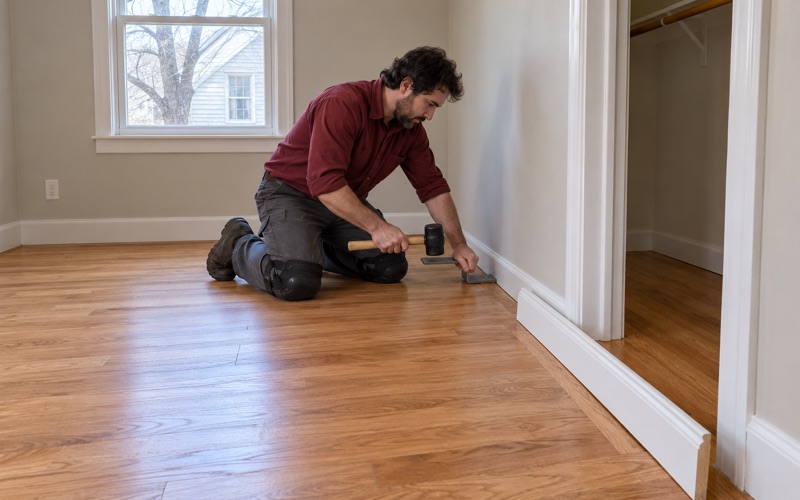
Heating season dries old boards, so winter gaps between strips are normal in a Lowell apartment and usually close again as humidity returns. We let new boards acclimate in the unit before installation, and we leave the expansion gap at the walls that solid hardwood needs to move without buckling.
Stairs and color
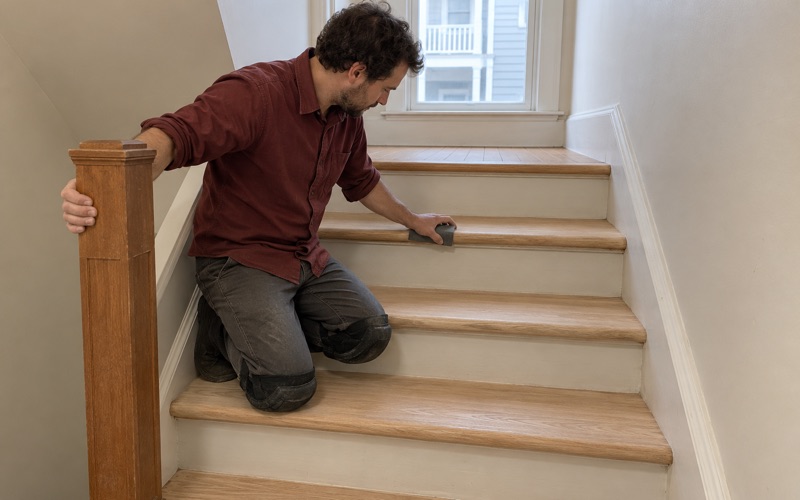
The shared stairs in a two- or three-decker take the hardest wear in the building. We price stair treads, stair risers and nosing one tread at a time rather than by the square foot. And when a color is on the table, we lay stain samples on your own boards, in your own light, so you can choose before the whole floor is committed.
- 20+ Years on Wood Floors
- Itemized Written Estimates
- Old Pine and Oak Work