Lawrence Wood Flooring has spent more than 20 years on wood-flooring in Lynn and the surrounding North Shore, and a good share of that work starts below the main floor. When water has come up from a drain or in through a foundation wall, the question is rarely whether to sand. It is which boards can stay, which have to go, and what belongs on that level once it is dry.
We approach a wet lower-level floor the way an adjuster or a careful owner would want it handled. We trace where the water came from, read the subfloor and the remaining boards with a moisture meter, and document every room before anything is pulled. Only then do we talk about replacement, refinishing or a different floor altogether.
The rest of this page covers what water does to wood and what has to be removed rather than saved. It ends with how we rebuild a lower level that has taken a backup or a flood.
Lynn’s Combined Sewers and the West Lynn Separation
Like other North Shore cities, much of Lynn was built on combined sewers, where wastewater and stormwater travel in shared pipes. CommonWealth Beacon describes what happens in heavy rain: the excess flow bypasses the treatment plants and is discharged into local bodies of water to prevent backups in people’s homes. That relief valve exists because the alternative is sewage pushing back up through floor drains and fixtures on the lowest level of a house.
When the System Backs Up
Itemlive reported one such case after the December 2019 snowstorm. A Verona Street homeowner said the city’s sewage system backed up into his house, and the flooring and sections of the walls in his newly remodeled basement had to be stripped. That is one household, not a count of how often it happens, but it shows exactly what a backup does to finished space.
Where the Overflow Goes
The city’s own public-health notices from April 2024 show the other side of the same design. After heavy rain, the Lynn Water and Sewer Commission reported overflows at three outfalls into the Saugus River and Lynn Harbor, described the discharge as untreated or partially treated sewage, and advised residents to avoid contact with those waters for 48 hours. Water that reaches a basement through the same pipes carries the same contents, and that is what decides how we treat the floor it touches.
The West Lynn Separation Project
In April 2026, the Lynn Water and Sewer Commission celebrated the completion of the West Lynn Sewer Separation Project, the first phase of its Facilities Plan, at a cost of $120 million. According to Underground Infrastructure, it laid more than 26,000 linear feet of storm drain and built a 92-million-gallon-per-day stormwater pump station, and it grew out of a performance agreement with regulators to reduce combined sewer overflows. When the separation went out to bid in 2020, Itemlive described it as aimed at alleviating flooding in West Lynn and the downtown, under a $200 million bid-stage figure that is not the cost of the finished phase. Separating rainwater from wastewater is what keeps a storm from filling the same pipes a basement floor drain empties into.
Looking for wood-flooring closer to Winthrop Town? See Wood-Flooring Services in Winthrop Town.
What Sewage and Floodwater Do to Wood
Clean water from a burst supply line and dirty water from a backed-up drain look the same on the surface, but they are not the same job. Wood is porous, and the seams between tongue and groove boards, the nail holes and the open grain at the ends of each board all draw liquid in. A finish coat does not seal any of that from below.
Cupping, Crowning and Buckling
Wet boards swell across their width. When the bottom of the board takes on more moisture than the top, the edges rise and the floor cups. If someone sands a cupped floor flat before it has dried, the board crowns once the moisture leaves, with the center now higher than the edges. In worse cases the swelling has nowhere to go and the floor buckles, lifting off the subfloor and pulling its flooring cleats or staples loose.
Why Contaminated Flooring Comes Out
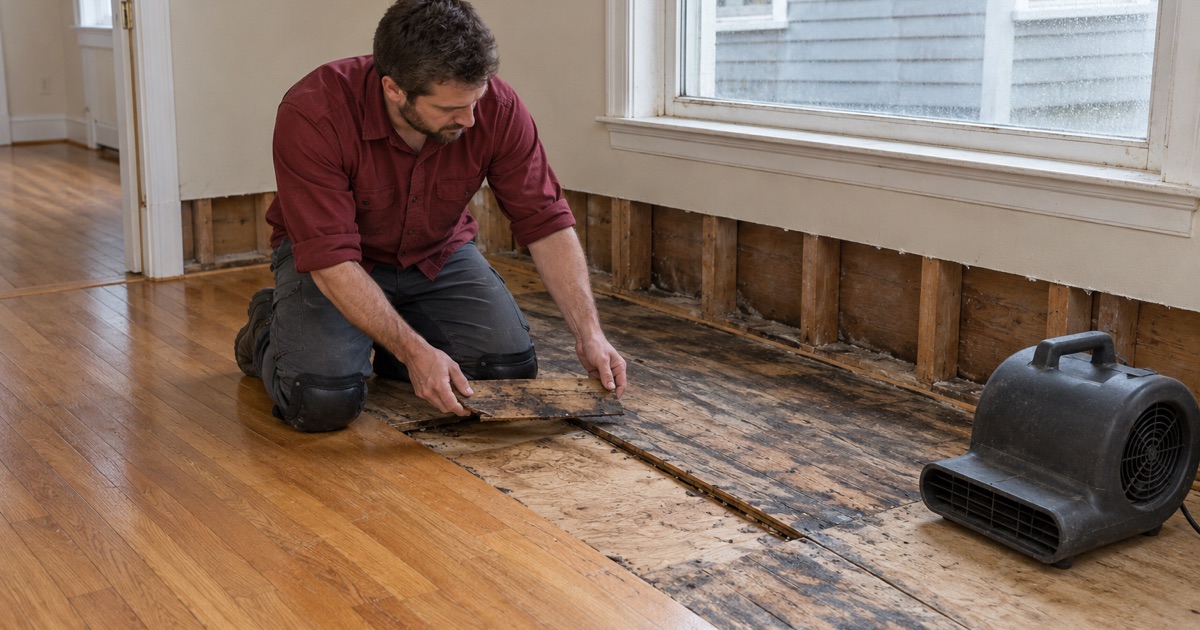
Refinishing removes a thin layer from the top of a board. It does nothing about what has soaked into the tongue, the groove, the underside and the subfloor beneath. When the water was a sewage backup, we do not sand and recoat those boards. We remove the affected flooring, along with any carpet pad, tack strip and underlayment, and leave the contaminated material and cleanup to the remediation trade before we come back to the subfloor.
Engineered and Floating Floors
Engineered planks and floating floors fail differently from solid boards. The thin wear layer leaves little room to sand out damage, and a floating floor can hold water beneath it where nobody sees it. When we find either over a wet subfloor, we lift enough of it to read what is underneath before recommending anything.
Water Stains That Are Only Water Stains
Not every dark mark on a first floor is a lost cause. A water stain from a plant pot or a slow radiator drip, where the source was clean and the boards never cupped, can sometimes be sanded out or handled with a weave-in repair of a few boards. We tell you which of the two you are looking at before we price anything, because the difference changes the job entirely.
Remove, Confirm Dry, Rebuild
A floor that has taken water fails twice if it is rebuilt too early. New boards laid over a wet subfloor will cup within a season, and the finish will not hide it. The order of operations matters more than any product choice.
Documenting Before Demolition
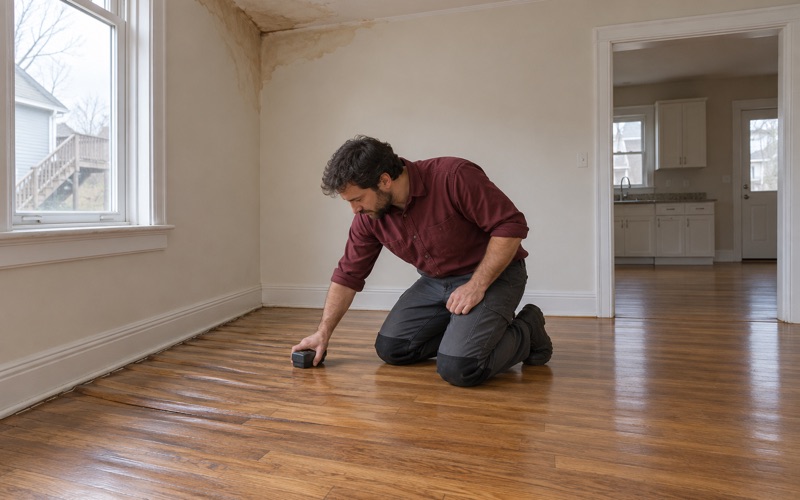
Before we pull a single board, we photograph and note each room: where the water line reached, which boards are cupped or stained, and what the moisture readings say across the floor. That room-by-room record is for you and your adjuster. We do not tell anyone what a policy will or will not pay; we give you a clear account of the damage so the people who decide that have something specific to read.
Rental Units and the 48-Hour Rule
In a rented unit, Massachusetts’ sanitary code, 105 CMR 410.500(B), requires owners to dry surfaces within 48 hours of leaks and flooding. That deadline is the owner’s obligation, but it shapes our part of the job: we can come in to read and document the floor while drying is underway. For a landlord, we also put the removal and replacement into an itemized written estimate, the kind Massachusetts requires before a tenant can be charged for floor damage.
Reading the Subfloor and Joists
Once the damaged flooring is out, we check the subfloor for delamination, soft spots and staining, and look at the joists for any sign of rot or movement. Drying is handled by the remediation contractor, and we come back to confirm it with a moisture meter rather than by touch. If a joist is compromised or the floor has started to slope, we say so and refer that structural work out; we do not sand a sloping or bouncy floor flat and call it fixed.
Matching What Stayed
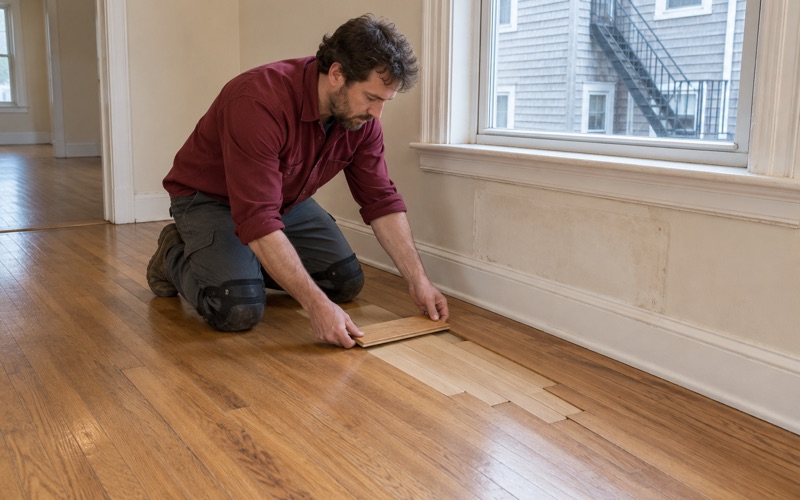
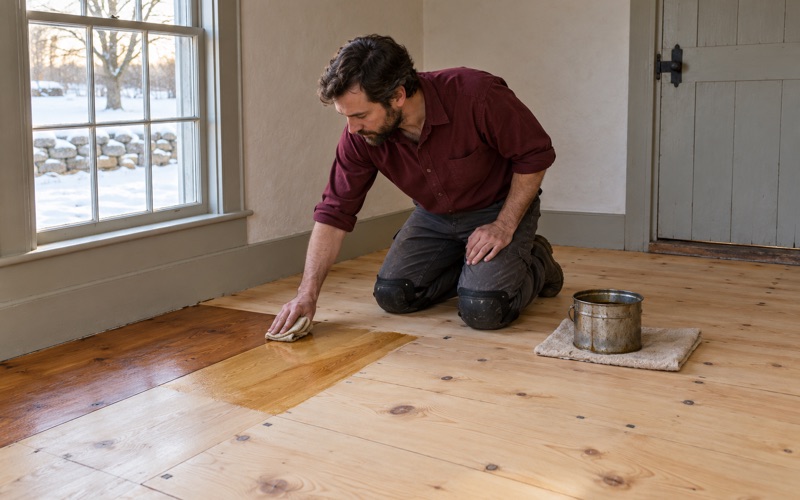
When a backup reaches only part of a level, the boards that stayed dry can often remain. We patch the removed area with matching stock woven into the existing floor so the repair does not read as a rectangle, then sand and finish the whole room together. Stain samples go down on your own floor, in your own light, so the patched section and the original boards end up the same color.
Choosing Floors for a Lynn Basement or Lower Level
Much of Lynn’s housing is old. Of the 37,960 housing units the Census Bureau’s 2024 five-year survey counts in the city, 17,360 were built in 1939 or earlier, about 45.7 percent. Whatever the age of the house, a floor on its lowest level has to suit a space that may see moisture again.
Below Grade Calls for Different Choices
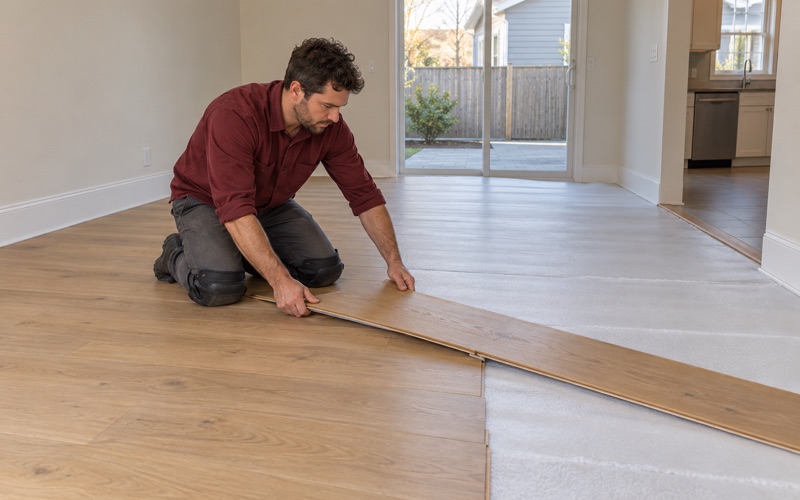
Solid hardwood nailed down below grade is a poor match for a space with any history of water. For a basement, we usually recommend an engineered floor with a stable core and a real wood wear layer, installed over a vapor retarder with the expansion gap the NWFA Installation Guidelines call for around the perimeter. That combination tolerates seasonal humidity far better, and if the room ever takes water again, there is less to lose.
First Floors Over Damp Basements
A first floor can suffer from a basement that stays damp even without a flood. Boards over a humid space take on moisture from below and cup in the summer, then open into winter gaps when the heat comes on. Before we install or refinish a first floor in that situation, we take readings from both sides of the subfloor and talk through whether the basement needs attention first.
Lead and Old Finishes
Before we sand, we check the build year and any painted trim, stairs or floor borders, because Massachusetts runs its own lead-safe renovation rules for homes built before 1978. Some older basements also turn up resilient tile with black mastic underneath. We identify it rather than sand it, and stop that part of the work until the right trade has dealt with it.
Planning for the Risk You Have
The West Lynn separation is a real change for the areas it covers, but we do not know which streets remain on combined pipes, and we would not guess. If your basement has a history of water, we say so in the estimate and recommend materials to match, so the next floor is easier to save than the last one.
- 20+ Years on Wood Floors
- Itemized Written Estimates
- Old Pine and Oak Work