Lawrence Wood Flooring has handled wood-flooring in Lynnfield and the surrounding part of Massachusetts for more than 20 years, and most of our work here starts with a meter reading rather than a sander. Installing new boards, refinishing a tired finish and repairing damaged sections all depend on how much moisture the wood and the subfloor are carrying on the day we arrive. Getting that number first costs far less than discovering it later through cupping or open seams.
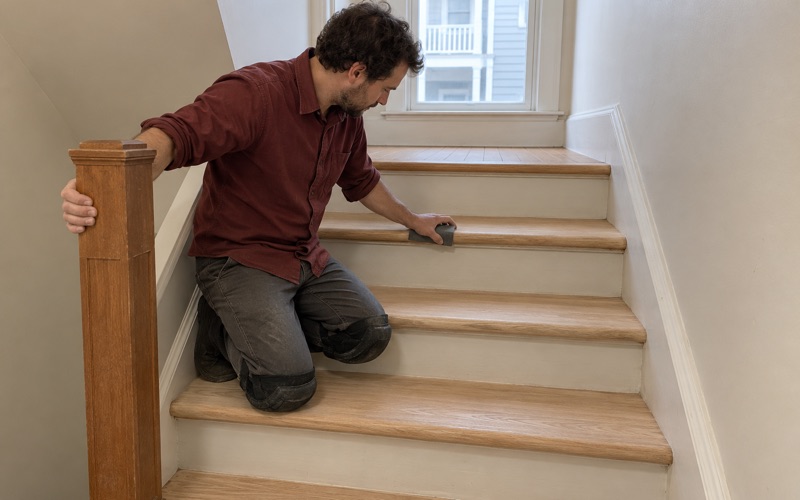
Our crews install solid hardwood and engineered flooring, refinish existing floors through a measured grit sequence, and weave matching boards into a floor where damaged ones come out. Stairs are quoted tread by tread, since a staircase does not price out by the square foot. Color is chosen from stain samples laid on your own floor, in your own light, before anything goes on the whole room.
In two- and three-family buildings we work one floor at a time, so the household on the other level keeps living there. Landlords get rental floors turned around between tenancies on a schedule set by the move-out and move-in dates, along with itemized written estimates of the kind Massachusetts requires before a tenant can be charged for floor damage.
Floors in a Town Built Around Reedy Meadow
Lynnfield is a town in Essex County, and at its heart sits Reedy Meadow, which the town describes as the largest freshwater cattail marsh in Massachusetts. Older records call it Lynnfield Marsh. The meadow lies between Wakefield and South Lynnfield, and in June 1972 the U.S. Department of the Interior designated it a National Natural Landmark.
A Watershed’s Retention Area
The town calls the meadow the major water retention area for the Saugus River Watershed, as well as a natural wildlife refuge and a breeding ground for the king rail and least bittern. Lynnfield’s Pillings Pond drains into it. From Main Street across from Heritage Lane, an entrance along a spring run-off brook leads to the meadow and Partridge Island, and a boardwalk was built across a short stretch of it in 1976 for the Bicentennial.
None of that tells us a particular house is wet, and we never assume it is. What it does tell us is that water is a steady part of the town’s landscape, and that seasonal shifts in ground moisture and indoor humidity are worth measuring rather than guessing at. A floor answers to the air and the subfloor it lives with, so those are what we read.
Why the Ground Is Part of the Job
Wood flooring takes on moisture when the air around it is damp and gives it back when the air dries out. Boards that swell press against each other and can cup, with edges standing higher than centers, or end up crowned if a sanding cuts those raised edges down too soon. Boards that shrink open into winter gaps along the seams, and severe swelling can push a floor into buckling.
So on a Lynnfield estimate we look past the room itself. We note how the lot grades toward or away from the house, whether any lower level stays damp in spring, and how the home is heated and ventilated. That context shapes which floor we recommend and when we put it on the calendar.
Looking for wood-flooring closer to Burlington? See Wood-Flooring Services in Burlington.
Moisture Readings Before Any Floor Work in Lynnfield
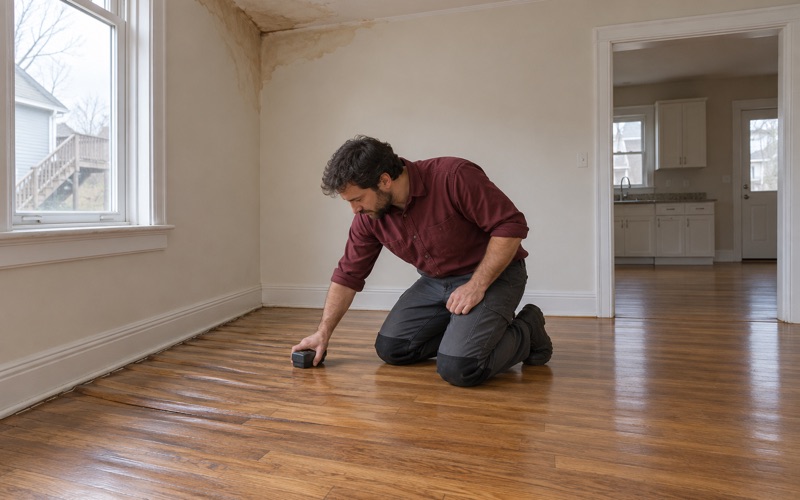
A moisture meter is the first tool out of the truck. We take readings across the existing floor, in the subfloor where we can reach it, and in any new material already delivered, then compare them. The NWFA Installation Guidelines set out how wood and subfloor readings should relate before installation, and we work from that guidance instead of a fixed number of days.
Acclimation for New Hardwood
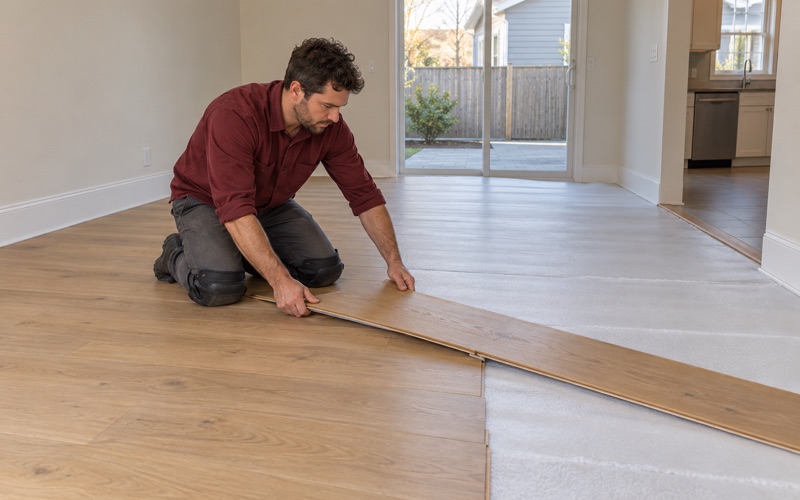
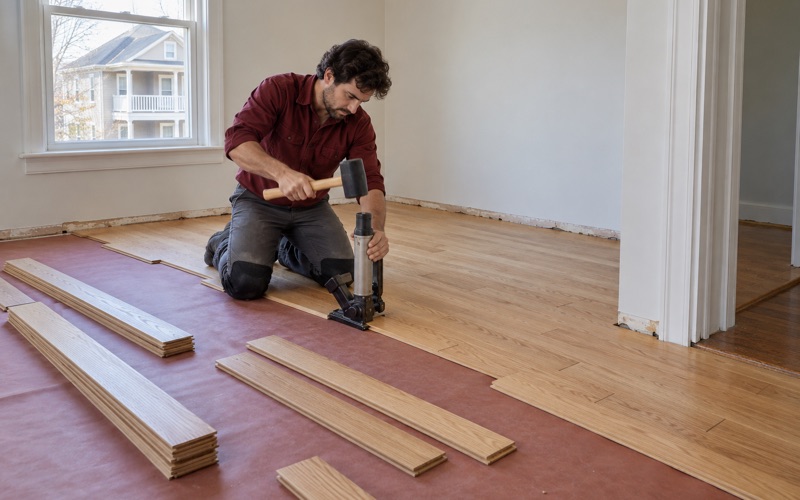
New solid hardwood needs time in the house before it goes down, with the heat or air conditioning running the way the household normally runs it. We open the boxes in the rooms where the boards will be installed and recheck them until the readings settle close to the subfloor’s. Skipping that step is one of the most common reasons a new floor shows gapping or cupping in its first year.
Engineered flooring is more dimensionally stable because of its layered construction, which can make it a sensible pick for a room over a lower level or a space that swings in humidity. We still check the subfloor, leave the expansion gap the manufacturer calls for at the walls, and talk through whether a vapor retarder belongs under it. The thickness of the engineered wear layer also decides how many future sandings the floor can take, so we look at that before you buy.
Refinishing Needs a Reading Too
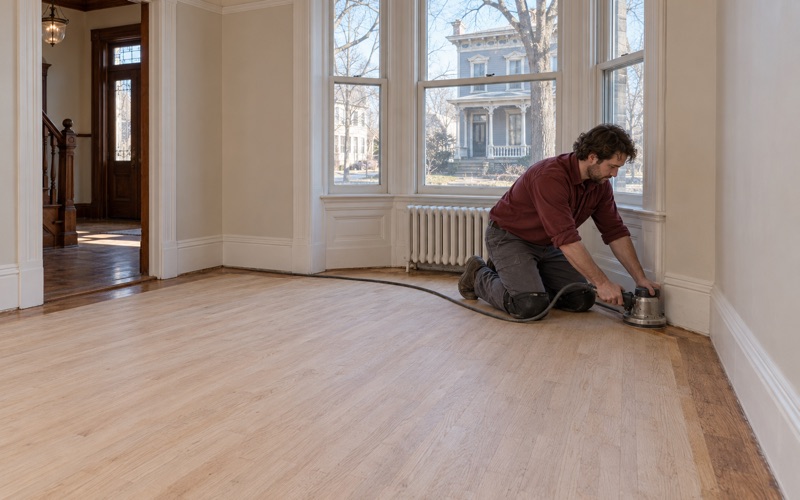
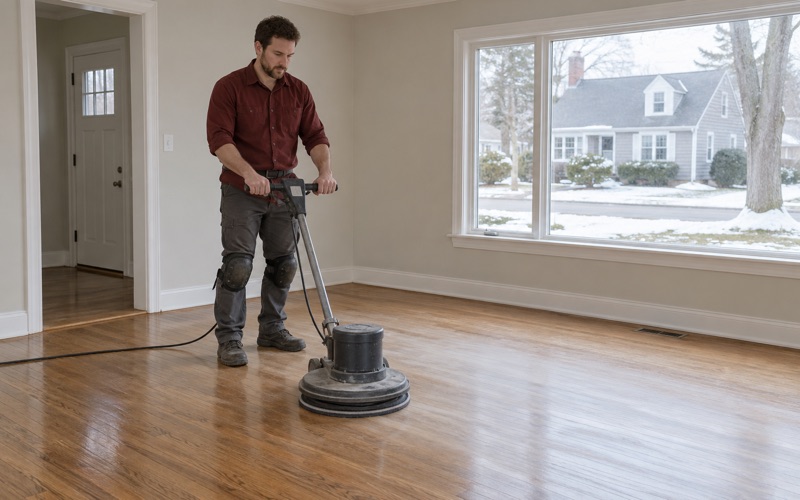
An existing floor gets the same check before a refinish. If boards are cupped, sanding them flat while they are still swollen leaves them crowned once they dry, so we wait for the readings to come back to normal before the drum sander touches the wood. A floor that has taken water from a leak, an overflowing appliance or the unit upstairs is traced to its source and dried first.
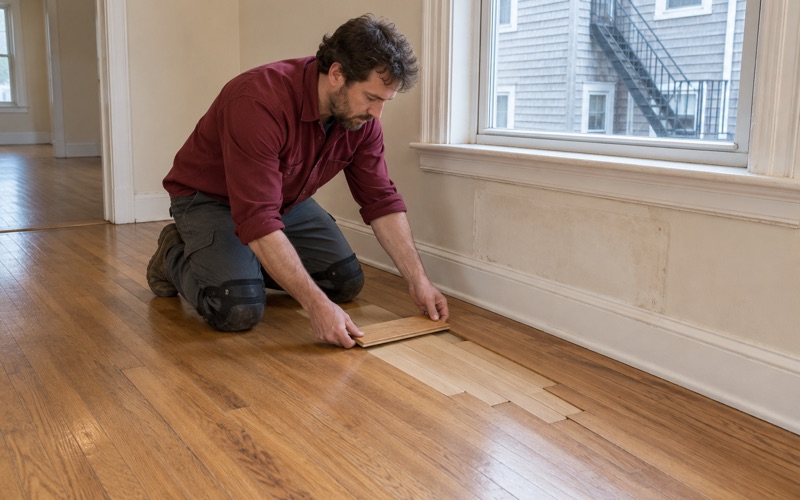
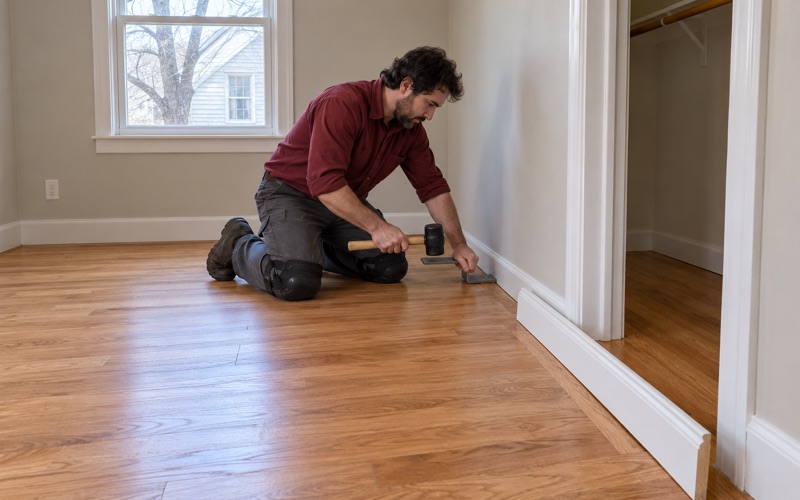
When water damage is part of the story, we document it room by room for the adjuster and replace boards only after the meter says the surrounding floor is stable. New boards are woven into the existing courses, so the repair reads as one continuous surface instead of a square plug.
Spring Run-Off, Wet Seasons and Scheduling a Project
A brook the town itself describes as spring run-off is a fair reminder of how the calendar works here. Spring brings snowmelt and rain, summer brings humid air, and winter heating dries a house out sharply. Each of those swings shows up in wood, so timing is part of how we plan.
Choosing When to Sand and Finish
For refinishing, we prefer stretches when indoor humidity holds steady, which in a heated New England house often means late spring once the damp settles or early fall before the heat comes on. Sanding at the driest point of winter can lock open gaps under the new finish, while sanding at peak humidity can seal boards in a swollen state. Neither is a hard rule, and the meter makes the final call, not the month.
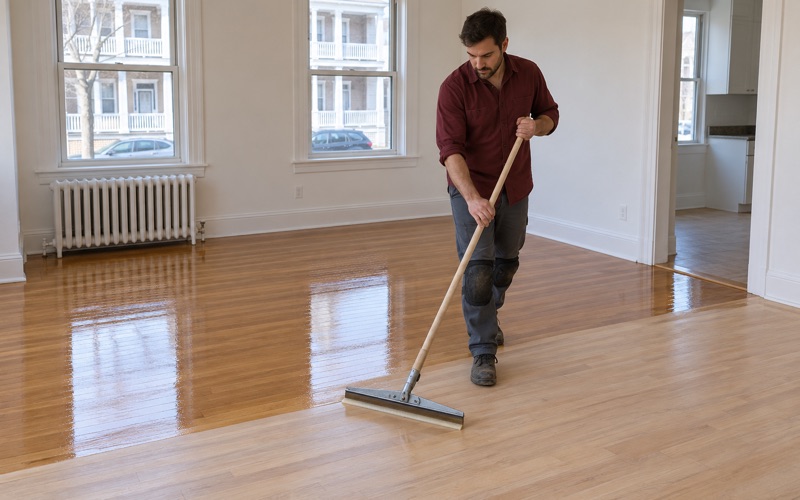
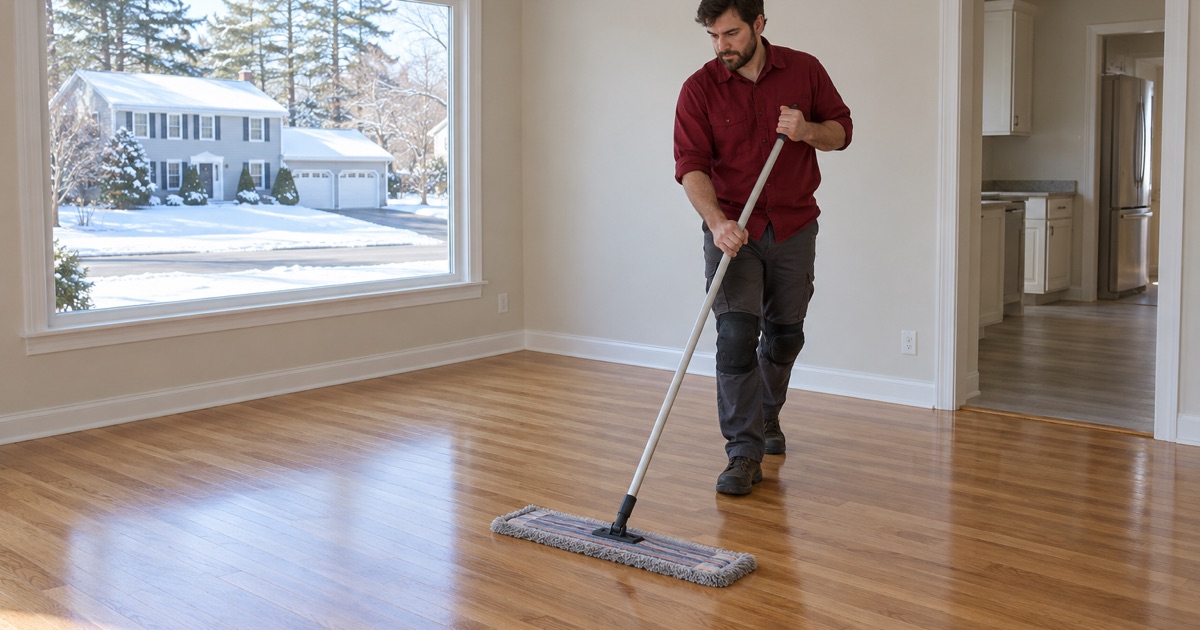
Finish choice ties into the weather as well. Waterborne polyurethane dries faster and gives the house back sooner, while oil-modified polyurethane and hardwax oil need longer cure times and good ventilation. Whatever we use is picked to meet the coating VOC limits for varnish, sealer and lacquer, which match each other in Massachusetts and New Hampshire.
Planning Around the Lot, Not Just the Room
Lynnfield falls in the National Weather Service’s Eastern Essex forecast zone, and we watch that forecast before booking a run of sanding and coating days. Open windows help a finish cure, but not through a string of damp, muggy days. If a wet system is moving through, we would rather shift a day than lay a coat into heavy air.
For a home whose yard slopes toward one of the town’s wet areas, we ask about the lower level, the gutters and the downspouts before choosing a floor for the rooms above. That is not a prediction of trouble. It is the information we need to decide between solid and engineered boards and to judge whether a vapor retarder earns its place, so ground conditions show up in the estimate rather than in a callback.
Refinishing Hardwood in Lynnfield’s 1950s and 1960s Houses
Census figures put 3,759 of Lynnfield’s 4,597 housing units, or 81.8 percent, in one-unit detached houses. The 1950s were the biggest building decade, adding 1,008 units, with another 800 from the 1960s. Houses of that period commonly went in with red oak strip flooring, and where it survives it often has sanding left in it.
What Turns Up Under Carpet and Old Finish
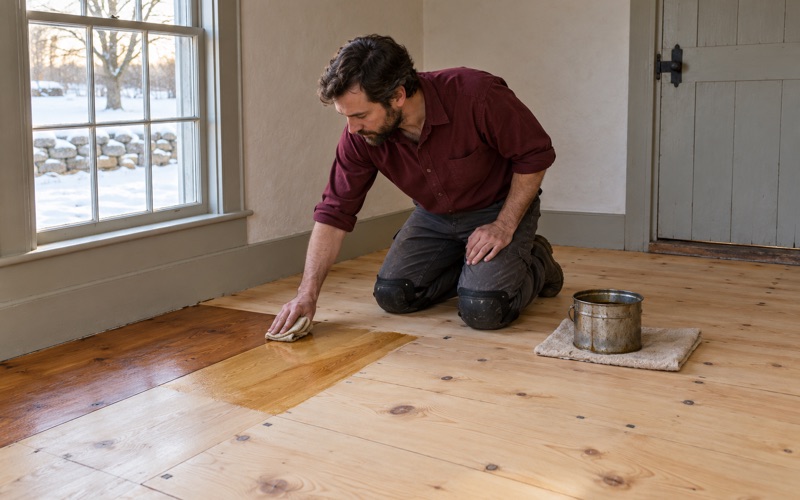
When carpet comes up in a midcentury house, we pull the tack strip and carpet pad, fill the fastener holes, and check the wood for carpet glue or linoleum glue. Older finishes may be shellac or wax rather than polyurethane, and wax residue has to come off completely or a new coating will not bond. Original finishes have also often aged to an orange oak tone that some owners like and others want gone.
Traffic lanes from hallways and kitchens, sun fade near windows, pet urine stains and water stains each call for a different response. Some sand out, some need a board replacement, and some run deep enough that we will tell you plainly a patch is the better choice. On oak we often use water popping before stain to open the grain for a more even color.
Lead, Tile and Structural Questions
Census figures show 73.0 percent of Lynnfield’s housing was built before 1980, so the build year is one of the first things we confirm. Massachusetts runs its own lead-safe renovation rules for homes built before 1978, and we check painted baseboards, thresholds and stair parts before any sanding starts. Dustless sanding with HEPA vacuum collection keeps the dust out of the rest of the house.
Under old carpet or sheet flooring, we sometimes find resilient tile with black mastic beneath it, which can be vinyl asbestos tile. We identify it rather than sand it, and the job pauses until the right trade has handled it. Complaints about a bouncy floor or a sloping floor get a look at the joists, and structural work is referred out rather than sanded over.
Older Pine and Upstairs Units
Not every house in town is midcentury, since 616 units date to 1939 or earlier. Older homes can carry eastern white pine or other softwood flooring, which we refinish with lighter passes and a gentler approach than oak would get. Where radiators and their pipes came out, we patch the holes with matching boards woven into the floor.
The town also has a smaller number of units in larger buildings. For an upstairs condominium unit, we talk through acoustic underlayment and floor choices against what the building’s own condominium documents say about impact noise, before any material is ordered.
- 20+ Years on Wood Floors
- Itemized Written Estimates
- Old Pine and Oak Work