Lawrence Wood Flooring has handled wood flooring in Methuen for more than 20 years. We sand, refinish, repair and install floors in the city’s houses, from turn-of-the-century parlors to the split-levels and colonials that came decades later. Before any machine runs, we find out what the floor is made of, when the house was built and what has happened to the boards since.
Most of our Methuen calls come from people who own the house and plan to stay in it. That changes the job. An owner wants a finish that will hold up for years, a repair that blends in, and an honest answer about whether a tired floor needs a full sanding or only a screen and recoat. We give that answer on site, in writing, before any work is booked.
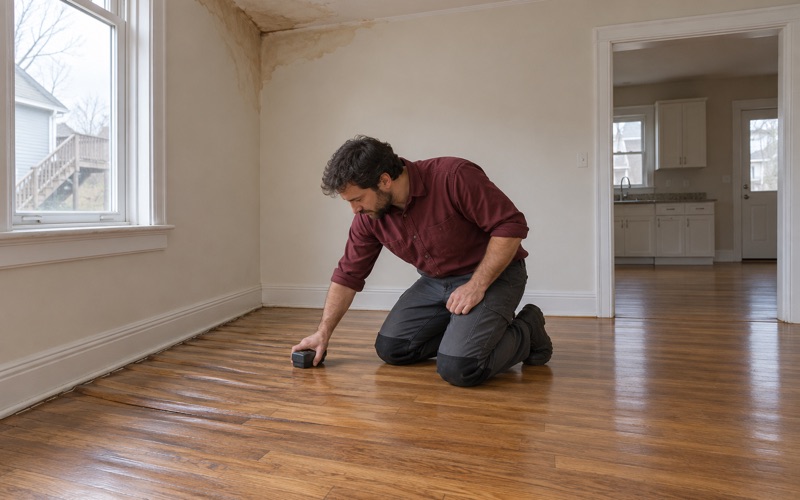
We walk every room with a moisture meter, look at how the boards were fastened, and note any cupping, gapping or soft spots. Stain samples go down on your own floor so you see the color in your own light. Then we write up an itemized plan that you can read, question and change.
Floors in Methuen’s Streetcar-Era Subdivisions

A large share of Methuen’s older housing was sold as lots in planned subdivisions rather than built one house at a time. According to the Massachusetts Historical Commission’s reconnaissance report on the town, electric streetcar lines reached Methuen in the 1890s and changed where people built. Farmland on the edges of the village became house lots almost at once.
Nevins Park and Fair Oaks
The best documented of these is Nevins Park, platted in the 1890s by David Nevins, owner of the Methuen Mills, and laid out mainly along Gage and Stevens Streets. It held 100 lots and was promoted as a streetcar suburb, with restrictions put in place, in the report’s words, “to assure quality construction.” Fair Oaks followed around 1898, and between 1890 and 1915 the two subdivisions filled with Queen Anne, Shingle and Georgian Revival houses.
By 1906 there were ten significant subdivisions, mostly on the southern edge of Methuen Village, advertising paved streets, electricity and water service. Later plats such as Oaklands, Fairview and Canobieola Heights were as much as five times larger than Nevins Park. The report also singles out Broadway, Pleasant, George (High), Park and Gage Streets as home to the city’s best post-Civil War houses.
What That History Tells Us About a Floor
None of this tells us what is under your rug, and we never assume it does. A house from these years may have red oak strip flooring, maple, a softwood such as eastern white pine or southern yellow pine, or a mix of all of these from room to room. Some rooms were covered with carpet or resilient tile long ago. We pull a vent cover, check a closet and look at the board edges before we name the species.
What the era does tell us is to expect age. Boards from this period have often been sanded more than once, so we check the remaining thickness above the tongue and groove before quoting a full sanding. We also look for cut nails, old patches and places where a radiator once stood.
Looking for wood-flooring closer to Andover? See Wood-Flooring Services in Andover.
Refinishing a Queen Anne, Shingle or Georgian Revival House
The houses in these subdivisions were built with care and have usually had a century of changes since. A refinish here is less about the sander and more about reading what each owner before you did to the floor.
Old Finishes and What Lies Under Them
Many older floors carry layers of shellac finish, wax residue or an orange oak tone from finishes that have aged. Wax has to come off completely or new polyurethane will not bond, so we test before we sand. Under carpet we often find tack strip holes, carpet glue or linoleum glue. Where we find old resilient tile or black mastic, we stop. Vinyl asbestos tile and its adhesive are not something we sand, and we hold the job until the right trade has handled it.
Lead Paint and the Build Year
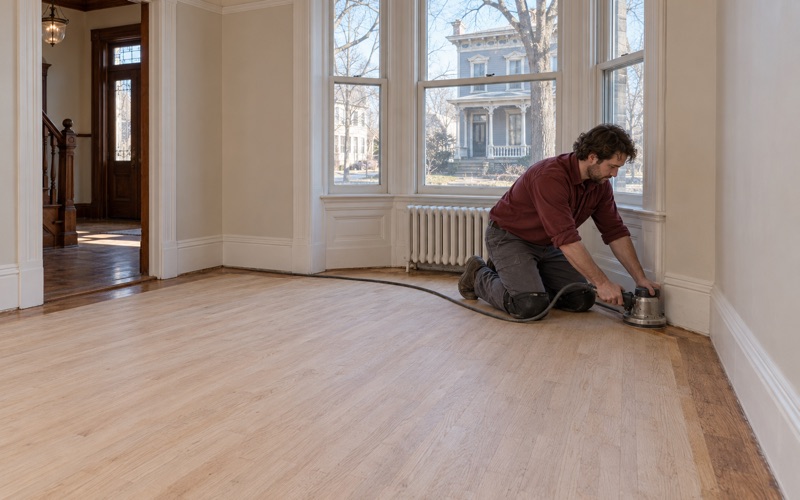
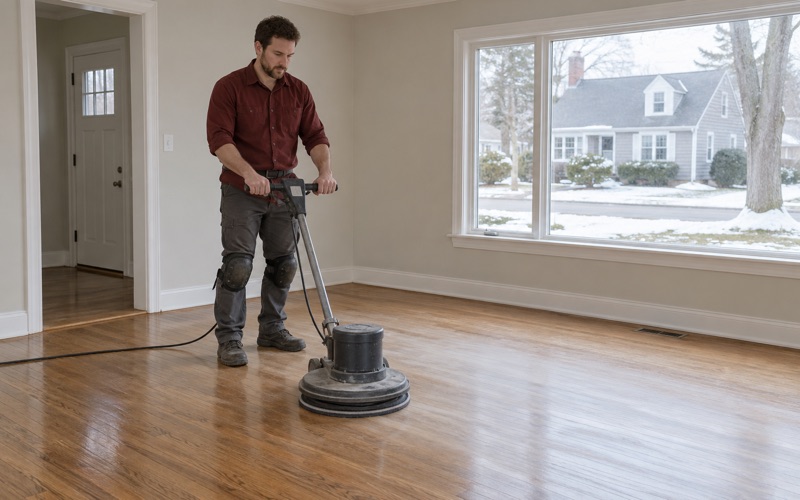
Massachusetts runs its own lead-safe renovation rules for homes built before 1978, alongside the federal EPA RRP Rule. In a house from the 1890s, painted baseboards, stair risers and old floor paint near the walls are all possible sources. We confirm the build year and look at every painted surface we will touch before sanding starts, then plan dust control around what we find. Our dustless sanding setup feeds the drum sander and orbital sander into a HEPA vacuum, which cuts down the fine dust that settles through an old house.
Sanding Softwood and Patching Radiator Holes
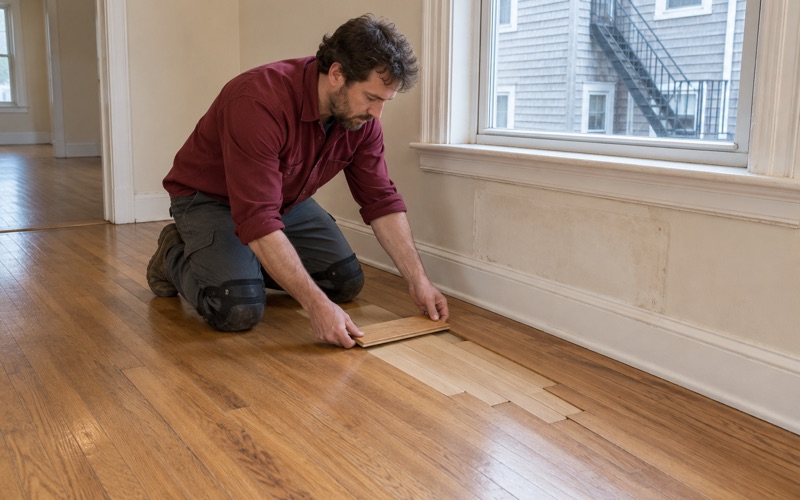
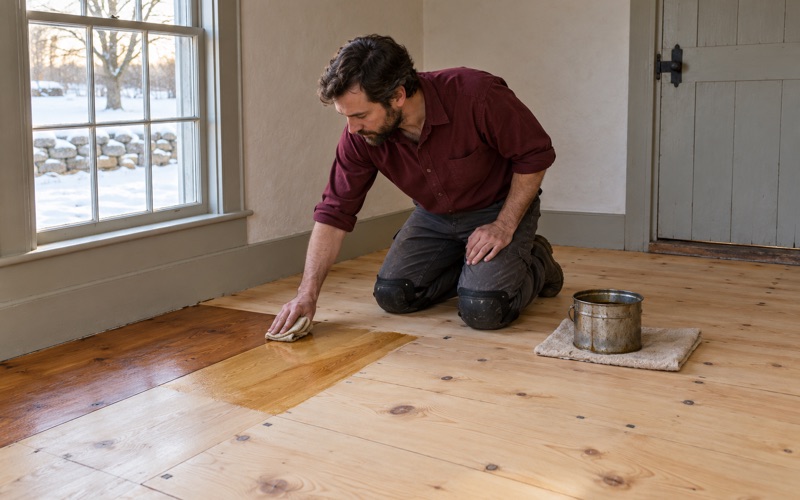
Pine and other softwood flooring dents more easily than oak and sands away faster. We refinish it with that in mind, using a lighter touch and a gentler grit sequence instead of the aggressive passes oak can take. Where radiators and their pipes came out, we patch the holes with matching boards woven into the floor, so the repair follows the grain instead of reading as a square plug. Loose or missing boards get a weave-in repair of the same kind.
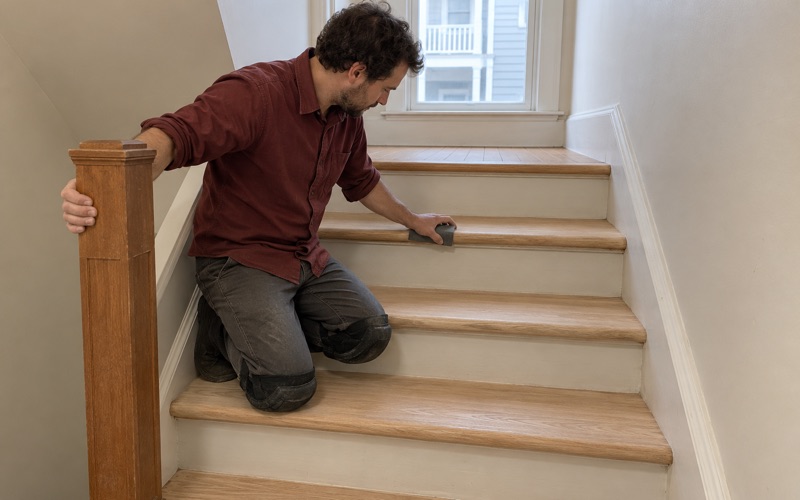
On stairs, which these houses often have plenty of, we quote tread by tread. A staircase with worn stair treads, split stair nosing and painted risers is not priced by the square foot, and a written per-tread figure keeps the estimate honest.
Methuen’s Postwar Houses and Their Floors
The MHC report notes that little new subdivision happened in Methuen between 1920 and 1950. Building picked up after World War II, and in the 1970s Interstates 93 and 495 opened more farmland to platting. Census figures show the 1980s as the largest single decade of construction in the city, with 2,377 housing units. So while the streetcar subdivisions give Methuen its character, most of the houses we work in are newer.
What Changes in a Newer House
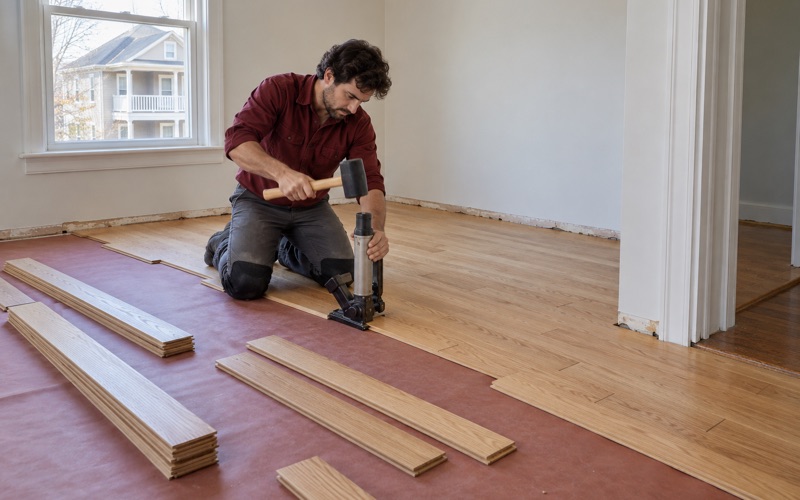
Floors from these decades are more often red oak strip or white oak nailed with flooring cleats or flooring staples over a plywood subfloor. Some have been covered with wall-to-wall carpet and carpet pad for years and show sun fade or traffic lanes once the carpet comes up. Others were replaced with prefinished or engineered boards. With engineered flooring, the thickness of the engineered wear layer decides whether a sanding is possible at all, so we check it before we promise anything.
Water, Movement and Seasonal Gaps
Methuen sits in the National Weather Service’s Western Essex forecast zone, and like the rest of the region it swings between humid summers and dry, heated winters. Wood follows that swing. Winter gaps that close again in summer are normal. Cupping, crowning or buckling usually point to a moisture problem that a new finish will not fix.
When water from a burst pipe or a wet basement has reached a floor, we trace the source, dry the area and read it with a moisture meter before replacing a single board. Pet urine stains and old water stains that have gone black usually mean board replacement rather than sanding. If the damage is part of an insurance claim, we document each affected room for the adjuster. A bouncy floor or sloping floor can be a sign of trouble in a joist, and we refer structural work out rather than sanding over it.
Planning Floor Work in an Owner-Occupied Methuen Home
Methuen is a city of owners in detached houses. Census estimates count 19,191 housing units, of which 4,970 were built in 1939 or earlier and 59.0 percent are one-unit detached houses. Of the occupied units, 72.3 percent are owner-occupied. That mix shapes how we plan the work.
Choosing a Finish
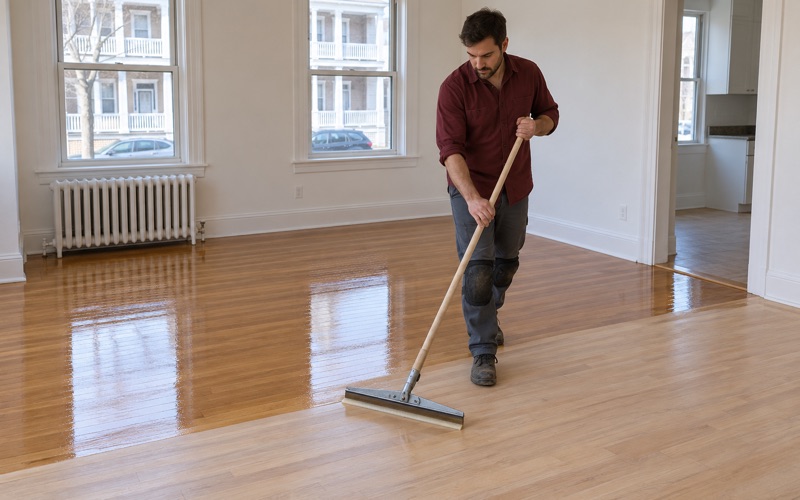
For a house you intend to keep, the finish matters as much as the sanding. Waterborne polyurethane dries clear and fast, which suits pale woods and households that need rooms back quickly. Oil-modified polyurethane brings out a warmer amber tone that many owners prefer on older oak. Hardwax oil gives a low, natural sheen level and spot repairs well. We choose finishes that meet the state’s limits on volatile organic compounds in varnish, sealer and lacquer. Where a stain is wanted, we often use water popping to open the grain so the color takes evenly.
Scheduling Around the People Who Live There
Most owners live in the house during the work, so we plan room by room. We tell you which rooms will be off-limits, for how long, and when the floor can take socks, furniture and finally rugs. A screen and recoat may need a day; a full sand and three coats takes longer, and we give you the dates in writing.
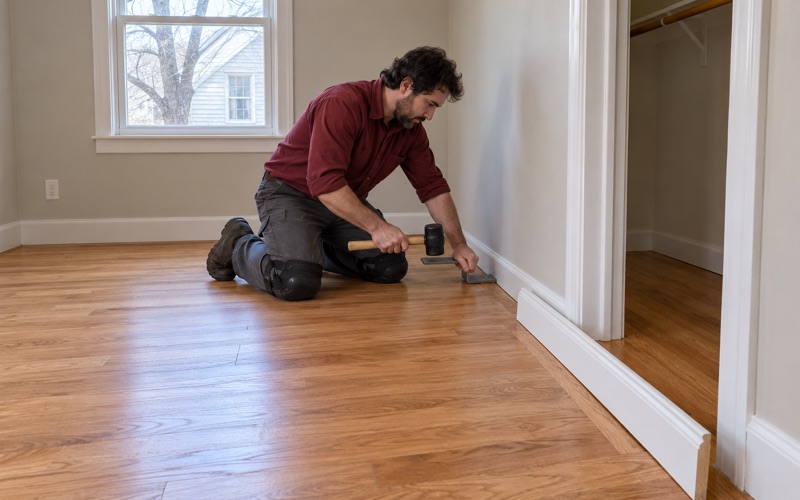
If your house has a second unit, we can work one floor at a time so whoever lives on the other floor keeps living there. For new boards, we leave time for acclimation and keep the expansion gap at the walls, which the trim and quarter round will cover.
What You Get Before We Start
Every Methuen job starts with a visit, a walk through each room and a written, itemized estimate. It lists the rooms, the stairs, any board replacement and the finish we recommend. If we find something that needs another trade first, such as old tile, a structural concern or an active leak, we say so plainly and wait.
- 20+ Years on Wood Floors
- Itemized Written Estimates
- Old Pine and Oak Work