Lawrence Wood Flooring handles wood-flooring in Nashua for landlords and property owners, backed by more than 20 years of sanding, repairing and installing hardwood. Our work here centers on the floor between tenants: refinishing, board replacement and new installs scheduled around a move-out date and the next move-in. A unit that sits empty costs rent every day, so we set the sequence before the first sander comes off the truck.
The jobs we see range from a single bedroom with pet urine stains to a full apartment of red oak strip flooring worn into gray traffic lanes. Some floors need only a screen and recoat to look fresh for the next lease, while others need a full sand, a stain choice and three coats of finish. We tell you which one your floor actually needs, room by room, in an itemized written estimate you can keep with the unit’s records.
That estimate separates normal wear from damage, line by line, which gives an owner something concrete to point to at the end of a tenancy. It also makes budgeting simpler when several units turn over in the same year.
Floors in Nashua Rental Property
Nashua is close to half renters. Of the city’s 37,134 occupied homes, 16,410 are rented, or 44.2 percent, according to the Census Bureau’s 2024 five-year American Community Survey. That share shapes the floor work here more than any single style of house does.
Those renters are spread across a wide range of building sizes. The same survey counts 4,408 renter households living in two-to-four-unit buildings, 4,325 living in buildings of five to nineteen units, and 5,415 living in buildings of twenty or more. A converted house with a landlord living downstairs and a fifty-unit complex with a management office need very different things from a flooring crew.
Common Damage We See at Move-Out
Move-out damage in rental units follows familiar patterns. Furniture drags leave scratches through the finish, plant pots and leaky aquarium stands leave dark water stains, and rooms with big windows show sun fade where rugs once sat. Shallow marks sand out with the rest of the floor, while deep gouges may need a board or two replaced.
What a Turnover Floor Has to Do
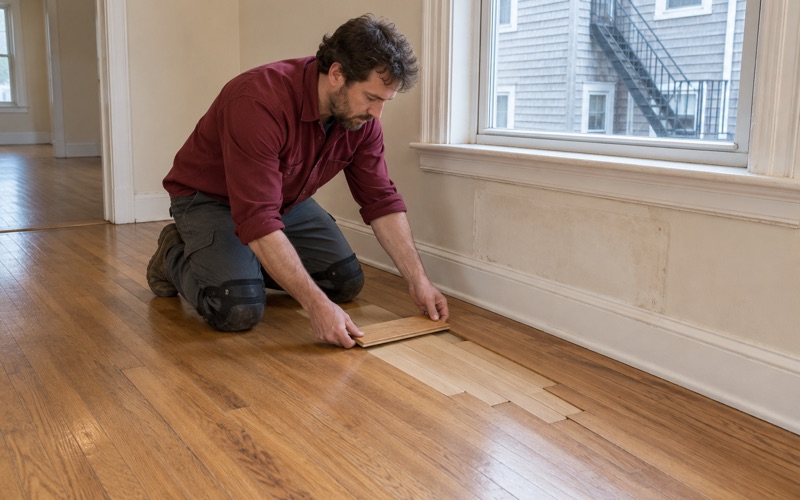
A rental floor has to survive the next tenant, not just photograph well for the listing. We lean toward durable finishes and sheen levels that hide scuffs, usually a satin rather than a gloss. Where pet urine stains have gone black and deep, the honest fix is board replacement with a weave-in repair, and we say so in the estimate.
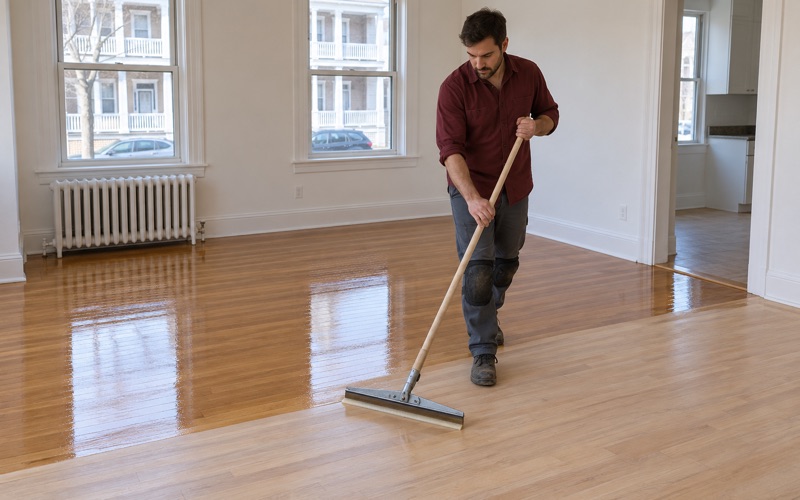
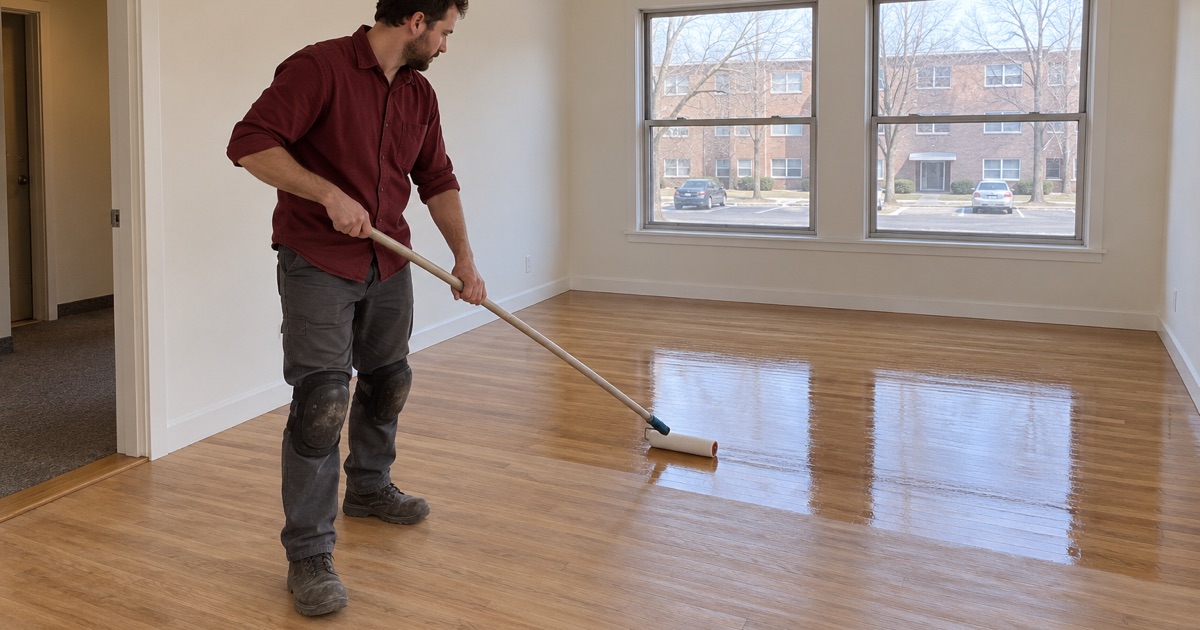
Speed matters, but so does cure time. Waterborne polyurethane lets furniture and a new tenant back in sooner than oil-modified polyurethane, and it stays clearer over a light floor. When an owner prefers the warmer amber of an oil-modified finish, we build the extra drying days into the turnover calendar from the start.
Rent Pressure and the Case for Repair
Nashua’s rents have been climbing. A 2020 housing study by RKG Associates, presented to the Board of Aldermen, put the average 2018 rent at $1,287 a month and projected a need for 4,769 more housing units by 2030. Among its recommendations was expanding rental and owner rehabilitation programs.
The city’s Housing Services Officer, LaTonya Muccioli, has described landlords increasing rental prices and tenants considered high risk finding it harder to rent. In that kind of market, every week a unit sits vacant for floor work is a week of lost rent, and refinishing the original hardwood usually costs far less than tearing it out. We quote both options when both are realistic.
Looking for wood-flooring closer to Winchester? See Winchester Wood-Flooring.
Turnover Floors for Two- and Three-Unit Landlords
A two- or three-unit house is often owned by someone who also lives in it or manages it alone, with no maintenance staff and a tight window between leases. We work with that reality rather than around it.
One Floor at a Time
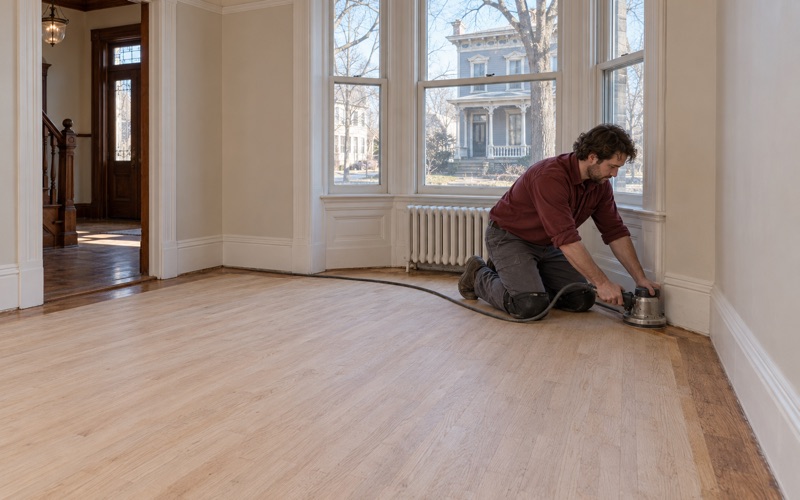
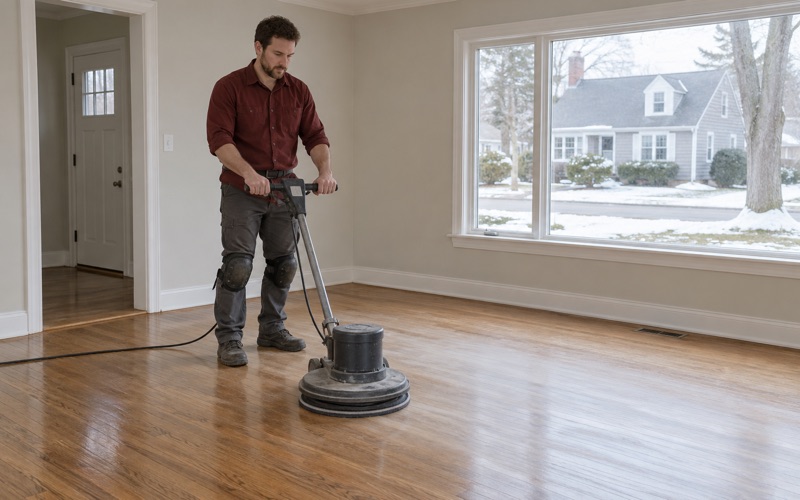
In a two- or three-unit house, we work one floor at a time so the tenant or owner on the other floor can keep living normally. Dustless sanding with a HEPA vacuum hooked to the drum sander and the orbital sander keeps most fine dust out of shared stairwells and the occupied apartment next door. We also tell the other household when the loud days fall, which tends to matter more to them than the dust.
Built Around the Lease Dates
Give us the move-out and move-in dates and we build the schedule backward from the new tenant’s arrival. Sanding, stain, finish coats and cure time each get their own days, with a buffer for humidity that slows drying. If the gap is too short for a full refinish, we will say so and offer a screen and recoat or a partial job that fits.
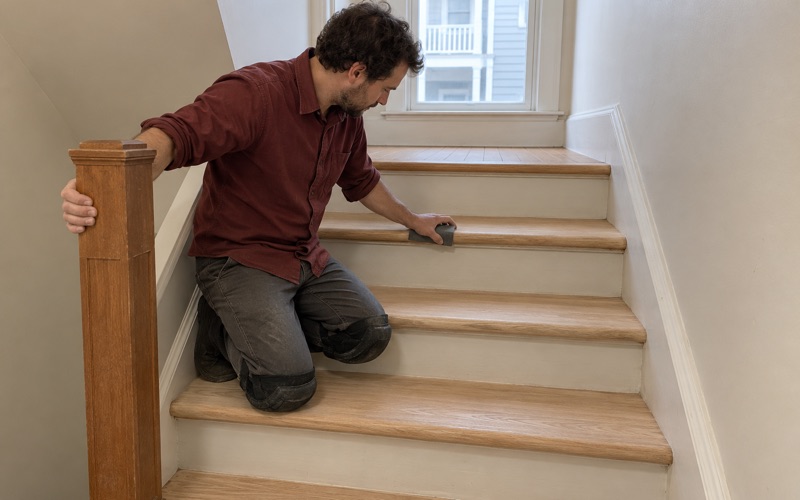
Stairs in these houses take a beating from moving day alone. We quote stair treads, stair risers and stair nosing tread by tread, because a staircase is never priced like open floor, and a worn tread can be refinished or replaced with a retread.
Older Floors in Smaller Rentals
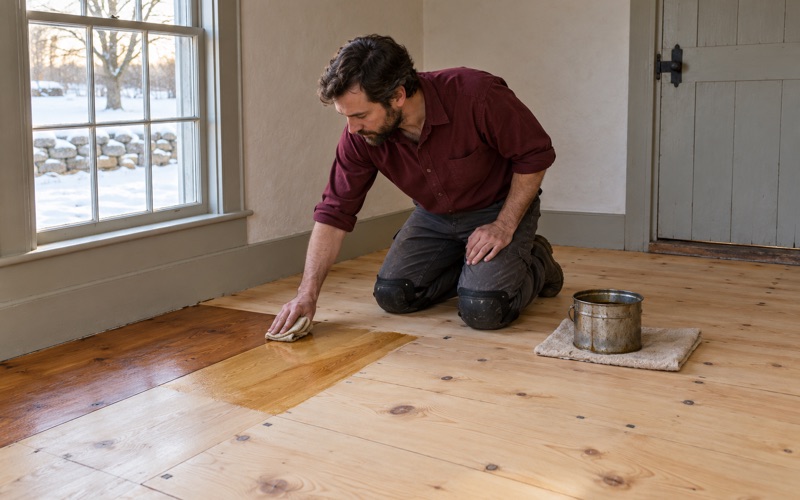
Many small rental houses carry original pine or early hardwood, and some still show holes where radiators and their pipes came out. We refinish eastern white pine and other softwood flooring with the softer wood in mind, using a gentler grit sequence than oak would get, and we patch radiator holes with matching boards woven into the floor.
Nashua has a lot of older housing stock: 7,577 of its 38,760 units were built 1939 or earlier. Before any sanding, we check the build year and look for painted surfaces, and we identify old resilient tile and black mastic rather than sanding it, stopping the work until the right trade has handled it. Older boards sometimes show the small exit holes of powderpost beetle or old house borer, and we point them out so the owner can have the wood checked before we refinish over it.
Floors in Larger Nashua Apartment Buildings
Owners of mid-size and large buildings face a different problem: volume. Across the city, 9,740 renter households live in buildings of five or more units, and a building that size can turn several apartments in a single month. We handle those as a running program rather than a string of one-off calls.
Matching Finish Across Units
When units share a hallway and a rent level, their floors should look like they belong to the same building. We record the stain, sheen level and finish system used in each unit so the next turnover matches, whether that floor is white oak, maple or a prefinished engineered product. For engineered floors, we check the engineered wear layer before promising a sand, because a thin one may only allow a light recoat.
Upstairs Units and Noise
Replacing carpet with hardwood in an upstairs apartment changes how impact noise travels to the unit below. We talk through acoustic underlayment and floor choices with owners before the carpet pad and tack strip come up, and where a building is a condominium, we read those choices against what the condominium documents say. We let the documents and the product data decide, not a rule of thumb.
Carpet Out, Hardwood In
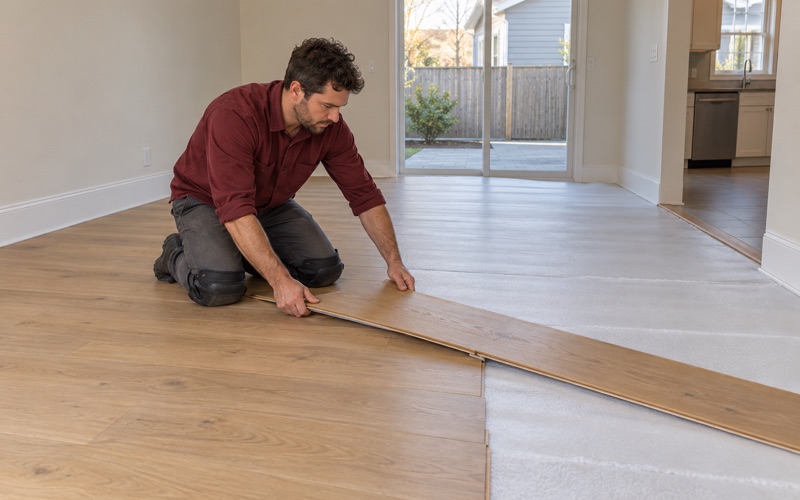
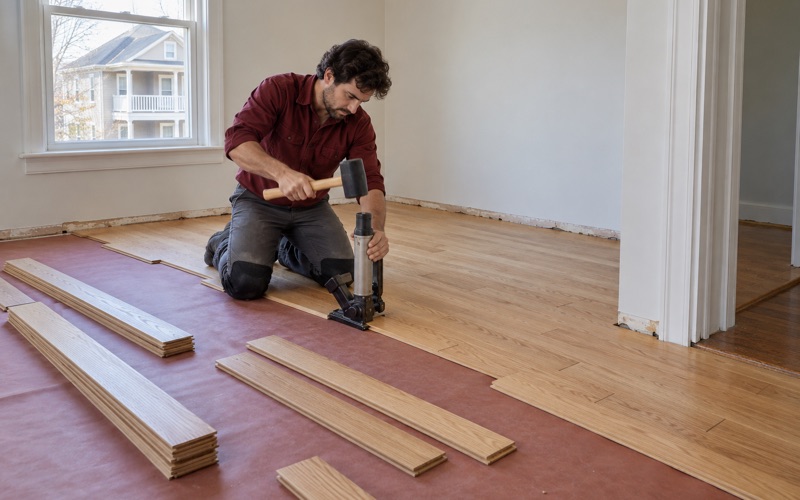
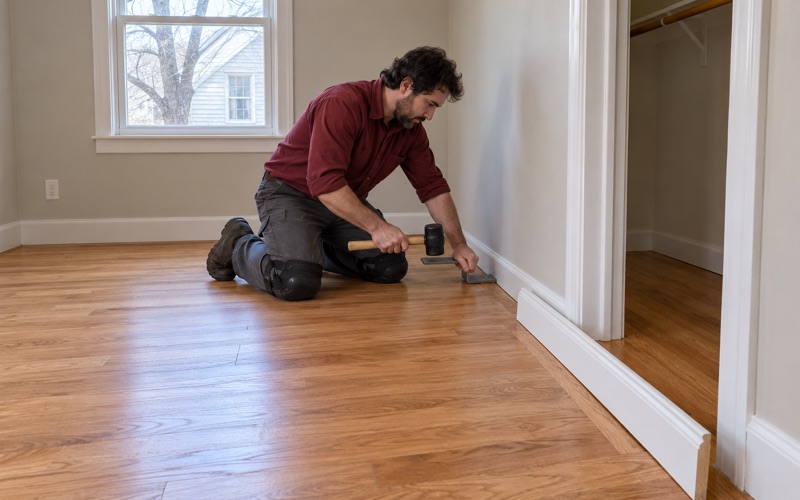
When an owner decides to replace worn carpet between leases, the subfloor underneath decides what comes next. We scrape away carpet glue, check the subfloor for flatness and moisture, and give new boards time for acclimation before a solid hardwood install. Tongue and groove boards go down with flooring cleats or staples, an expansion gap at the walls, and a reducer or threshold where the new floor meets tile or a shared hallway.
Water Between Floors
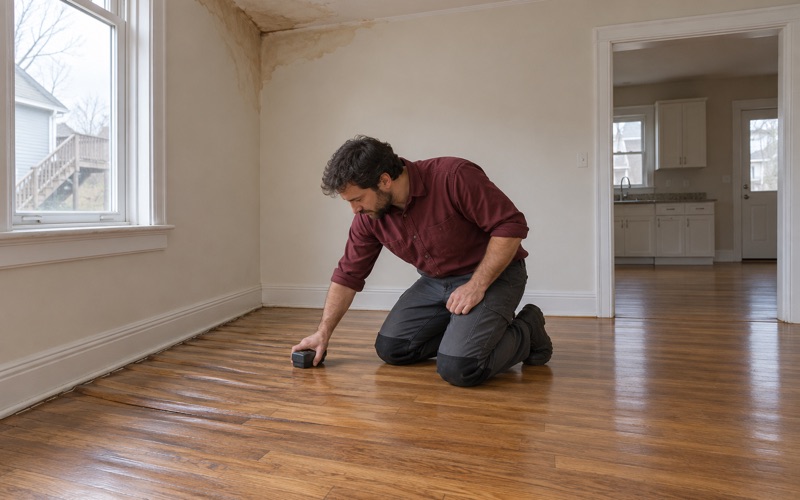
Stacked apartments mean a leak upstairs often becomes a floor problem downstairs. We trace the water from the unit above, a burst pipe or a wet basement, dry the area and read the subfloor and boards with a moisture meter before replacing anything, because cupping and crowning can settle once the wood dries. When an insurance claim is involved, we document each damaged room for the adjuster.
A New Hampshire Rental on the Massachusetts Line
Nashua, known as New Hampshire’s Gate City, had 91,322 residents in the 2020 census, the second-largest in northern New England after Manchester. It sits in Hillsborough County on New Hampshire’s southern border, with Massachusetts directly to the south. Our home base is in Lawrence, so we cross that line often, and we keep the two states separate in how we run a job. A Nashua rental turnover runs under New Hampshire rules, not the Massachusetts rules that govern the apartments we work on in Lawrence.
What Changes at the State Line
In practice, that means we do not import Massachusetts landlord paperwork or Massachusetts lead procedures into a Nashua job as if they applied here. Our itemized estimates still help a Nashua owner document floor condition between tenants, but questions about deposits or tenant charges belong with the owner’s own attorney or property manager, not with a flooring crew.
Some things do carry across. For varnish, sealer and lacquer, the coating VOC limits on both sides of the line match each other, so the finishes we choose fit either state. Our dust control, moisture readings and stain sampling are the same on either side of the border.
Permits and City Contacts
Permit questions for floor work go to the City of Nashua Building Safety Department at City Hall, 229 Main Street. We check with them on the specific job rather than assuming, since the answer depends on the scope of work. If a condominium association or management company has its own approval step, we build that into the schedule too.
Planning a Rental Floor Project in Nashua
The most useful thing a landlord can send us is the unit list: addresses, floor types, lease end dates and anything a departing tenant left behind, such as pet stains or carpet over old hardwood. We walk the units, lay stain samples on your own floor in your own light, and return an itemized schedule that ties each floor to its turnover date. For a building with many units, we stagger the work so each apartment’s floor fits inside its own lease gap.
We also flag what is not ours to fix. A bouncy floor or a sloping floor can point to a joist or framing issue, and we refer structural work out rather than sanding over it, while board gapping, winter gaps and buckling get read for the moisture story they tell. With the list in hand and the dates set, most turnovers become routine.
- 20+ Years on Wood Floors
- Itemized Written Estimates
- Old Pine and Oak Work