
Lawrence Wood Flooring has helped homeowners replace carpet with hardwood in Lawrence, MA for 20+ years, serving surrounding cities including Methuen, Andover, Haverhill, Lowell, Boxford. Sometimes that means pulling up wall-to-wall carpet to find red oak that has been hiding for decades, and sometimes it means installing a new wood floor where the carpet sat on plywood.
Either way, the job starts the same: carpet, pad, staples and tack strip come out, and we look at what is underneath before deciding anything. Whatever we find, you get a written estimate that compares refinishing the floor you already have with installing new boards, so the choice is based on the actual floor and not on a guess.
What Is Under the Carpet
Original Oak Strip Flooring
Many older homes were built with red oak strip flooring that was later covered with wall-to-wall carpet. Underneath, the oak is often in better shape than people expect, protected from sunlight and foot traffic for years.
When we find a sound strip floor, refinishing it is usually less expensive than new hardwood and keeps the original floor. Any stained or damaged boards are replaced before sanding, and the whole room is finished together.
Old Pine Floors
In some houses, especially in older rooms and upper floors, the carpet sits on eastern white pine or other softwood flooring. Pine is softer than oak, so it shows dents and wear, but it can be refinished with a lighter grit sequence that respects the softer wood.
We tell you plainly what a refinished pine floor will look like. It will keep its character marks, which many owners love and some do not, and that difference decides whether to refinish it or cover it with new boards.
Plywood or Particleboard Subfloor
In additions, newer houses and rooms that were renovated, carpet often sits directly on plywood or particleboard. There is no finished floor to bring back, so new hardwood is installed once the subfloor is checked.
Particleboard can swell and crumble when it gets wet, and it does not hold flooring fasteners well. Where we find it, we explain whether it needs to be replaced or covered with plywood before hardwood goes down.
Old Tile and Black Mastic
Sometimes carpet was laid over older resilient floor tile, with black mastic underneath. We identify it rather than sanding or pulling it, and that part of the work stops until the right trade has handled it, because some older tile and adhesive need specialized removal.
Removing Carpet the Right Way
Pad, Staples and Tack Strip
Carpet pad is usually stapled to the floor every few inches, and tack strip is nailed around the edges of every room. Each staple and strip has to come out completely, and the nail holes have to be filled before a floor underneath can be refinished.
We take the time to pull every fastener, because a missed staple tears sandpaper and leaves a scratch across the floor. It is slow, unglamorous work, and it is what decides how good the finished floor looks.
Carpet Glue and Padding Residue
Some carpet was glued down, and some pads leave residue stuck to the boards. We remove glue and residue before sanding, since sanding through it clogs the paper and smears adhesive into the grain.
Painted Edges and Older Homes
Carpet installers often painted or stained only the exposed edges of a floor, and in older homes those painted strips may need care. We confirm the build year before sanding any painted surfaces, because Massachusetts runs its own lead-safe renovation rules for homes built before 1978.
Installing New Hardwood Where Carpet Was
Solid or Engineered Boards
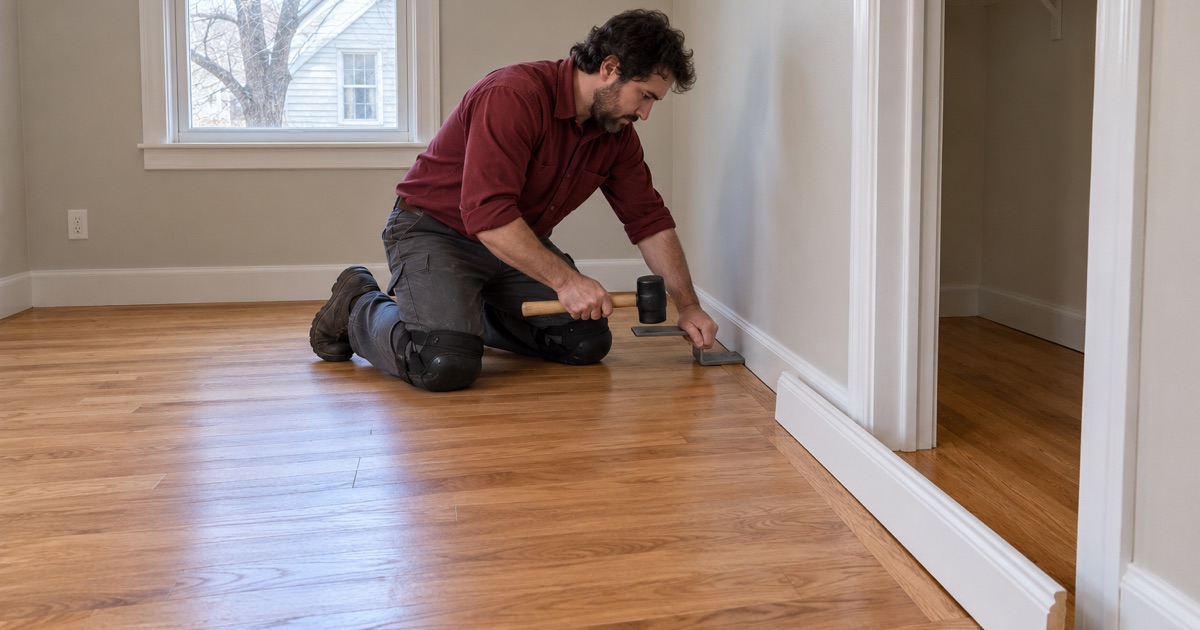
Where there is no floor to save, new solid hardwood is the usual choice above grade, and engineered hardwood is better for basements or rooms over concrete. We match the species and width to any floors the new room connects to, so the house reads as one floor.
Heights and Doorways
Carpet and pad sit at a different height than hardwood, so doorways and transitions change when the carpet comes out. We plan thresholds and reducers so the new floor meets tile, vinyl or other hardwood without a trip edge.
Doors may need to be trimmed or adjusted when the floor height changes. We point that out in advance so it is not a surprise at the end of the job.
Quieter Floors in Upstairs Units
Carpet absorbs footstep noise, and hardwood does not. In a condo or an upper unit of a two-family, that change can be noticed by the people below, so we talk through acoustic underlayment and check whether the building’s condominium documents require one.
Carpeted Stairs and Whole Floors
Stairs From Carpet to Wood
Stairs under carpet often have rough treads never meant to be seen, along with tack strip and staples on every step. We pull everything, inspect the treads and either refinish them, fit new hardwood treads and risers, or retread over them, pricing the stairs tread by tread.
One Room or a Whole Floor
Some owners replace carpet one room at a time, while others take out every carpet on a floor at once. Doing a whole floor together lets us run the boards continuously through doorways and finish everything to one color.
Rentals Between Tenants
Landlords often replace worn carpet with hardwood between tenants, since a wood floor can be refinished at the next turnover instead of being torn out. We schedule the work around the move-out and move-in dates so the unit is ready on time.
- 20+ Years on Wood Floors
- Itemized Written Estimates
- Old Pine and Oak Work