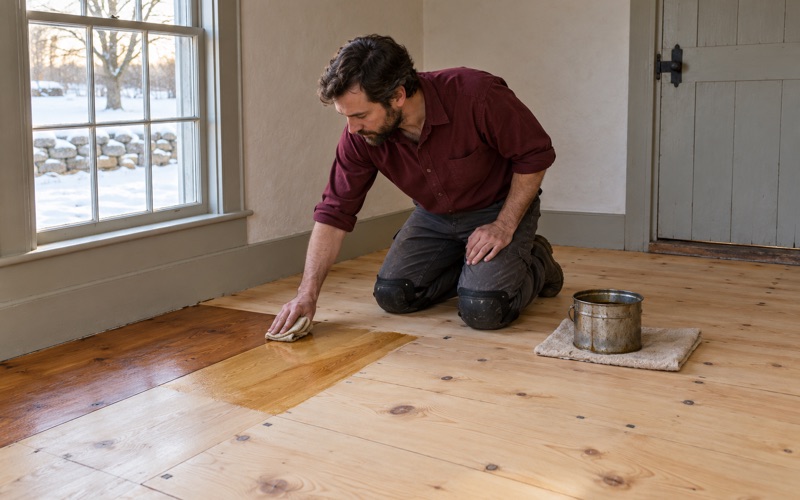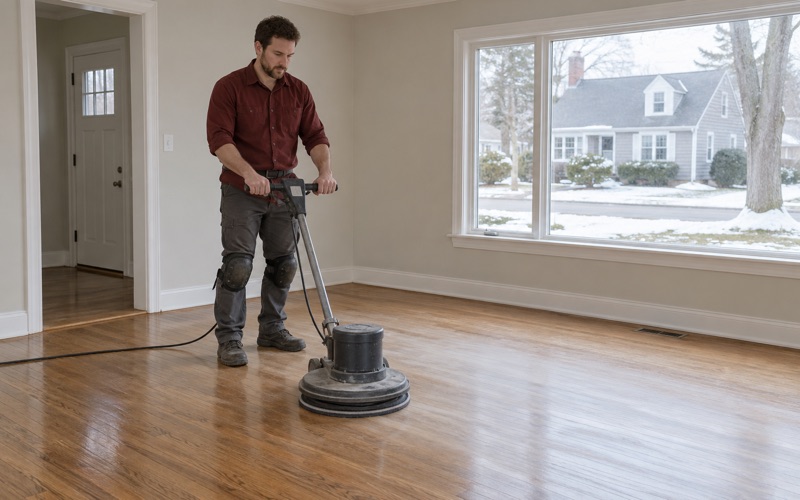
Lawrence Wood Flooring handles wood-flooring in Rowley with more than 20 years in the trade, refinishing, repairing and matching floors in homes where one room was not always built at the same time as the next. A floor that runs from an older front room into a later addition rarely behaves as one surface. Board widths shift, the species can change, and the framing beneath each part may sit at its own height.
That is the kind of job we are set up for. We read each room for what it is before a drum sander touches it, decide where a seam should stay visible and where it can be woven out, and give you a written plan that treats the house as the sum of its parts rather than a single square footage.
Whether you own a farmhouse with an ell off the back, a detached house from the 1990s, or a condominium unit with its own association rules, the work starts the same way: a walk-through, a moisture reading, and stain samples laid on your own boards in your own light. From there, each room gets the treatment its age and wood call for.
Floors in Rowley Houses Built in Stages

Rowley has a well-documented example of a house that grew. The Platts-Bradstreet House on Main Street, just beyond the town green, is believed to have been built in 1677 by Samuel Platts, and its 1980 National Register nomination calls it a good example of a First Period house expanded during the eighteenth century to meet changing needs. The Rowley Historical Society has owned it since the 1920s.
What the Nomination Records
According to that nomination, the house began as two stories and one room deep. A rear lean-to was added during the first quarter of the 1700s, and between 1766 and 1770, after the property passed to Moses Bradstreet, the lean-to was raised to make a full two-and-a-half-story, two-room-deep house. The nomination notes that most of the present interior finish appears to date from that enlargement, and that the framing reflects the earlier lean-to form.
Why a Documented Example Matters on Your Floor
We do not assume any one Rowley home followed that sequence; the nomination documents one house. What it shows is the pattern we look for whenever a client tells us a house has an addition: each stage brings its own framing, its own finish and its own idea of where the floor should sit. The Chaplin-Clarke House on Haverhill Street, whose oldest section dates to about 1670, also gained a rear lean-to around 1700, so the idea of a house added to over decades has deep roots here.
In practical terms, a staged house can have red oak strip flooring in one room, eastern white pine in the next and an engineered wear layer in a kitchen that was redone later. Each needs its own grit sequence, its own finish choice and, sometimes, its own repair method. Treating them as one floor is how a softwood room gets gouged or an engineered floor gets sanded through.
Looking for wood-flooring closer to Newburyport? See Newburyport Wood-Flooring.
Old Rooms, Later Ells: Where Rowley Floors Change
The most telling spot in a staged house is the doorway between eras. That is where we often find a threshold covering a height difference, a reducer someone added to hide a seam, or boards running at right angles because the addition was framed in the other direction.
Reading the Transition
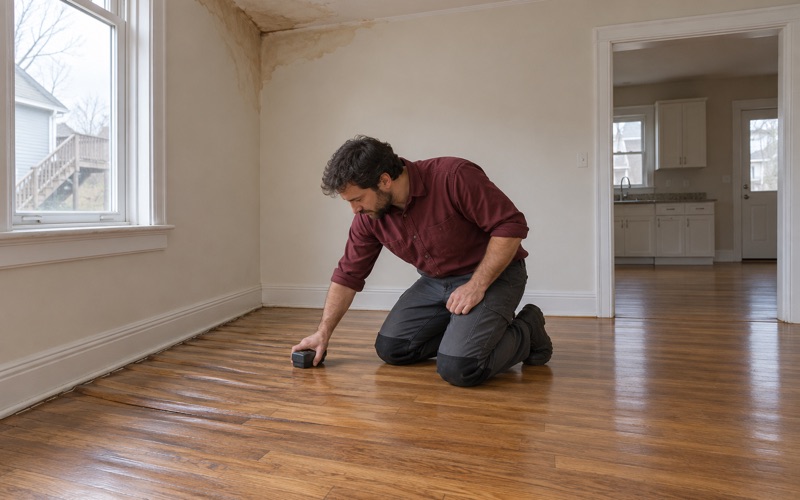
Before we quote a transition, we check the joist direction on each side, the board width and species, and whether the two floors move the same way through the seasons. Winter gaps that open in an old pine room and stay tight in a newer oak room are a normal sign of two floors with different histories. Cupping or crowning along the line where they meet usually points to moisture, and we trace it with a moisture meter before deciding anything.
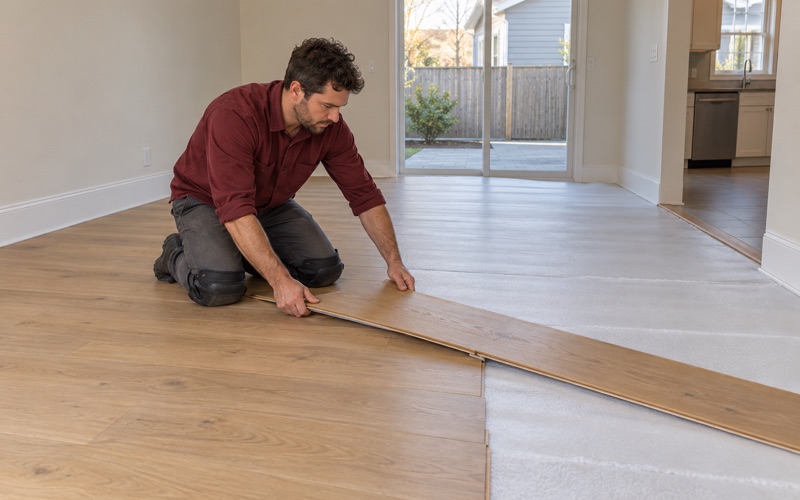
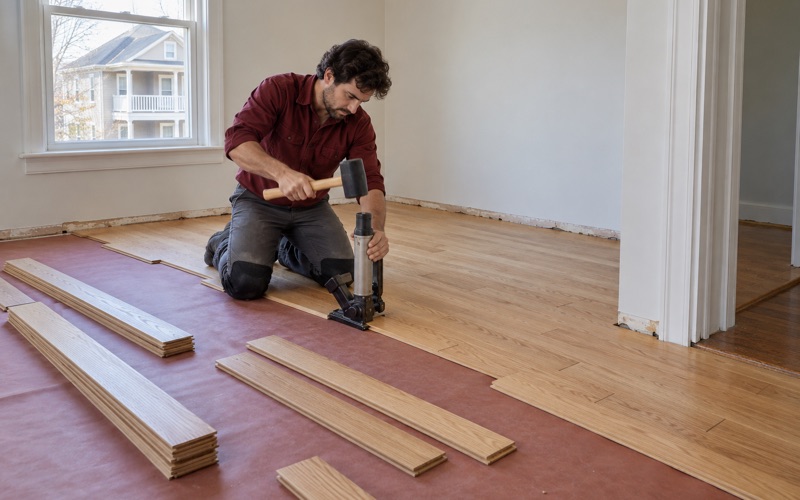
When a later room needs new boards to meet an old one, the new stock is brought into the house to acclimate before it goes down, and we leave an expansion gap at walls and fixed edges, following the NWFA Installation Guidelines. Skipping that step is how a seam that looked tight in summer opens into board gapping by the first heating season.
Weaving, Bridging or Leaving a Clean Break
Where the species and width allow, a weave-in repair can carry the boards across the old line so the seam disappears. Where they do not, a well-made threshold or a flush reducer is the honest answer, and we will tell you so rather than force a match that will open up within a season. If a floor dips or bounces at the transition, we read it for what it is and refer structural work to the right trade instead of sanding over a sloping floor.
Holes and Patches Left by Earlier Changes
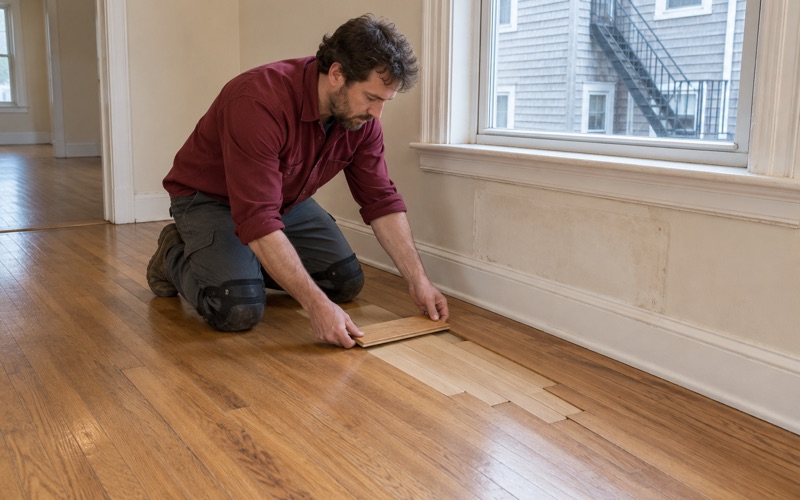
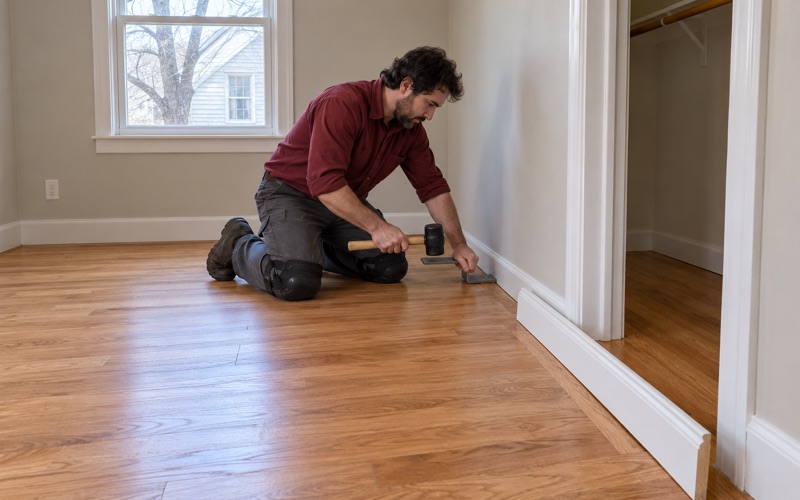
Heating changes often came along with additions. When radiators and their pipes come out, we patch the holes they leave with matching boards woven into the floor rather than filling them with putty. A good patch follows the existing board lengths and staggered joints, so it reads as part of the floor once it is sanded and finished.
Repairing Floors in Rowley’s Pre-1940 Houses
According to the ACS 2024 five-year estimates for the town, 562 of Rowley’s 2,447 homes, or 23.0 percent, were built in 1939 or earlier. That is a minority of the housing, but it is a large enough share that we expect to meet softwood flooring, cut nails and layers of old finish on a regular basis.
Softwood Is Not Oak
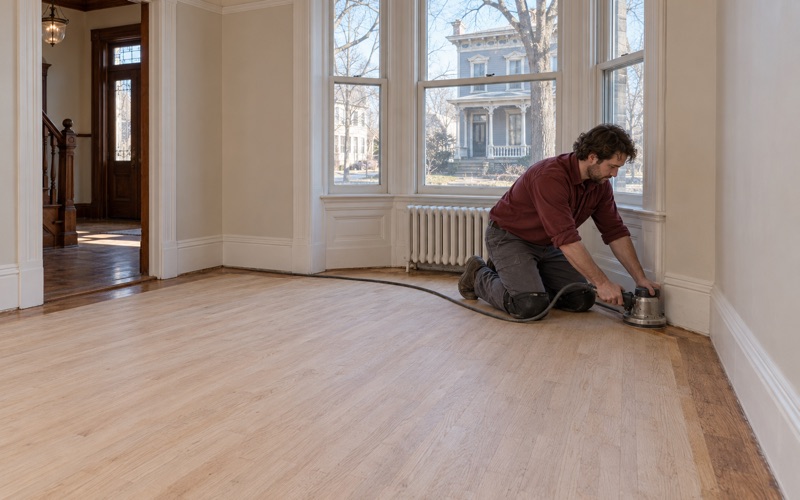
Old pine and other softwood floors are sanded with the softer wood in mind. We use a gentler grit sequence, lighter pressure and more orbital sander work at the edges, because a drum sander run the way it would be on oak can dish out the soft grain between the harder rings. Shellac finish and wax residue are common on these floors, and both have to come off cleanly or the new coat will not bond.
Some older rooms hold southern yellow pine or heart pine rather than eastern white pine, and each sands and takes stain in its own way, so we test a small area before committing to a grit sequence for the room. Boards fastened with cut nails are often face-nailed, so we set the nail heads below the surface before sanding rather than let a drum sander catch them.
Lead and Old Coverings
Before any sanding, we confirm the build year and look for painted surfaces. Massachusetts runs its own lead-safe renovation rules for homes built before 1978, and in Rowley, 55.7 percent of homes date from before 1980, so this check is routine rather than occasional. If we lift carpet and find old resilient tile or black mastic underneath, we identify it rather than sand it, and the work stops until the right trade has handled it.
Pests, Stains and Damage
Old boards can carry the small exit holes of powderpost beetle or old house borer, as well as pet urine stains and water stains that run deeper than the finish. We test whether a stain will sand out, and where it will not, we replace the affected boards with matched stock instead of staining the whole room dark to hide it.
Newer Rowley Homes and Planning Your Floor Project
Rowley has also kept building. The same ACS estimates count 367 homes built during the 1990s, 321 during the 2000s, 94 during the 2010s and 47 since 2020, or 829 homes since 1990. Floors in houses of that age are often solid hardwood or prefinished boards, and the usual complaints are traffic lanes, sun fade, scratches and a finish that has worn thin.
Screen and Recoat or Full Sanding
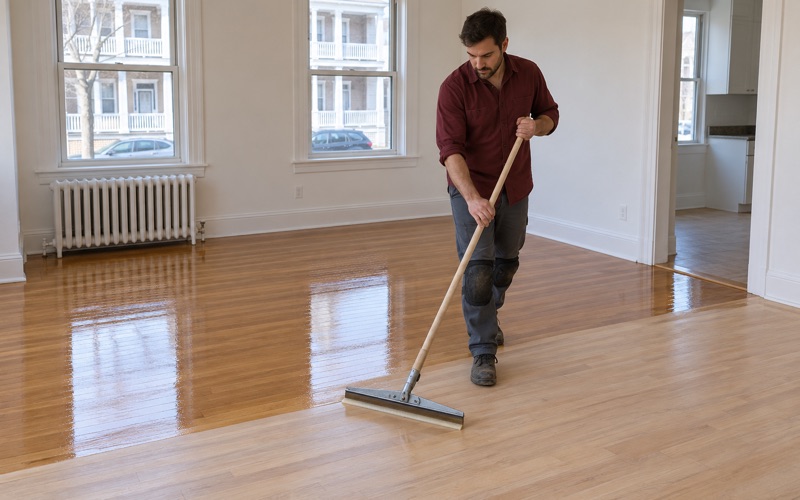
If the finish is worn but the wood beneath is intact, a screen and recoat can restore it without taking the floor back to bare wood. Where the finish is gone in traffic lanes or the color needs to change, we sand fully, with dustless sanding and a HEPA vacuum to limit dust in the rest of the house. On an engineered floor, we measure the wear layer first, because some can take a sanding and some cannot.
Finish, Sheen and Color
We talk through waterborne polyurethane, oil-modified polyurethane and hardwax oil in terms of how you use the room, how fast you need it back, and how much amber you want. Finishes are chosen to fit coating VOC limits for varnish, sealer and lacquer. Sheen level and stain color are settled with samples on your own floor, not from a chip in a showroom.
Planning a Floor Project in Rowley
According to the same estimates, 81.7 percent of Rowley homes are owner-occupied and 70.0 percent are detached. For attached homes and any condominium units, we talk through underlayment and floor choices against what the building’s own condominium documents say. For landlords, we write itemized estimates of the kind Massachusetts requires before a tenant can be charged for floor damage, and schedule rental floor work around move-out and move-in dates.
Rowley’s housing also counts 61 units in two-unit buildings and 110 units in three- or four-unit buildings. In a two- or three-family house, we work one floor at a time, so whoever lives on the other floor keeps living in the building while the job goes on.
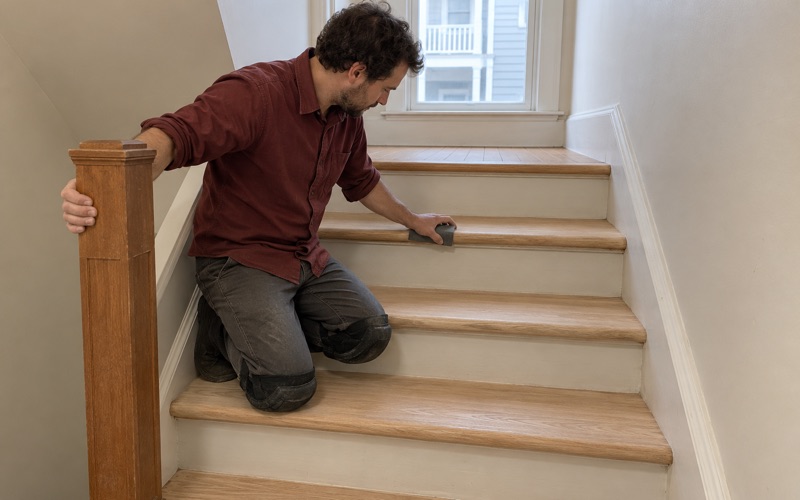
Stairs are quoted tread by tread, because a staircase is not priced by the square foot. If water from a burst pipe or a wet basement is part of the story, we trace and dry it, read the boards with a moisture meter before replacing anything, and document the damage room by room for the adjuster. Then we put the full plan in writing so you know which rooms get which treatment, and why.
- 20+ Years on Wood Floors
- Itemized Written Estimates
- Old Pine and Oak Work