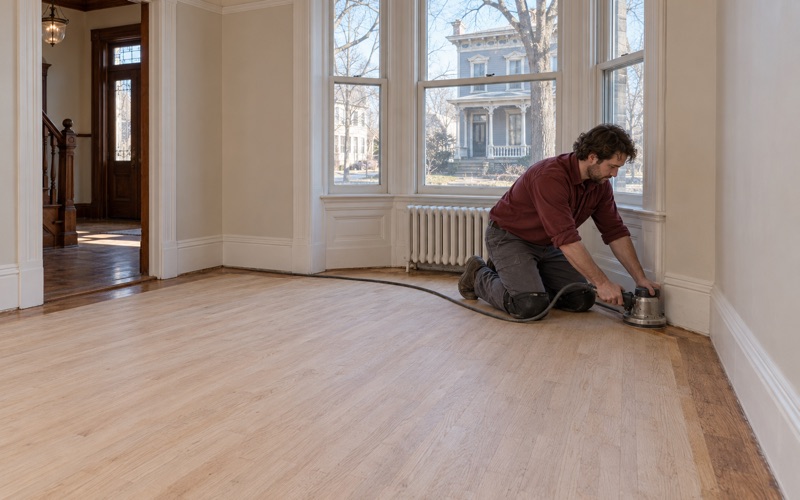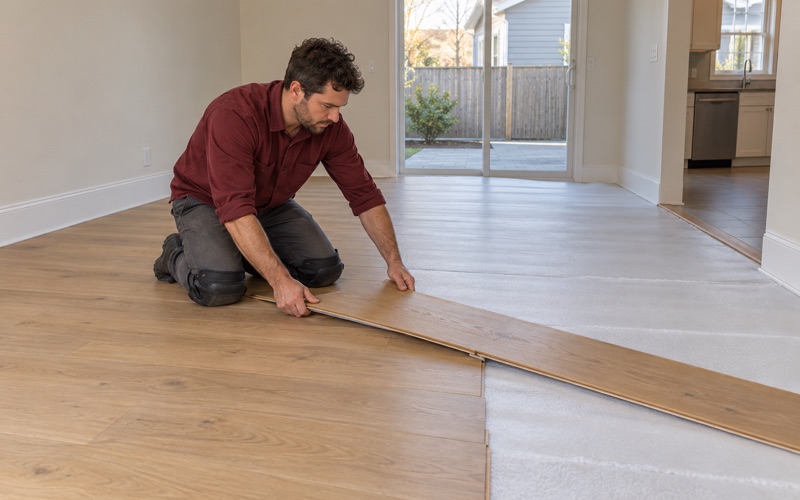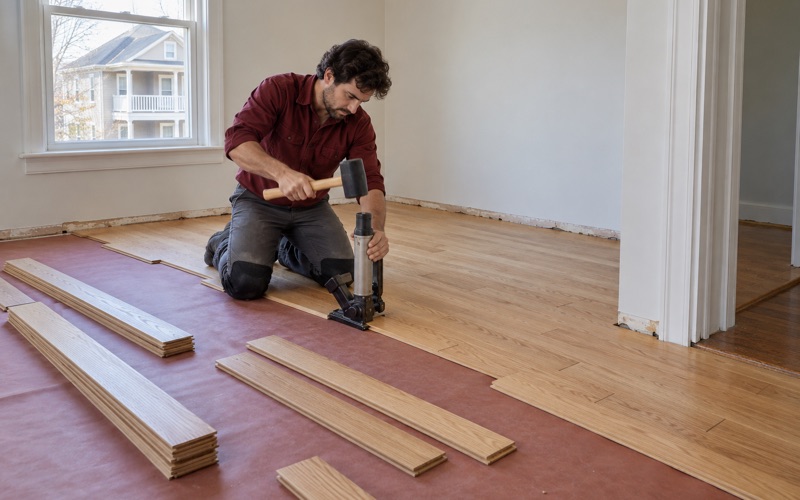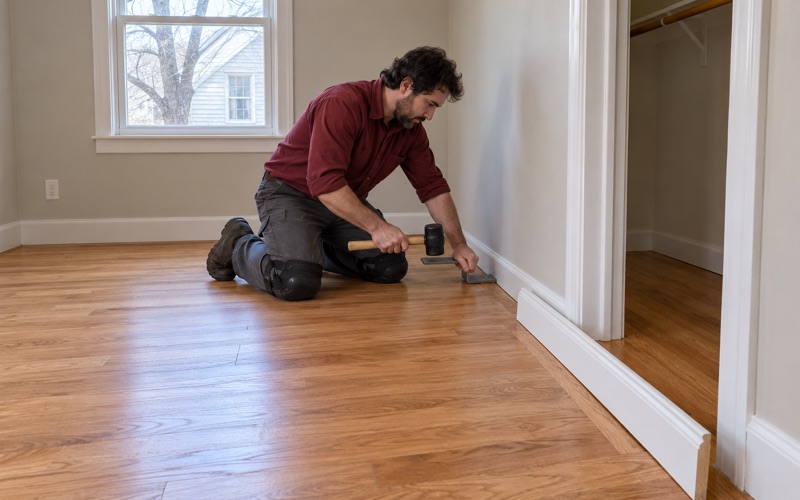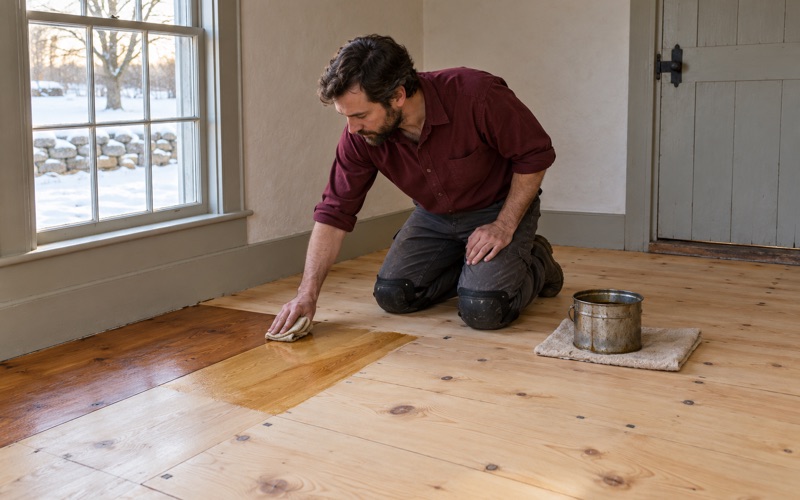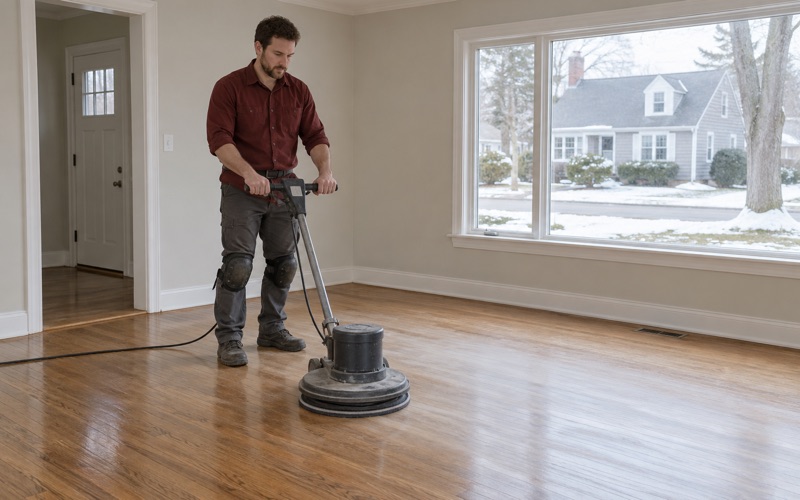
Lawrence Wood Flooring brings more than 20 years in the trade to wood-flooring in Salisbury, and much of that work here starts with a landlord’s calendar. A unit sits empty, a new tenant or guest is booked, and the floors are the most visible thing standing between the two. We refinish, repair and replace wood floors for rental owners who need the job sized to the gap they actually have.
Our estimates are written and itemized, room by room, so an owner knows what each line covers before we start. That matters twice for a landlord: it plans the work, and it is the kind of document Massachusetts expects before a tenant can be charged for floor damage out of a security deposit.
We also work around people. In a two- or three-family house we take one floor at a time, so whoever lives on the other level keeps living there while we sand, stain and finish.
A Certificate of Habitability Before Any Salisbury Rental
Salisbury’s Board of Health treats a rental as a rental no matter how long it lasts. Its housing regulation, Chapter 5, Section 9, “Housing Inspections and Rental Certificates,” was amended on June 3, 2025, and it says owners “must obtain a Certificate of Habitability prior to renting or leasing long-term, seasonal, or short-term dwelling units.” The regulation adopts the State Sanitary Code, 105 CMR 410, as a local rule, and the inspection is carried out under it.
Year-round, seasonal and short-term alike
The definitions are what catch owners off guard. A seasonal rental is a term of not more than five months, and a short-term rental is a term of not more than 31 days, and both need the same certificate a year-round lease does. A cottage let for July and August is covered, and so is a condo rented by the week.
A short-term operator also has to show the Department of Revenue’s Room Occupancy Excise registration as part of the application. The town’s Health Department at 5 Beach Road handles the application and the inspection.
Five years, and $100 a day without one
A Certificate of Habitability is valid for five years. The penalty side is blunt: the regulation fines an owner $100 for each and every day a unit is occupied without the required certificate. Waiting until the first guest arrives to think about the floors can turn a refinishing job into a running fine.
Owner-occupied units are exempt, but the owner files a notarized Affidavit of Owner Occupancy every five years instead. If you live in one unit of your building and rent the other, the rented unit still needs its own certificate.
Owners the regulation names
The regulation’s definition of an owner is broad. It includes a manufactured housing community and an officer or trustee of the association of unit owners of a condominium. Salisbury has 196 mobile homes, 3.9 percent of its housing units, so floor work in a park or a condominium can involve a manager or an association board as well as the unit holder.
Looking for wood-flooring closer to Lynn? See Wood-Flooring in Lynn.
What “Move In Condition” Asks of a Floor
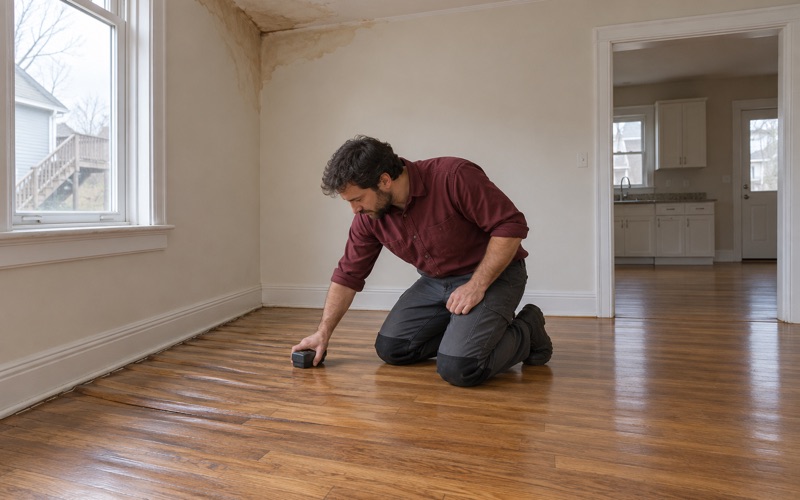
The inspection section of the regulation says vacant units “shall be in ‘move in condition,’” and it lists what that means: clean, walls painted, appliances clean and working, bathroom fixtures of a smooth impervious material, and “floors, walls and ceilings in good condition.” Floors are named directly, which is why owners call us before an inspection is booked.
The regulation’s wording, and what it leaves open
The regulation does not define good condition for a floor. We will not tell you that one finish, one sheen or one species is what the inspector wants, and we will not promise any inspection result. What we can do is walk the unit, show you what a reasonable person would call damage or wear, and price fixing it.
Wear we look for in a vacant unit
Turnover floors tend to show the same handful of problems. Traffic lanes worn gray through the finish in a hallway, sun fade under a window, pet urine stains that have gone black in the wood, and water stains near a kitchen sink or a radiator are common. Board gapping that opens up every winter, cupping or crowning along a wet wall, and loose or squeaking boards all get noted on the estimate.
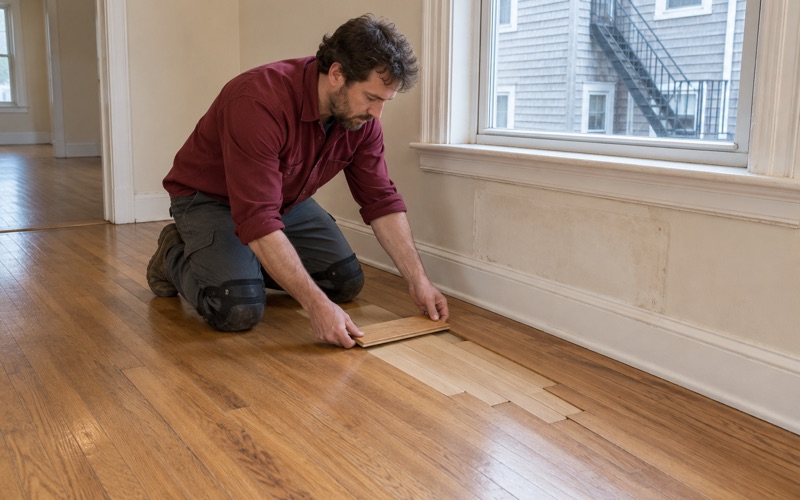
Some of those are cosmetic and some are not. Light traffic wear that has not reached bare wood may need only a screen and recoat, while a pet stain that has soaked into the grain usually means a board replacement woven into the surrounding floor. A bouncy floor or a sloping floor gets read for what it is, and when the cause sits in the joists or framing we refer that work out rather than sanding over it.
Old floors, old tile and pre-1978 paint
The town’s housing stock skews old. Of its 5,040 housing units, 18.4 percent were built before 1940 and 49.6 percent before 1980, so a rental may well have eastern white pine, heart pine or an early red oak strip floor under its finish. Softwood dents and sands differently from oak, and we refinish it with lighter passes and a grit sequence suited to the softer wood.
Older units also bring two things we check before any sanding starts. We confirm the build year and look for painted surfaces, because Massachusetts runs its own lead-safe renovation rules for homes built before 1978. Old resilient tile and the black mastic under it are identified and left alone, and the work pauses until the right trade has handled them.
Seasonal, Short-Term and Year-Round Turnovers
A beach rental and a year-round apartment ask for different schedules, even when the floor problems look alike. We build the job around your move-out and move-in dates rather than asking you to work around ours.
Seasonal and short-term units
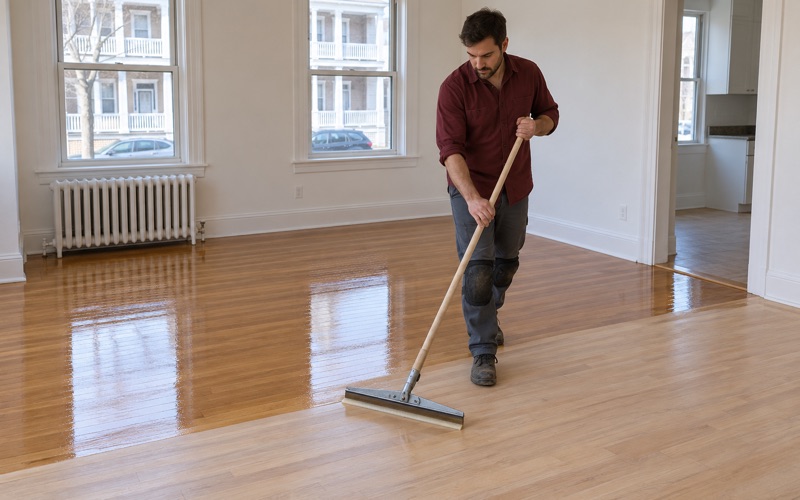
For a unit rented by the week or the month, the window between bookings is often short. A screen and recoat with waterborne polyurethane can refresh a sound floor quickly and with little odor, and it suits floors that see sand, flip-flops and luggage wheels all summer. When the finish has worn through to bare wood, a full sand and refinish needs a longer gap, and we will tell you plainly whether your calendar allows it.
Sand tracked in from the Salisbury Beach Boardwalk and the shore acts like fine sandpaper on a finish. We talk through sheen level with owners of these units, since a satin or matte finish hides the fine scratches that a gloss finish shows. Entry mats and felt pads do more for a short-term floor than most owners expect.
Year-round leases and the security deposit
Salisbury has 1,196 renter households among its 4,148 occupied homes, and when one of those tenants moves out, the floor is where damage disputes usually start. Our itemized estimate separates ordinary wear from damage line by line, which gives a landlord a clear written record if any of the deposit is to be held back.
That record is also useful for your own planning. If one bedroom needs board replacement and the rest of the unit needs only a recoat, the estimate says so, and you can decide how much to do now and what can wait until the next turnover.
Two- and three-family buildings
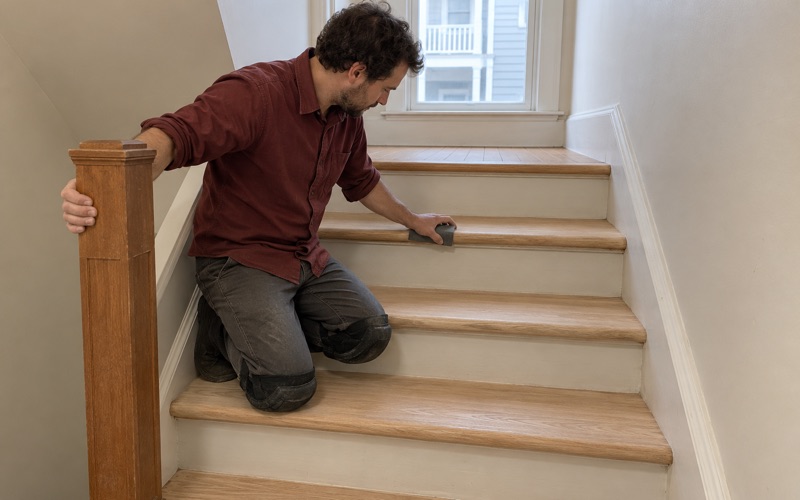
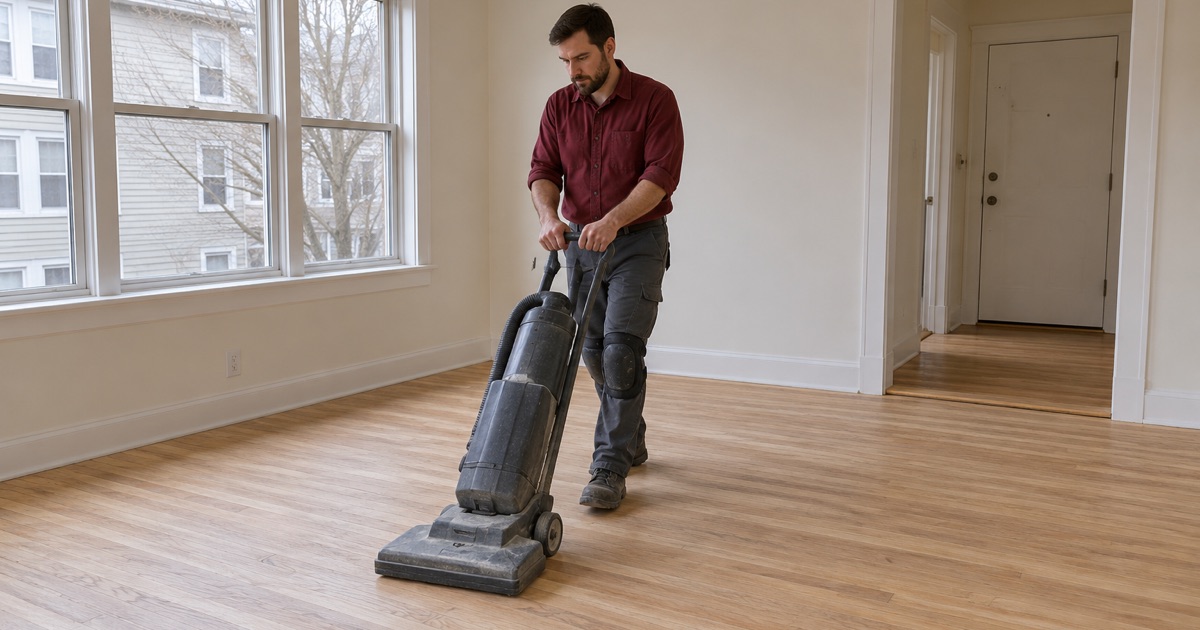
Some Salisbury rentals sit inside two- and three-family houses, with an owner or another tenant living upstairs or down. We stage the job so the occupied unit stays occupied, and we use dustless sanding with a HEPA vacuum to keep dust on our side of the door. Stairs in a shared hall are quoted tread by tread, since a staircase is not priced by the square foot.
Planning Floor Work Before a Salisbury Inspection
The simplest advice we give is to get the floor done before the inspection is scheduled, not after. A finish needs time to cure before furniture goes back, and an inspector walking a unit mid-project sees a job site rather than a home.
Sequencing the turnover
We usually suggest this order: empty the unit, let us assess and quote, finish any wall painting, then sand and coat the floors last so paint drips and ladder marks do not land on new finish. Bathroom fixture and appliance work can run alongside, as long as nobody is crossing a wet floor. Once the floor has cured, the unit is ready for its inspection and its next occupant.
Where a radiator has been removed, the holes left by the unit and its pipes are patched with matching boards woven into the floor rather than covered with a plate. That kind of repair reads as part of the original floor, which is how most owners want a vacant unit to look.
Finishes on both sides of the state line
Salisbury borders Seabrook, New Hampshire, to the north and Amesbury to the west, and an owner may hold rentals in both states. We choose finishes that fit the coating VOC limits in Massachusetts and New Hampshire, which match each other for varnish, sealer and lacquer. That keeps one finish choice workable across a portfolio that crosses the line.
When a color change is part of the turnover, we lay stain samples on your own floor, in your own light, before you pick one. For a rental, a mid-tone usually hides sand and scuffs better than a very dark or very light stain.
Condominiums and upstairs units
For a condominium unit, the building’s own documents may say what can go under a floor and how impact noise is handled. Before we replace carpet with wood or swap one floor for another upstairs, we talk through underlayment choices against what your association’s documents say. If an officer or trustee of the association is also the owner of record for the certificate, it helps to have them in that conversation early.
Lawrence Wood Flooring can walk a vacant Salisbury unit and write up exactly what we see. Then we schedule the work to land before your inspection and your next tenant or guest.
- 20+ Years on Wood Floors
- Itemized Written Estimates
- Old Pine and Oak Work