Lawrence Wood Flooring handles wood-flooring in Saugus with more than 20 years of sanding, refinishing, repair and installation behind the work. Much of what we do here starts with one question about the lowest floor of the house: how much moisture is the wood living with, and where is it coming from? The answer decides the material, the finish and the timing of every step that follows.
We read the floor before we quote it. That means moisture meter readings, a close look at cupping, crowning and board gapping, and a check of the build year and any painted surfaces, since Massachusetts runs its own lead-safe renovation rules for homes built before 1978. Old resilient tile and the black mastic beneath it get identified and left alone until the right trade has dealt with them.
Most of our Saugus estimates cover solid hardwood refinishing, board replacement, stairs priced tread by tread, and new floors on levels where an engineered wear layer makes more sense than solid oak. Every estimate comes back in writing and itemized, so you can see what each room costs before any sanding begins.
Saugus, the Saugus River and Rumney Marsh
Saugus is a town of 28,619 people in Essex County, and its story runs along the Saugus River, where the Saugus Iron Works was established in 1646 as the first integrated iron works in North America. Downstream, the river meets Rumney Marsh, a broad tidal salt marsh. For a flooring contractor that geography matters more than the history, because tidal water and the floors closest to it are tied together.
The Culvert Under Ballard Street
In southeastern Saugus, a culvert under Ballard Street provides the hydraulic connection between the Saugus River and the northern section of Rumney Marsh. A June 2020 certificate from the state’s Secretary of Energy and Environmental Affairs covers the Ballard Street Culvert Reconstruction, which proposes a 111-foot, 48-inch reinforced concrete pipe with an adjustable tide gate at its outlet. The existing culvert relies on a makeshift gate made of a metal plate covering the outlet.
The site sits about one mile northwest of the river’s mouth at Broad Sound, beside Fox Hill Yacht Club and Vitale Park. The certificate is a review document for a planned project, not a record of construction, so we describe what it says rather than what has been built.
How the Tide Gate Is Meant to Work
According to the certificate, the gate opening is adjusted to let salt water flow into the marsh in ordinary conditions. Under storm conditions it is closed to keep the Saugus River from flowing into the marsh, and before a forecast storm with heavy rain or surge the town is to lower it so the marsh keeps its flood storage and can drain once river levels fall. The same document states that maintaining flow at all times is necessary to minimize the risk of flooding in homes along the marsh upstream of the culvert.
Rumney Marsh as Flood Storage
Rumney Marsh was designated an Area of Critical Environmental Concern in August 1988, and the certificate notes that the marsh provides flood storage capacity protecting low-lying areas of adjacent communities from coastal storms. The designated area covers about 2,800 acres, including the 1,000-acre marsh itself. The certificate places the Ballard Street site in FEMA Zone AE with a base flood elevation of 10 feet, NAVD 88, which describes that site and not any particular house.
If you want to know where your own home sits, the flood map for your address is the place to look. We plan the lowest floor around what that map and our own readings tell us, not around a guess.
Looking for wood-flooring closer to Lexington? See Wood-Flooring Services in Lexington.
Choosing Floors for the Lowest Level Near Tidal Water
When a house sits low and close to the marsh or the river, we think about the lowest floor differently from the rooms upstairs. Solid hardwood swells and shrinks with humidity, and a ground-level room that sees damp air for long stretches can push red oak strip flooring into cupping or buckling. That does not rule out solid wood, but it changes how we prepare for it.
Engineered Versus Solid Wood
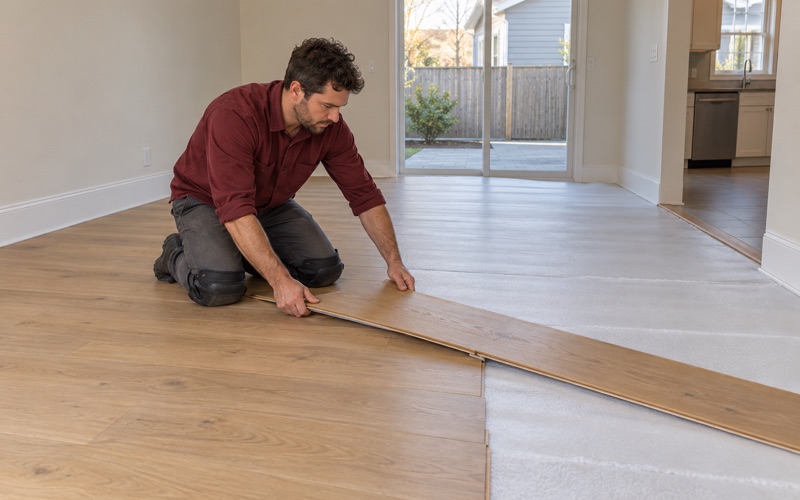
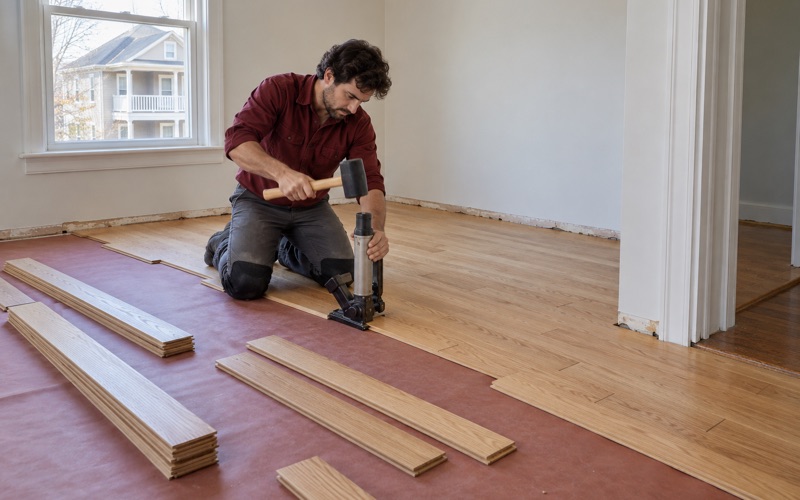
Engineered flooring puts a real hardwood wear layer over a cross-layered core, which holds its shape better when moisture levels swing. On a lowest floor near tidal water, or in a room that sits below grade, we often recommend engineered boards with a wear layer thick enough to be sanded again later. Solid white oak or maple still has a place on a main floor that stays dry, and we will tell you plainly which rooms suit which product.
Prefinished engineered boards also shorten the time a room is out of use, since there is no site-finished coating to cure. The tradeoff is a slight bevel at the edges, which some owners like and some do not, so we show both before you decide.
Subfloor, Vapor Retarder and Acclimation
Whatever goes down, the subfloor gets checked with a moisture meter first, and those readings are compared with the new flooring before installation. We follow the NWFA Installation Guidelines on acclimation, vapor retarder choices and the expansion gap at the walls, because a floor with no room to move will find room on its own. Boards are left to acclimate until the readings say they are ready, not until a set number of days has passed.
Finishes That Suit a Damp-Prone Level
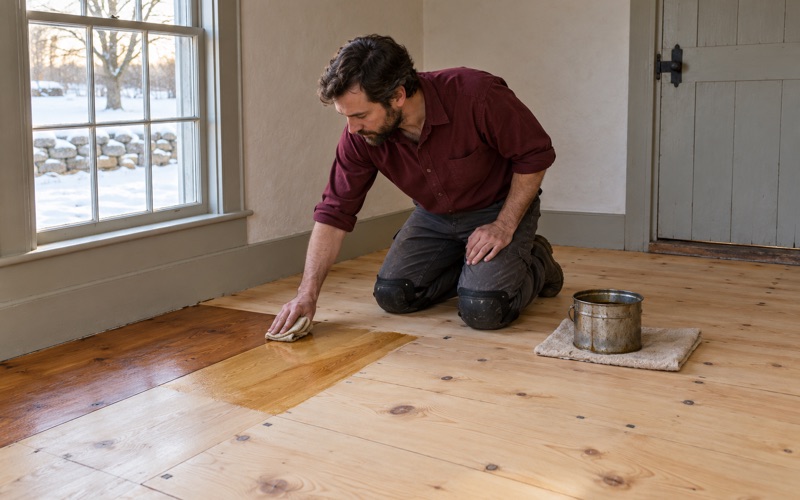
For finish, we talk through waterborne polyurethane, oil-modified polyurethane and hardwax oil with an eye on how easily each one is repaired. A hardwax oil can be spot-repaired after a small spill, while a film finish gives more short-term protection from standing water. Stain samples go down on your own floor, in your own light, so the color is chosen where it will actually live.
Drying and Moisture Checks Before Refinishing
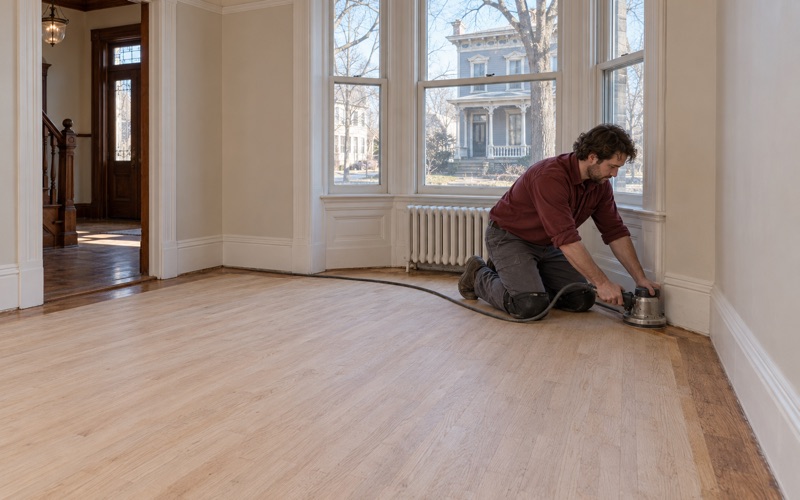
Refinishing a floor that is still carrying water seals the problem under fresh finish. If a lower-level floor has taken on water, or has simply stayed damp through a wet season, we wait for the wood and subfloor to dry before a drum sander touches it. Sanding a cupped floor too early flattens the raised edges, and once the boards dry out they crown in the middle and the finish shows it.
Reading the Wood, Not the Calendar
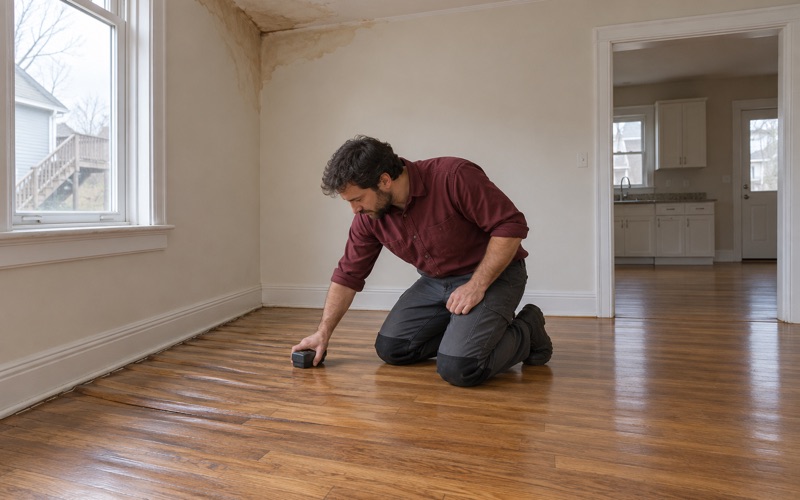
We take moisture meter readings across the room and compare them with readings from a dry area of the same house. Drying time depends on how much water got in, how long it sat and how well the space can be ventilated, so we give you a range rather than a promise. When the numbers level out and the boards lie flat, the floor is ready for the full grit sequence.
Water Stains, Gaps and What Sanding Can Fix
Light water stains in the top of the finish often sand out, while dark stains that have soaked deep into the wood usually call for board replacement. Winter gaps that open and close with the seasons are normal, but gapping that appears after a wet spell can point to boards that swelled and crushed against each other. We sort out which is which before quoting a refinish, so the estimate fits what the floor actually needs.
Dust and Lead Checks Still Apply
In Saugus, 71.9 percent of housing units were built before 1980, so we check the build year and the painted trim before sanding near it. Our dustless sanding setup runs through a HEPA vacuum, and the Massachusetts Lead Law and the state’s lead-safe renovation rules shape how we contain the work in older rooms.
Repairing Floors After Water Gets In
When water reaches a floor, whether from a storm, a burst pipe, a leak from upstairs or a wet lower level, the first job is tracing where it came from. We dry the area, take readings and confirm the source has stopped before any board is cut out. Replacing wood over a subfloor that is still wet only repeats the damage.
Documenting Damage for the Adjuster
If you are filing an insurance claim, we document the damage room by room with photos, moisture readings and a written description of what failed. Adjusters work from that record, and a clear one keeps the conversation on the floor rather than on guesses. We keep the itemized repair estimate separate from the drying work so each part of the claim is easy to follow.
Weave-In Repairs and Board Replacement
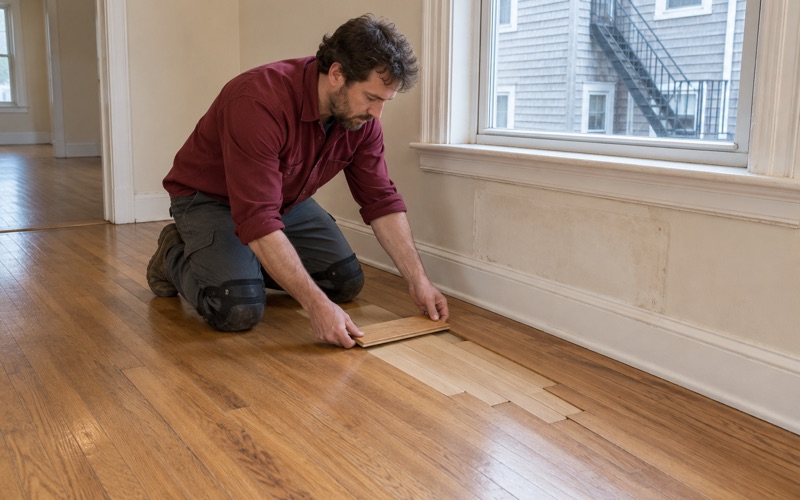
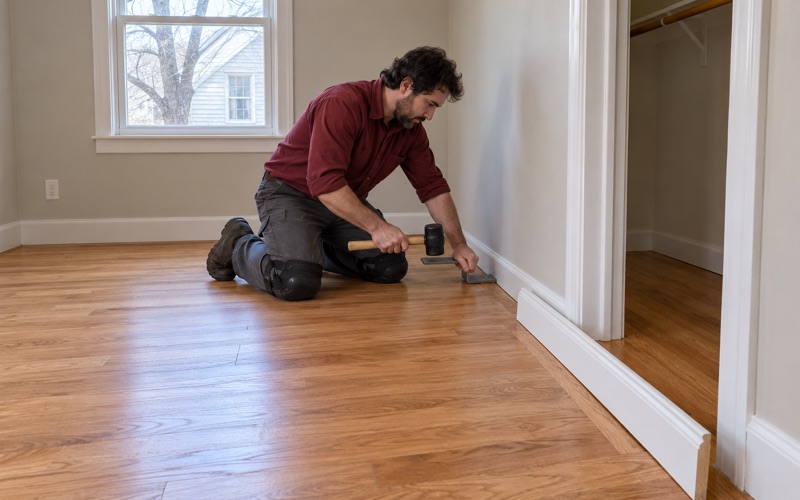
Damaged boards come out and new ones are woven into the existing floor so the joints stagger the way the original installer laid them. Where an old radiator once sat, the patch gets the same treatment, with matching boards rather than a filler strip. On eastern white pine or other softwood flooring, we sand with the softer wood in mind so the repair blends in instead of dishing out.
Stairs and Transitions After a Leak
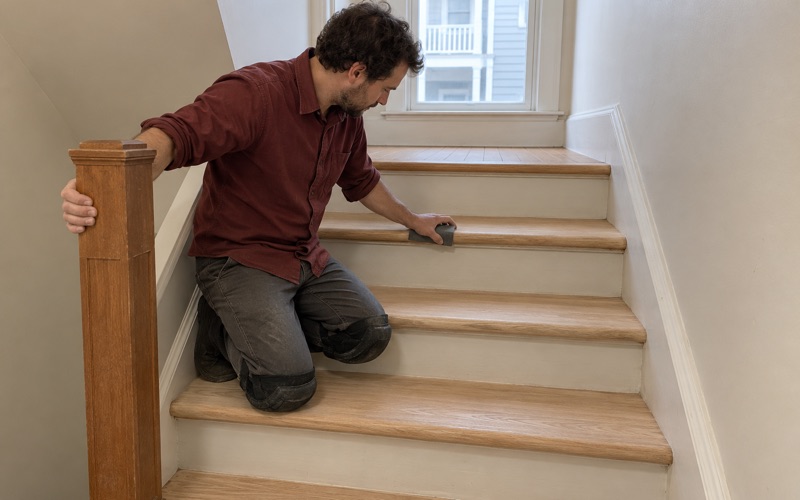
Stairs that lead down to a lower level can take water at the bottom treads first, and we quote them tread by tread rather than by the square foot. A swollen stair nosing or a lifted reducer at a threshold can usually be replaced on its own once the wood around it reads dry. Quarter round along the walls comes off during drying so air can reach the edge of the floor.
When the Problem Is Below the Floor
Sometimes a floor that bounces or slopes after water damage is telling you about the joists or framing beneath it. We read those floors for what they are and refer structural work out rather than sanding over it. Once the structure is sound and the readings are dry, we come back to finish the floor as one continuous surface.
- 20+ Years on Wood Floors
- Itemized Written Estimates
- Old Pine and Oak Work