Lawrence Wood Flooring brings more than 20 years of wood-flooring work to Topsfield, covering sanding and refinishing, board repair, stairs and new installation. Most of what we see here falls into two groups of houses: older homes that predate the town’s suburban growth, and the ranches, capes and colonials that filled in around them after the war. We plan each job around which of those two groups your floor belongs to, because the wood, the fasteners and the history of past finishes tend to differ between them.
Before any sander comes off the truck, we look at the build year, test painted surfaces where the house is old enough to need it, and check whether old tile or adhesive is hiding under a carpet. We lay stain samples on your own boards so you can judge color in the light your rooms actually get. Then you receive a written estimate that lists each room, each staircase and each repair as its own line.
Floors in Topsfield’s Farmhouses and Country Estates
Topsfield has an unusually clear written record of how its countryside was built. In 2005 the town’s farms and rural houses were documented for the National Register in a study titled “Historic Farms and Rural Retreats of Topsfield, Massachusetts,” which traces rural development from about 1670 to 1955. It covers the town outside its civic center, and it reads like a timeline of the houses whose floors we are now asked to save.
General Farms to Merchants’ Country Seats
The study describes general farms in the early centuries, followed by a new kind of owner in the first half of the 1800s. Two Salem merchants and ship owners, Captain Thomas Perkins and Captain Benjamin Crowninshield, set up large country estates here, among the earliest country seats wealthy city dwellers built in town. By the 1870s, the study notes, a few more farms had been bought as second homes and rural retreats, the arrangement often called a gentlemen’s farm.
That layered history matters on the floor. A house that began as a working farm and later became a retreat may carry floors from several eras in one building, patched and replaced as owners came and went. We never assume what a room is made of; we pull a register grille or check an edge in a closet and identify the species and the fastener before quoting the method.
What Older Boards Usually Need
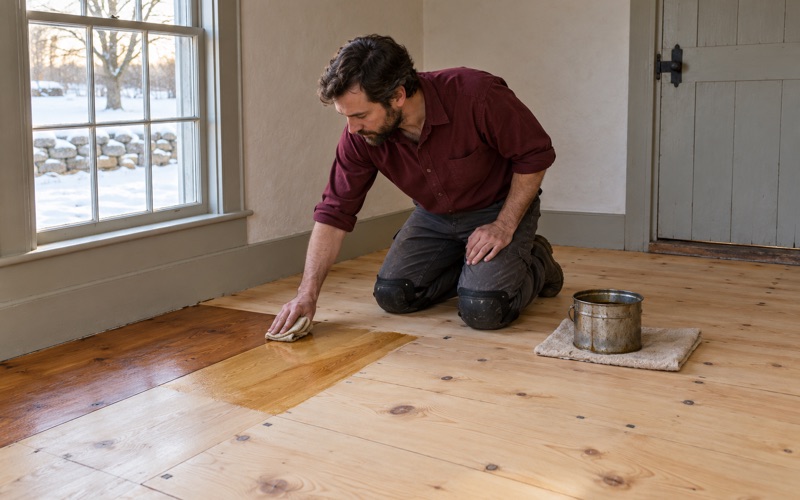
When a floor turns out to be eastern white pine or another softwood, we refinish it as softwood rather than sanding it like red oak strip flooring. Pine dents and dishes quickly under a drum sander, so we take lighter passes, use a gentler grit sequence and keep much of the character the floor has earned. Cut nails that have worked up get set back down before sanding, not ground off.
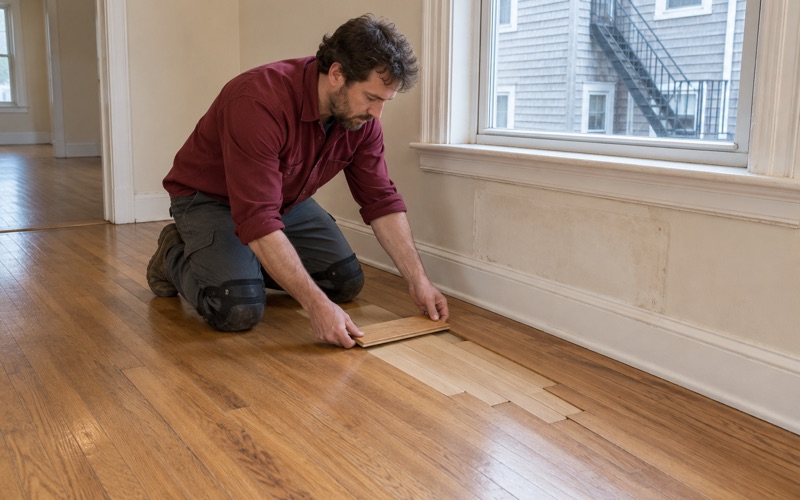
Older finishes also need reading first. Wax residue and shellac finish both reject a modern polyurethane if they are not fully removed, and orange oak from decades of amber coatings often needs more than one test before we know how far it will come back. Where a radiator and its pipes once came through the floor, we cut out the damaged ends and weave in matching boards so the patch reads as part of the floor rather than a square of new wood.
Looking for wood-flooring closer to Reading? See Wood-Flooring Services in Reading.
From Gentlemen’s Farms to Postwar House Lots
The same 2005 study marks the turning point plainly: residential construction “began to invade the town’s farm districts after World War II.” Dairy farming, it says, lasted in Topsfield until the middle of the 20th century, and in the second half of that century the town became an affluent residential exurb of greater Boston. The study calls the surviving fields, meadows and farmsteads the town’s most threatened resource.
What the Housing Count Shows
Census figures show how much of that change landed in a short span. According to the American Community Survey 2024 five-year estimates for the town of Topsfield, 597 of the town’s 2,263 homes were built in the 1960s alone, which is 26.4 percent of the housing stock. Homes built from 1950 through 1979 make up 54.1 percent. Across the town, 85.8 percent of homes are detached and 90.4 percent of households own the home they live in.
For us, that means a typical Topsfield job is an owner-occupied single-family house with a floor roughly 45 to 75 years old. Some of those floors have been refinished once or twice already, others are still under wall-to-wall carpet, and some have been partly covered with tile or sheet goods in kitchens and halls.
Lead and Old Tile in Pre-1978 Houses
Because so much of the town was built before 1978, we confirm the build year on every job and check painted surfaces such as baseboards, stair risers and painted floor borders before sanding. Massachusetts has its own lead-safe renovation rules for older homes, and sanding through old paint without the right setup spreads dust through the whole house. If a room needs work we cannot do safely, we say so before the job starts.
Kitchens and back halls from this era sometimes hide old resilient tile with black mastic underneath. Some tile and mastic from those decades contained asbestos, so we identify what is there rather than sanding it, and we stop the work until the right trade has dealt with it. Carpet glue, linoleum glue and tack strip get the same look before any wood underneath is exposed.
Refinishing Floors in Topsfield’s 1960s Houses
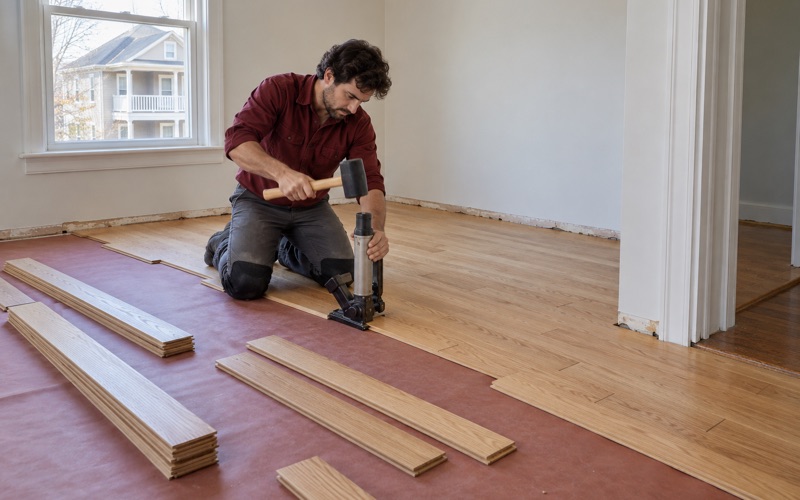
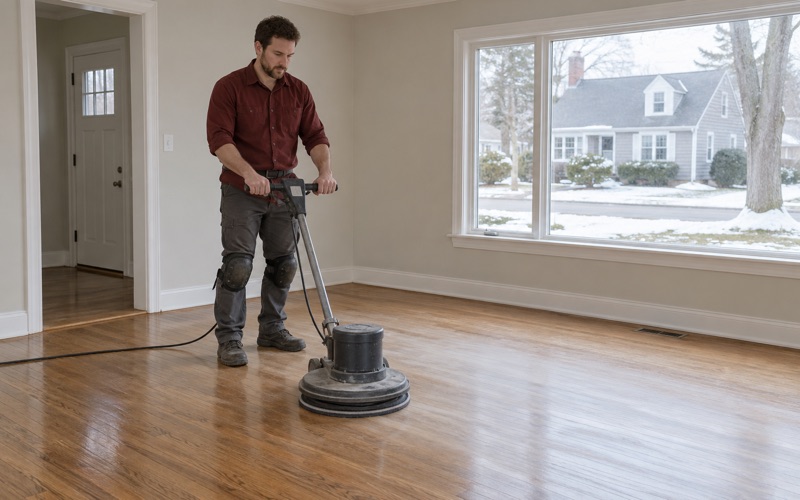
A house from the 1960s commonly has red oak strip flooring laid over a board or plywood subfloor, nailed tongue and groove. These floors often have enough solid hardwood left for several more full sandings, which makes them some of the most rewarding floors we work on. The usual problems are traffic lanes in halls, sun fade near large windows, pet urine stains and water stains near doors and sinks.
Sanding, Staining and Finish Choice
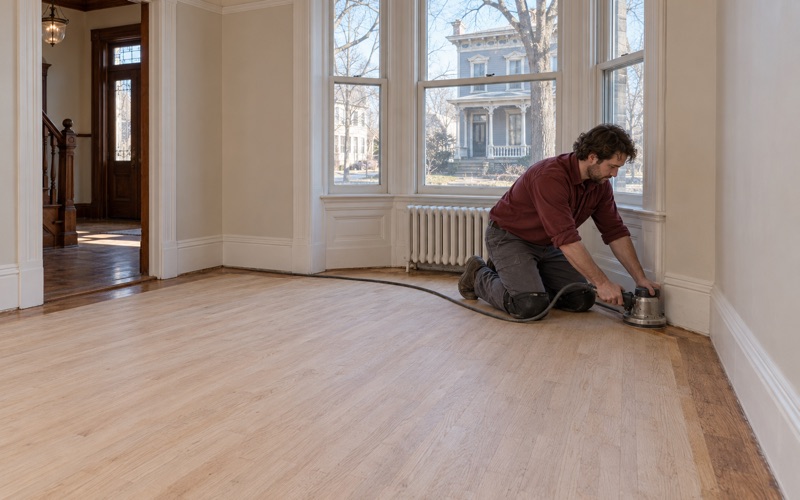
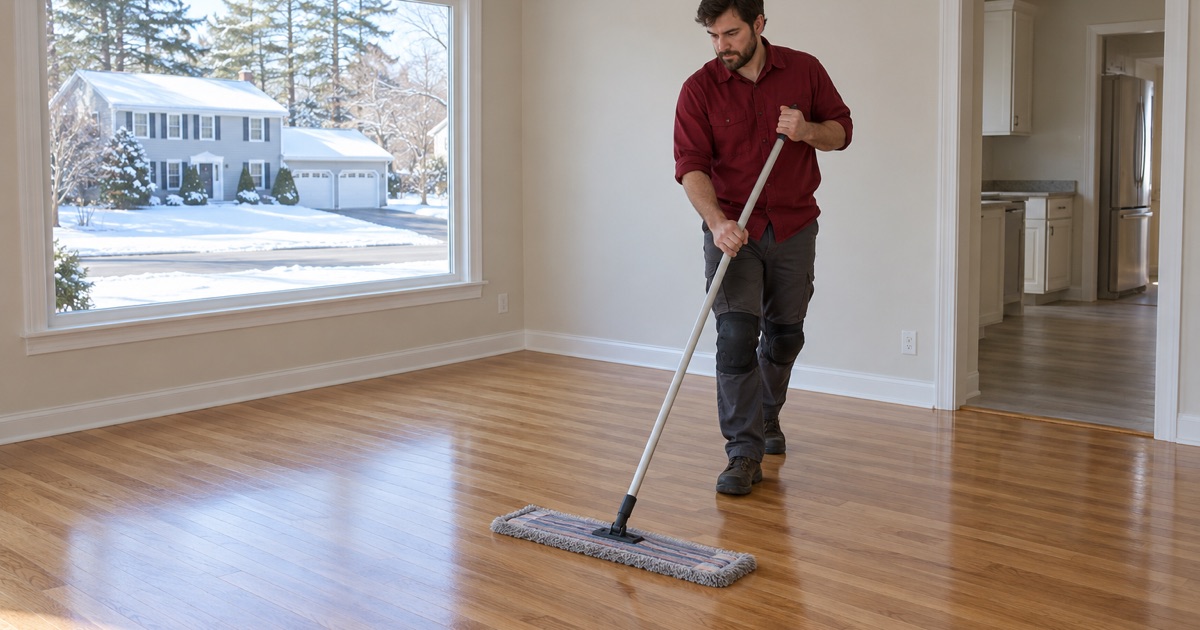
We sand with a drum sander and finish with an orbital sander, connected to HEPA vacuum collection to keep dust down in a house where people are still living. If you want a darker color, we may use water popping to open the grain so the stain takes evenly on oak. We then put down several stain samples on your floor and let you look at them in morning and evening light before committing.
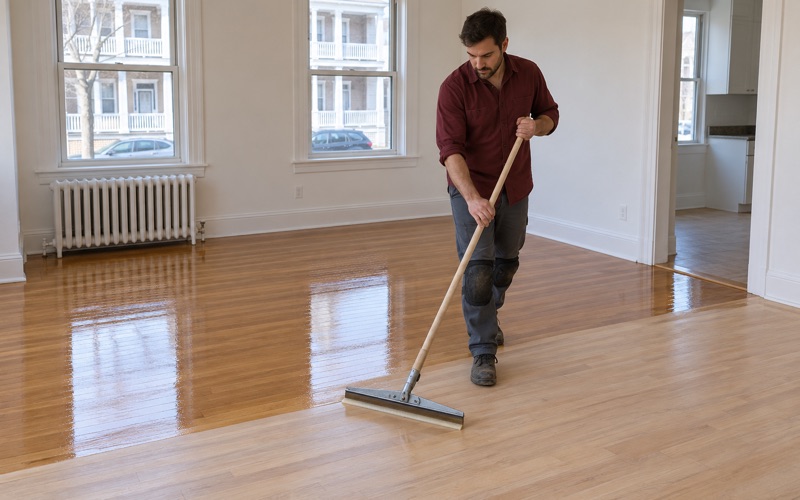
For finish, we walk through waterborne polyurethane, oil-modified polyurethane and hardwax oil, along with the sheen level that suits the room. Every product we use is chosen to fall within the coating VOC limits that apply in Massachusetts and New Hampshire, which match each other for varnish, sealer and lacquer. If your floor only has surface wear and no bare wood, a screen and recoat may be all it needs.
Repairs Before the Finish
Some floors need repair before refinishing makes sense. Pet stains that have turned black usually go deep into the wood, so we replace those boards with matching stock instead of sanding a hollow into the floor. Where a wall was moved or a heating line rerouted, we do a weave-in repair so the new boards stagger into the old ones.
If a floor feels bouncy or slopes noticeably, we look at it for what it is. A soft spot can be loose subfloor fastening we can address, but a sag across a room may involve a joist or framing that needs a structural contractor, and we refer that out rather than sanding over it.
Wood Floors Near the Town Common and Planning Your Project
Topsfield’s civic center is built around its Town Common, where the Parson Capen House, built in 1683 and now a National Historic Landmark, stands among houses from the 17th through the 20th centuries. The Common is also the core of the town’s local historic district. That district’s commission reviews changes visible from the street, and its by-law leaves paint color outside that review. Interior floor work in these older houses calls for the same care we give the farmhouses: identify the species and past finishes before choosing a method.
Water Damage and Moisture
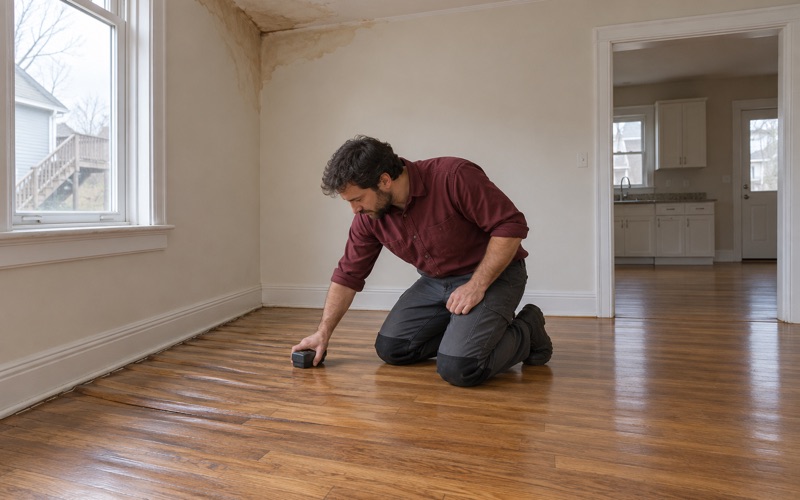
Whatever the age of the house, water is one of the quickest ways an otherwise sound floor fails. A burst pipe, an overflowing tub or a leaking dishwasher can cause cupping, crowning or full buckling within days. We trace where the water came from, help dry the area, and read the boards and subfloor with a moisture meter before deciding which boards to replace.
If you have an insurance claim open, we document the damage room by room for your adjuster, with readings and photos tied to each space. We also leave expected seasonal movement alone: winter gaps that open in heating season and close again in summer are normal board gapping, not a defect that needs filling.
Stairs, Transitions and Scheduling
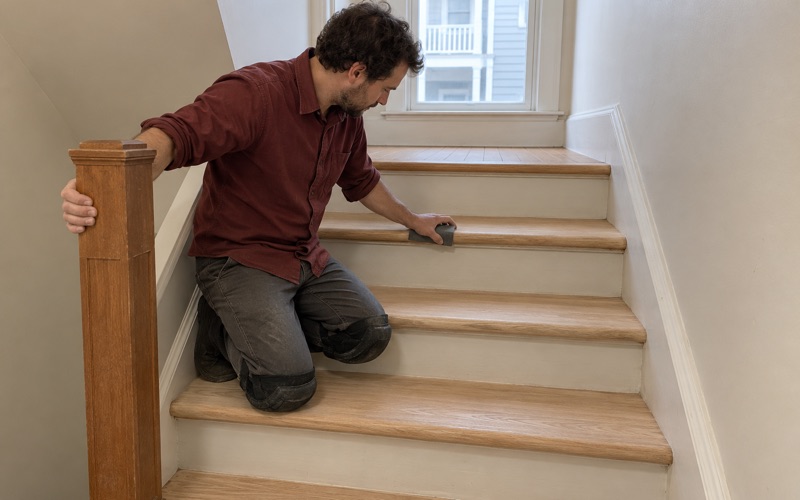
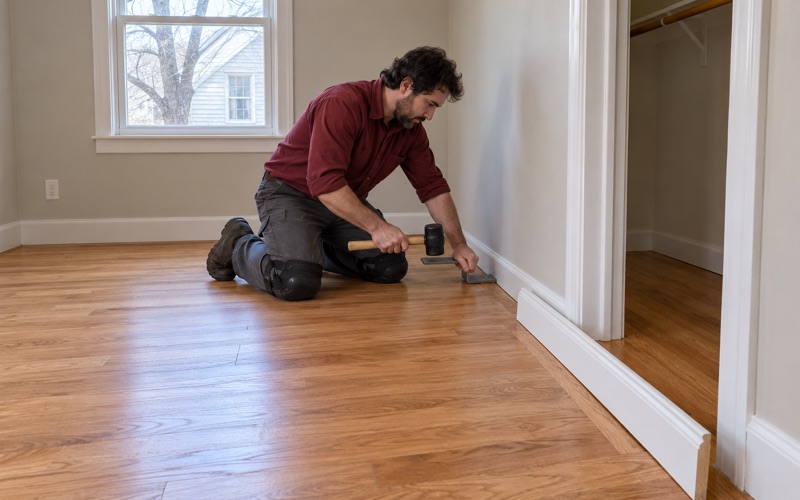
Staircases are quoted tread by tread, with stair treads, stair risers and stair nosing priced separately, because a staircase is not a square-foot job. Carpeted stairs sometimes have usable oak under the pad; when they do not, a retread with new treads and risers is the alternative. At doorways we fit a reducer, threshold or quarter round so the refinished floor meets tile and carpet cleanly.
Most refinishing projects in a single room or open area take a few days from first sanding to final coat, with dry time depending on the finish you choose. We schedule around how you use the house, sequence rooms so you keep access to the kitchen and bathrooms where possible, and confirm the plan in writing before we start.
- 20+ Years on Wood Floors
- Itemized Written Estimates
- Old Pine and Oak Work