Lawrence Wood Flooring takes on wood-flooring in Wakefield for homeowners and landlords who want a floor refinished, repaired or replaced without turning the building upside down for a week. After more than 20 years of sanding, patching and coating floors, we plan a job around the calendar first and the grit sequence second. That order matters most in a town that writes the working day into its own rules.
Most of what we do is ordinary floor work: red oak strip flooring that has gone orange, traffic lanes worn through the finish in a hallway, pet urine stains by a back door, winter gaps between boards. What changes from house to house is the plan around it, meaning which days the drum sander runs, how the dust is contained, and who is living on the other side of the wall while it does.
This page covers how we schedule a floor job so the loud days land inside the allowed hours. It also covers how we keep noise and dust from becoming a neighbor’s problem, and how we sequence sanding, staining and finish coats so the work wraps up when we said it would.
The Allowed Hours: Six Days a Week, Never Sunday
Wakefield’s General Bylaws carry a section titled Construction hours and noise limits, Section 154-6 in Chapter 154, Peace and Good Order. As the town’s code page is quoted, no person may perform construction in the town except between 7:00 a.m. and 7:00 p.m. Monday through Saturday, nor at any time on Sunday.
We treat sanding, board replacement and nailing as squarely inside that rule, and we build every schedule from there. We work from the quoted language of that section, not from assumptions about exceptions it might contain. If a situation seems to call for work outside those hours, the town is the place to ask, and our plan stays inside the window until it says otherwise.
A Twelve-Hour Window, Six Days Running
Twelve hours a day, six days a week, is plenty of time for a floor job that has been planned. A refinish runs through sanding, edging, buffing, staining if the color calls for it, and finish coats, and each of those steps has a natural stopping point. We start the loud equipment after 7:00 a.m., not at it, and we wrap the sanding well before 7:00 p.m. so cleanup and vacuuming do not drift past the line.
What No Sunday Work Means for a Job
The Sunday rule shapes more of the schedule than people expect. A job that starts late in the week has a built-in pause, and we would rather plan for that pause than fight it. We often put a finish coat on a Saturday so the floor cures through Sunday, a day when nobody would be working anyway.
Waterborne polyurethane and oil-modified polyurethane cure on different clocks, and that difference decides where the pause falls. Oil-modified finish needs a longer wait between coats, so a two-coat oil job pressed against a Saturday can stall partway through. We map the coats out before the first day, so the Sunday gap falls between steps rather than in the middle of one.
Looking for wood-flooring closer to Hudson? See Hudson Wood-Flooring.
Keeping Sanding Noise and Dust Off the Neighbors
Hours are only half of the section. The same bylaw, as summarized from the town’s code page, treats construction noise as unreasonable at any hour if it interferes with the normal and usual activities of residents and businesses nearby and could be reduced or eliminated through reasonable measures. A sander running at 10:00 a.m. on a Tuesday is inside the window, and it can still be a problem if we are careless about how it runs.
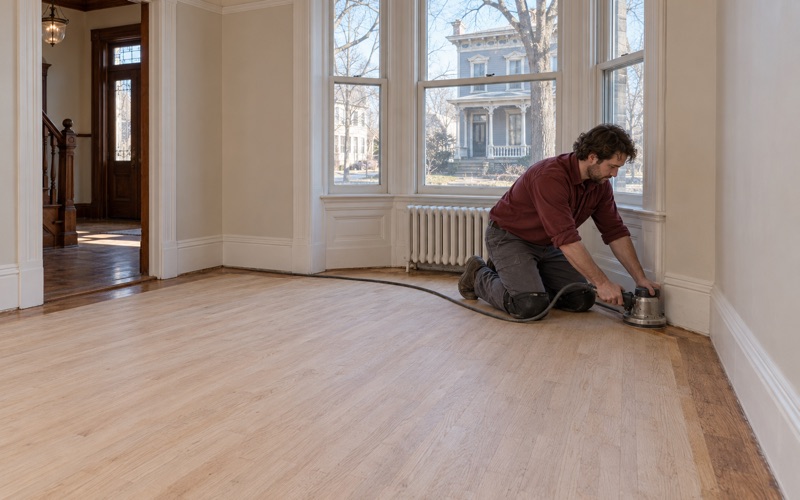
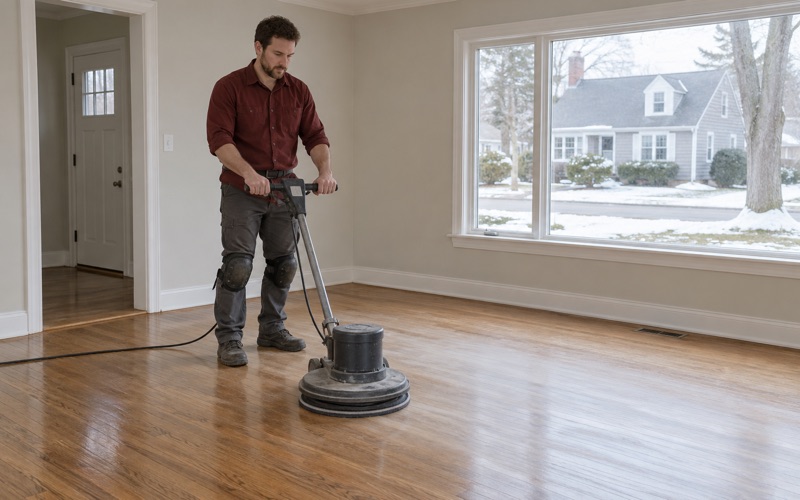
Sanding is the loudest day of any floor job. A drum sander, the edger along the walls and the dust collection running behind them make a steady noise that carries through framing, especially into a unit that shares a floor or ceiling with the room being worked.
Reasonable Measures We Actually Take
We sand rooms in an order that keeps the edger, the most piercing tool on the job, off shared walls during the early morning and the dinner hour. We batch the heaviest passes into one block of the day instead of spreading them from start to finish, so the people next door get a clear stretch of quiet rather than a whole day of on-and-off grinding. When a neighbor works nights or has a newborn, we would rather hear about it before the job starts than after.
Dust Control in a Shared Building
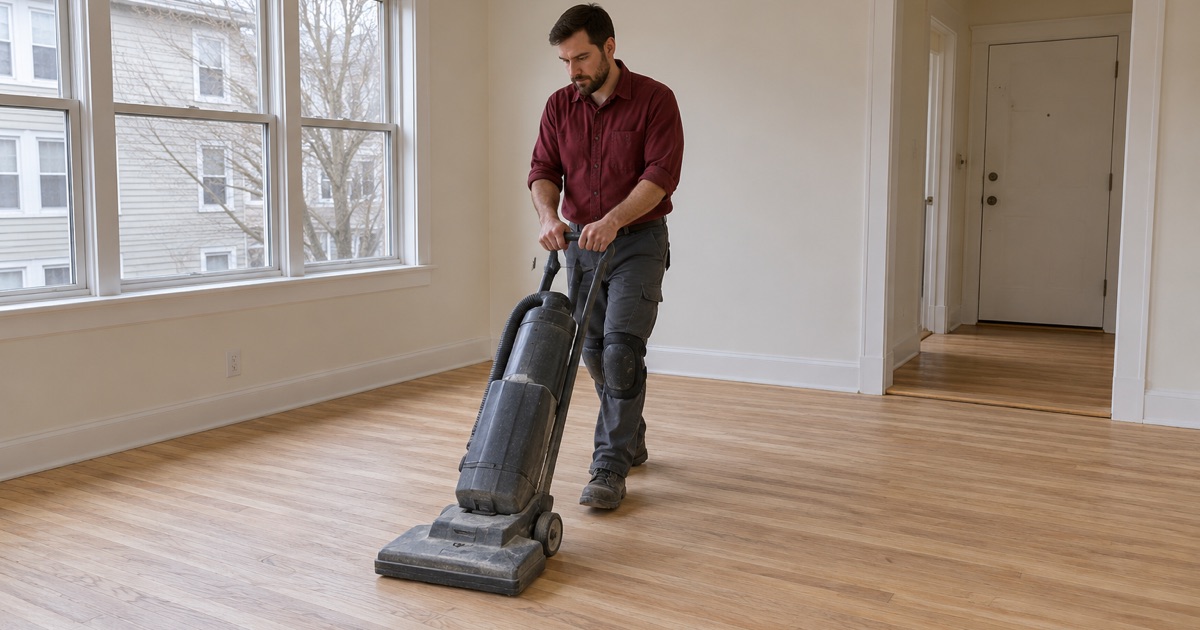
Dust travels the same paths noise does: under doors, through heating returns and up stairwells. We use dustless sanding with the sander tied to a collection system, seal the doorways and returns of the rooms we are working in, and end each day with a HEPA vacuum pass rather than a broom.
Older floors bring their own checks. Census estimates say 31.8 percent of Wakefield’s housing units were built in 1939 or earlier, so we look at the build year and any painted surfaces before the first pass, because Massachusetts runs its own lead-safe renovation rules for homes built before 1978. Old resilient tile with black mastic underneath gets identified and left alone, and the work stops until the right trade has handled it.
Floor Work in a Wakefield Two-Family
The reason we spend this much effort on noise and dust is the way a good share of Wakefield lives. According to the Census Bureau’s 2024 five-year American Community Survey estimates, 1,654 of the town’s 11,750 housing units, 14.1 percent, are in two-unit buildings. Among renters the pattern is stronger: 1,546 of Wakefield’s 3,302 renter households, 46.8 percent, live in buildings with two to four units.
Owners live this way too, and the same estimates count 659 owner households in two-unit buildings. In a house of that shape, the floor we sand is someone else’s ceiling, and the hallway we seal off may be their way in and out.
One Floor at a Time
In a two- or three-family house, we work one floor at a time, so the household on the other floor keeps living in the building through the job. We keep the common stairs and entry clear and stage equipment inside the unit we are working on. We also talk through which day the loud work happens with both households, not just the one paying for it.
Rental Floors Between Tenants
For landlords, the best window is often the gap between a move-out and a move-in, and here that gap has to fit inside six working days a week. We build the schedule backward from the move-in date, with sanding in the first days and the final coat timed to cure before the new tenant’s furniture arrives.
Landlords who plan to charge a departing tenant for floor damage get an itemized written estimate from us. Massachusetts expects that kind of written estimate under M.G.L. c.186 s.15B before a deduction for damage is taken from a security deposit, so we write it room by room and line by line.
Upstairs Units and What Goes Under the Floor
When an upstairs owner wants to replace carpet with wood, impact noise becomes the downstairs neighbor’s concern long after the job is done. We talk through acoustic underlayment and floor choices against what the building’s own condominium documents say, and we leave the final reading of those documents to the owner and the association.
Sequencing a Wakefield Floor Job Inside the Allowed Hours
A floor job is a sequence, and every step has its own noise level and its own waiting time. We lay it out on a calendar before we start, so the household, the neighbors and our crew all know which day is loud and which day is quiet.
Loud Days First
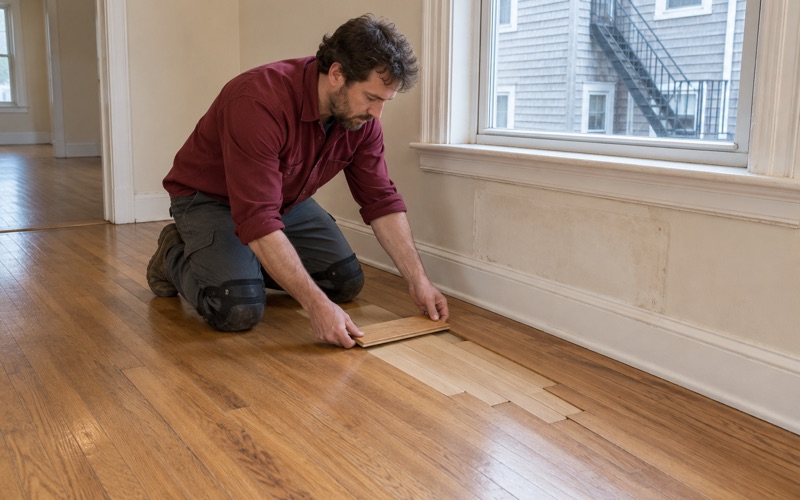
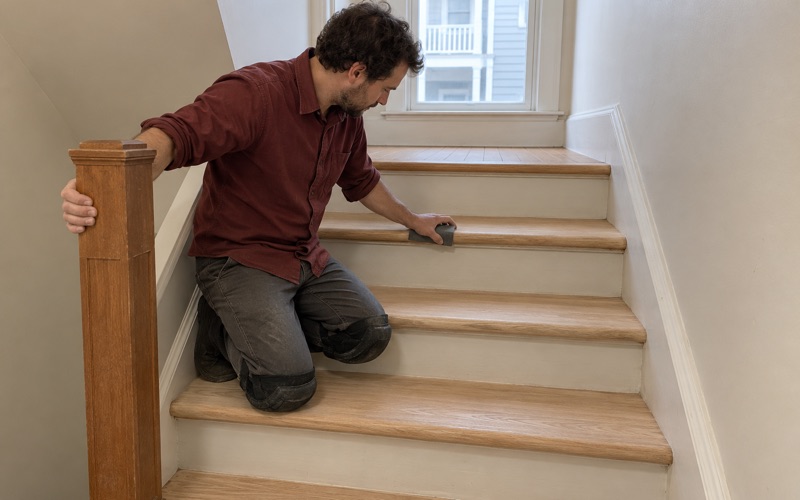
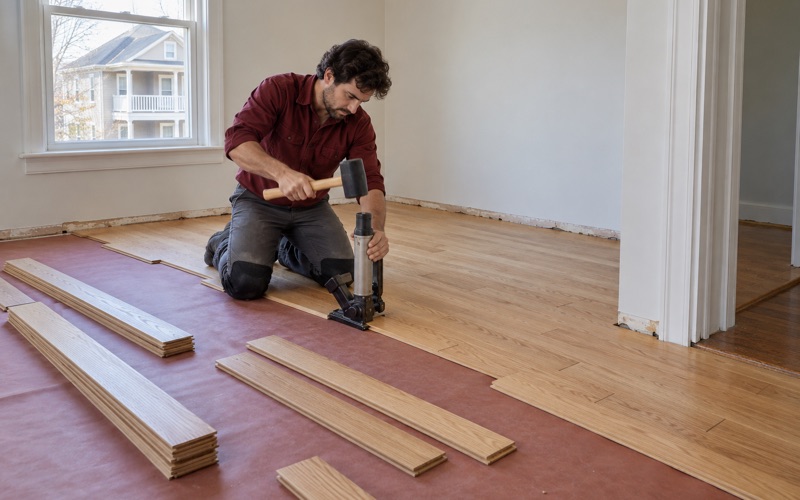
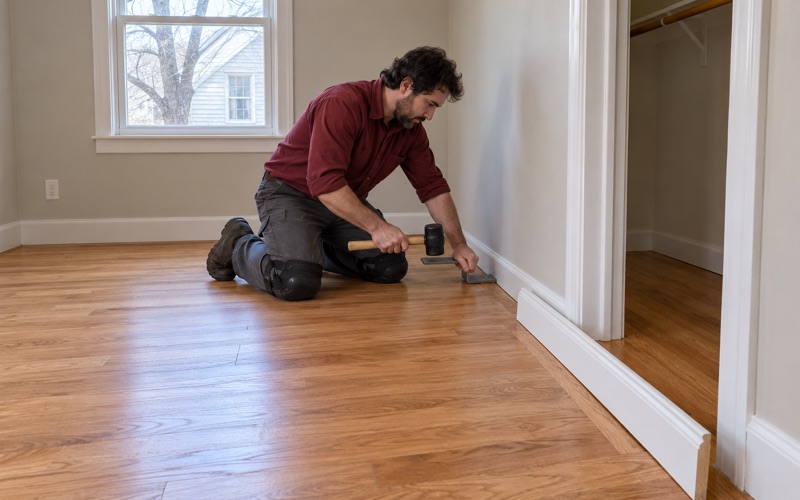
Board replacement, radiator removal patches and any weave-in repair come first, because cutting, fitting and nailing new tongue and groove boards is noisy work. Sanding follows, with the drum sander and orbital sander working through the grit sequence. We aim to finish all of it in the first two or three working days, which leaves the rest of the week for the quieter steps.
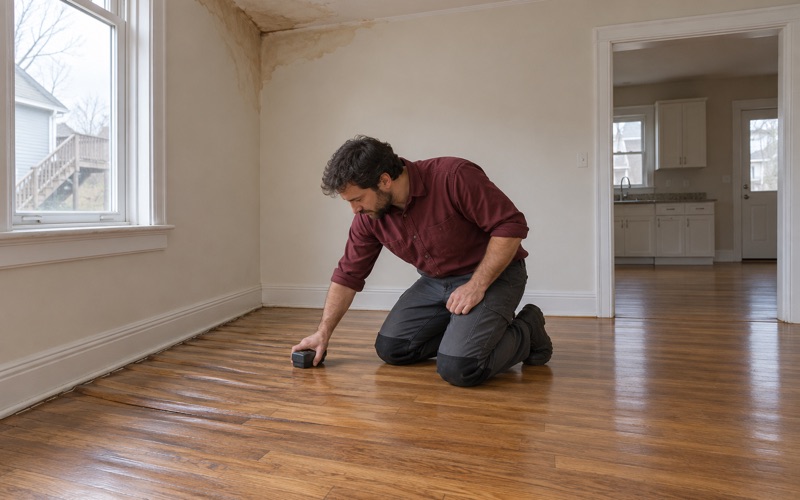
Water damage, cupping or a sloping floor change the order. Wet boards are dried and read with a moisture meter before any of them are replaced, and a floor that bounces or slopes because of what sits underneath is referred out for structural work before we sand it.
Quiet Days After
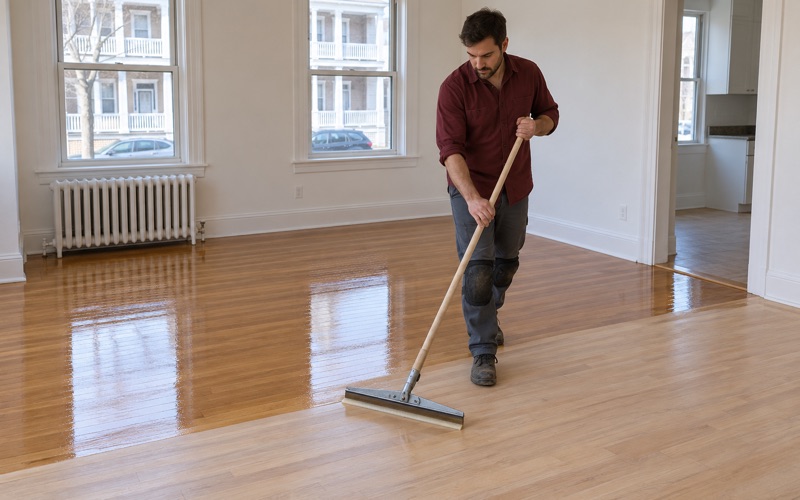
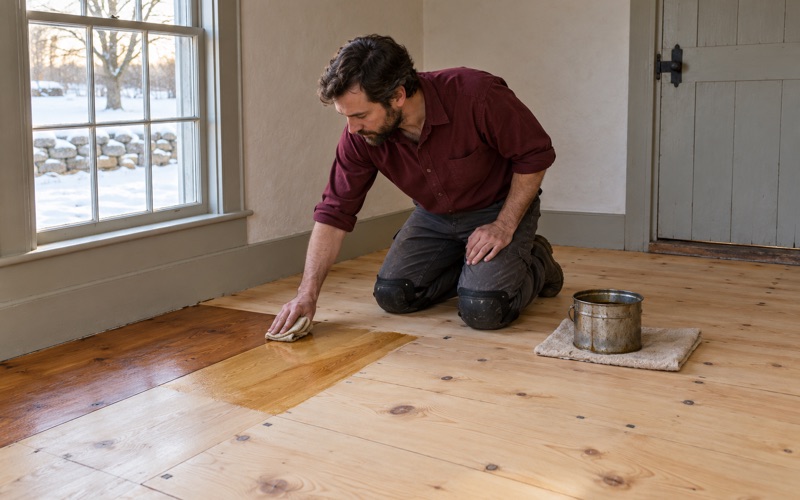
Stain samples go down on your own floor after the final sanding pass, and you pick a color in your own light. If the color needs it, we water pop the wood so the stain takes evenly, then stain and seal. Finish coats follow at whatever spacing the product calls for, and those days make little more noise than a buffer and an applicator.
Softwood Floors Take Longer
Old eastern white pine and other softwood flooring cut faster than oak, which sounds like it would shorten the job. In practice we run gentler passes and more of them, and that care adds hours that have to fit inside the same 7:00 a.m. to 7:00 p.m. window. We say so in the estimate rather than discovering it on day two.
If you are planning floor work in Wakefield, tell us about the building, who lives on the other side of the wall and the dates you are working around. We will build a schedule that keeps the loud days inside the allowed hours, keeps Sunday clear and leaves the neighbors with as little to notice as we can manage.
- 20+ Years on Wood Floors
- Itemized Written Estimates
- Old Pine and Oak Work