Lawrence Wood Flooring brings more than 20 years of experience to wood-flooring in Winchester, and most of the floors we are asked to look at here belong to houses that are already old. That shapes the job from the first visit: we are usually refinishing, repairing or matching existing boards rather than laying a new floor over a fresh subfloor.
Before we quote anything, we walk the rooms, confirm the build year and look at how much wood is left above the tongue. A strip floor that has been sanded before has less to give, and a softwood floor needs a different approach from oak, so the written estimate reflects the floor you actually have.
The sections below cover refinishing, patching and stair work in older Winchester houses, what changes in homes from the 1950s and 1960s, and how to plan the work around daily life. Where a room needs more than a flooring contractor should handle, such as structural repair or old tile that may contain asbestos, we say so before any sanding starts.
Floors in Winchester Homes Older Than the 1953 Plan
Winchester went a long time between master plans. The last one was completed in 1953, and the next, called Winchester 2030, was prepared by the Planning Board with consultant Jennifer Goldson of JM Goldson and was nearly complete in February 2020, the town’s first master plan update in more than 60 years. Sixty-seven years separate those two documents, and a large share of the town’s houses predate both.
The Census figures make that plain. Of Winchester’s 8,521 housing units, 3,853 were built before 1950, which is 45.2 percent of the stock, while only 692 units, or 8.1 percent, have been built since 2000. That means many of the floors we are called to here have been walked on and refinished over many decades rather than a few years.
What the Housing Goals Leave in Place
The steering committee’s housing objectives for the new plan were about what to add: “appropriately scaled” housing to “Maintain socio-economic diversity, allow workers to live near businesses,” and more rental and multi-family housing. Those goals describe homes yet to be built. The houses already standing, including the thousands built before 1950, stay where they are, and keeping them in good use means caring for the floors inside them.
For floor work, the point is practical. A house from before 1950 was built with the materials and methods of its era, and refinishing it well starts with knowing what those were.
Reading an Older Floor Before Quoting
In an older house we look for the signs that tell us how much work a floor can take. Exposed tongues along board edges, cut nails or face nails, old patches and wide winter gaps all suggest earlier sanding or long seasonal movement. We also look for cupping or crowning that points to moisture from below, which needs an answer before any sander touches the floor.
When a floor has little wood left, a full sanding is not always the right call. A screen and recoat, which abrades the existing finish and applies a fresh coat without cutting into the wood, can refresh a sound finish and save the remaining wear surface for later. We tell you which approach the floor can support after we have looked at it.
Looking for wood-flooring closer to Ipswich? See Wood-Flooring in Ipswich.
Refinishing and Repairing Floors in a House Built Before 1950
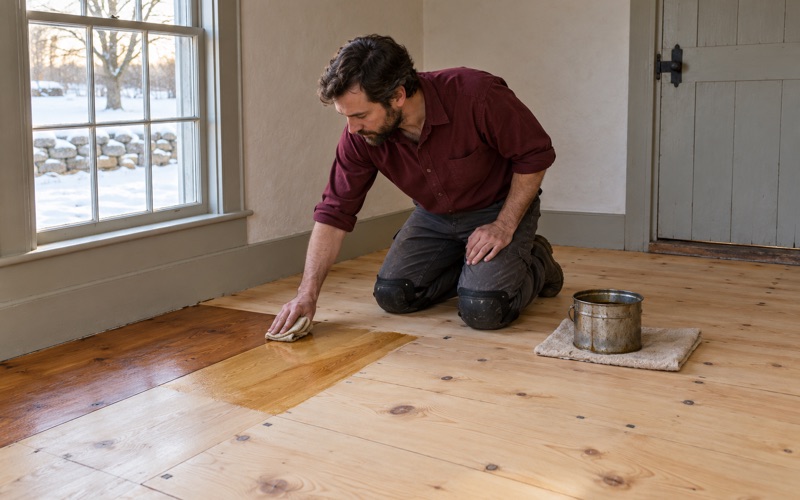
Refinishing a floor in a house from before 1950 is a different job from refinishing one laid twenty years ago. Red oak strip flooring, maple and softwoods like eastern white pine or southern yellow pine all turn up in older houses, and each sands, stains and wears differently. Old shellac finish, wax residue and layers of earlier coatings also have to come off cleanly before a new finish will bond.
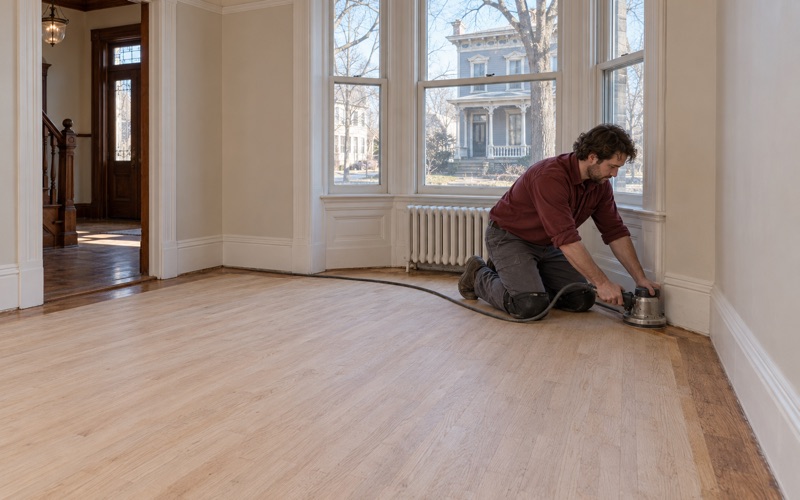
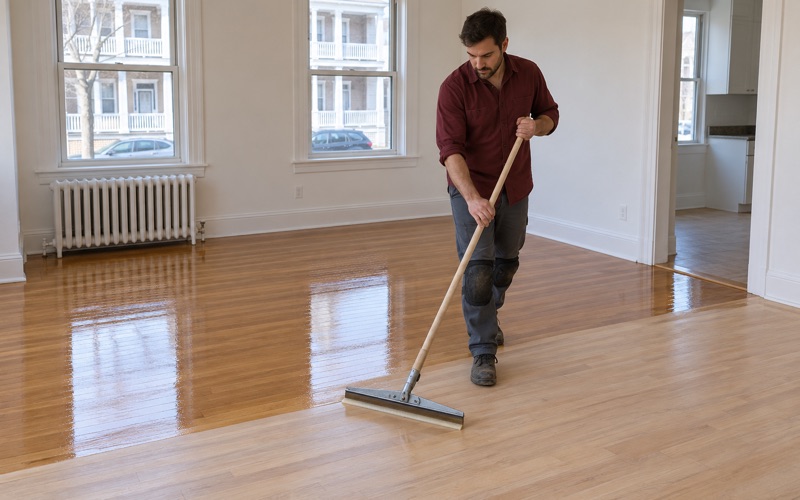
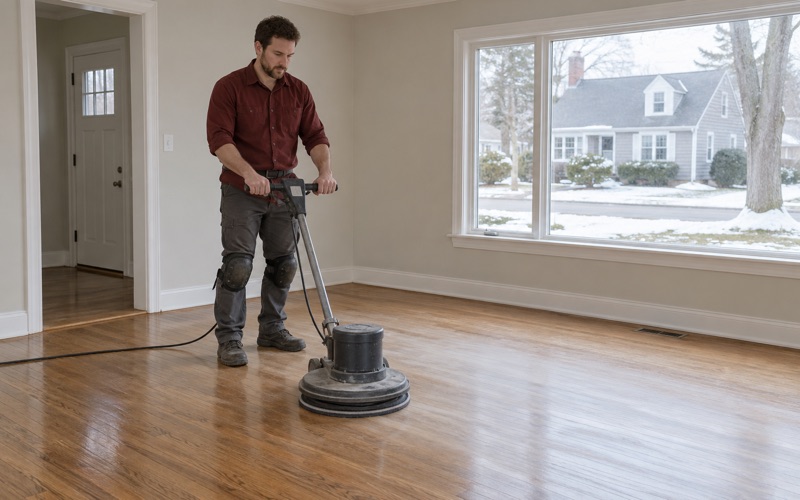
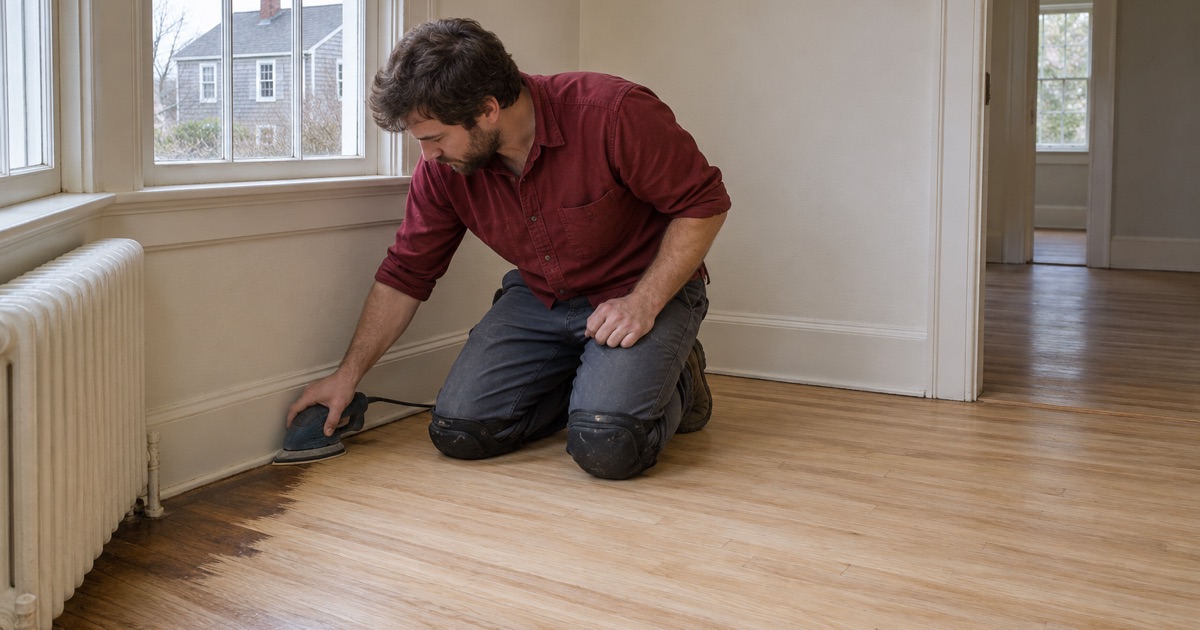
On a site-finished floor, we work through a grit sequence with a drum sander and finish the edges and corners by hand and with an orbital sander. If you are choosing a darker stain, water popping raises the grain so the color takes more evenly across old boards that have worn at different rates.
Lead Checks Before Sanding
Massachusetts runs its own lead-safe renovation rules for homes built before 1978, and in a town where 77.8 percent of units were built before 1980, the build-year check is routine for us. Before any sanding, we look at painted surfaces near the floor, such as baseboards, shoe molding and stair risers. If old paint is involved, the work is planned around it rather than discovered halfway through.
Old Tile and Black Mastic
Some older rooms have resilient tile or linoleum glued over the wood, or black mastic left behind after tile was pulled up. Vinyl asbestos tile and the mastic under it are not something we sand. When we find it, we identify it, stop that part of the job and leave it to the trade that handles asbestos before we return to the wood.
Softwood Floors and Radiator Patches
Old pine and other softwood flooring dents more easily and sands away faster than oak, so we choose the grits and sander pressure for the softer wood rather than running it like an oak floor. Heart pine, eastern white pine and southern yellow pine each take stain differently, which is one reason we lay stain samples on your floor and let you judge them in your own light.
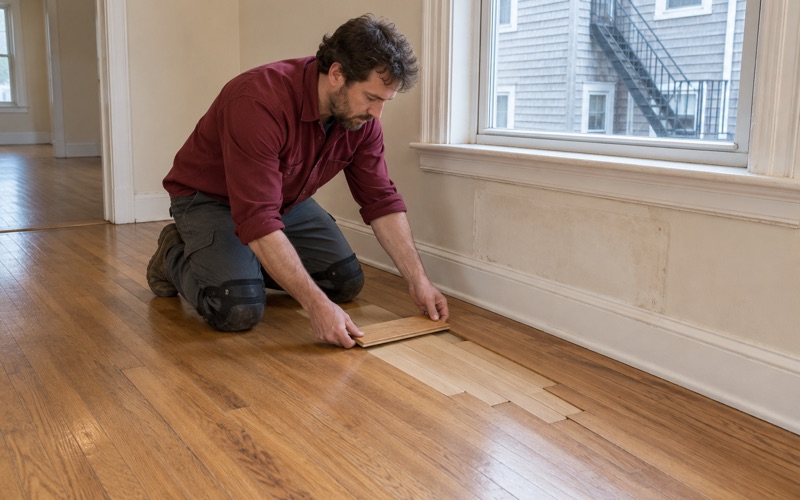
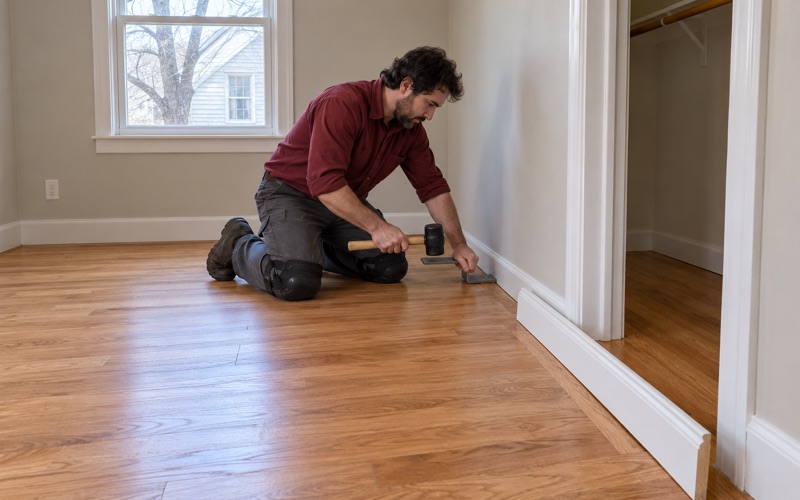
Where radiators and their supply pipes have come out, they usually leave holes or a rectangle of unfinished boards. We patch those with matching boards woven into the surrounding floor so the repair follows the existing pattern instead of reading as a square plug. The same weave-in repair handles board replacement after pet urine stains, water stains or old damage that sanding cannot reach.
Floor Work in Winchester’s 1950s and 1960s Houses
The houses from before 1950 are only the first layer. Another 1,160 of today’s units were built during the 1950s and 1,013 during the 1960s, so 58.8 percent of the town’s current units predate 1960. Those postwar decades bring their own floor questions.
Postwar Strip Floors Under Carpet
Postwar houses were often finished with red oak strip flooring, sometimes later covered with wall-to-wall carpet. When carpet comes up, we pull the tack strip, fill the nail holes and check for carpet pad residue, carpet glue and sun fade along the exposed edges. Oak that spent years under carpet often refinishes well, though traffic lanes and pet damage still need attention.
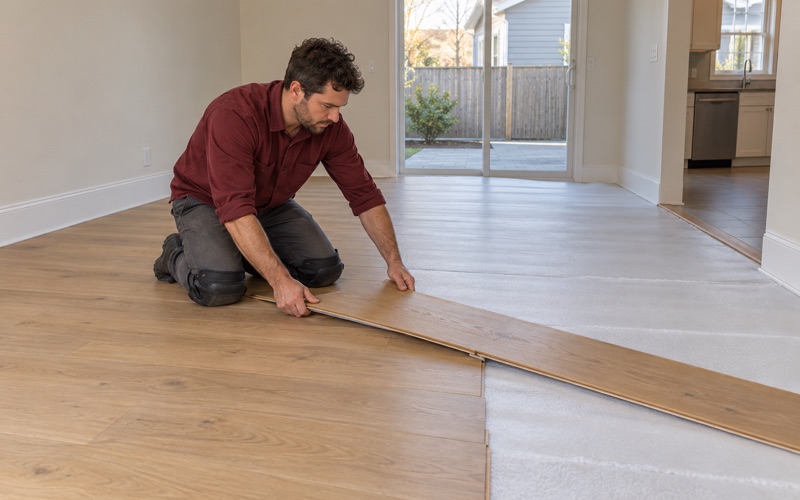
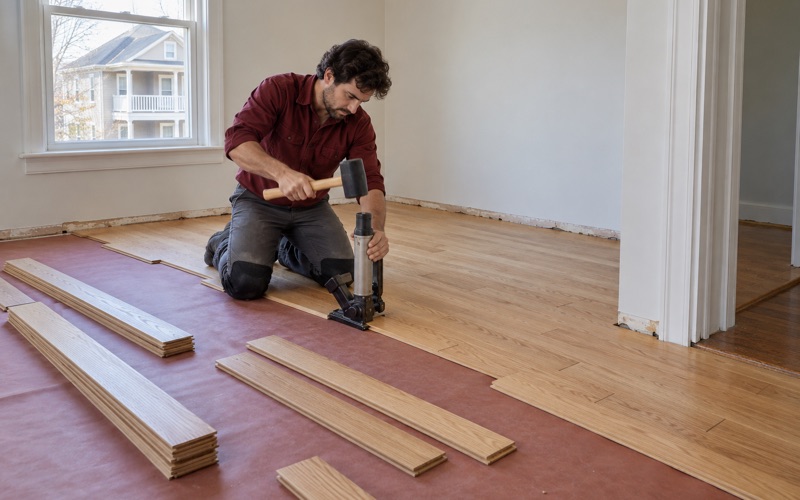
Where these houses have been remodeled, one floor can mix strip oak with later prefinished boards or an engineered floor in a kitchen or addition. An engineered wear layer can only be sanded a limited number of times, if at all, so we check its thickness before recommending a full refinish. Where two floors of different heights meet, a reducer or threshold usually makes a cleaner transition than forcing them into one plane.
Orange Oak and Finish Choices
Oak finished decades ago often ambers over time into what owners call orange oak. Sanding down to bare wood removes that color, and from there you can choose a natural look, a stain or a different sheen level. We compare waterborne polyurethane, oil-modified polyurethane and hardwax oil with you, and the finishes we use fit the coating VOC limits that Massachusetts and New Hampshire both apply to varnish, sealer and lacquer.
Bouncy and Sloping Floors
Older and postwar houses alike can develop a bouncy floor or a sloping floor. We read what is causing it, whether a loose subfloor, a tired joist or settlement, and refer structural work to the right trade instead of sanding over a problem that will come back. Once the structure is sound, the floor can be refinished with confidence.
Planning Floor Work in a Long-Settled Town
Winchester is largely owner-occupied, with 6,811 of 8,340 occupied units lived in by their owners, so much of the work here happens in homes where the family stays put during the job. We plan rooms in sequence so you keep a working kitchen and a path to the bedrooms, and we use dustless sanding with HEPA vacuum collection to keep fine dust out of the rest of the house.
Water Damage and Moisture
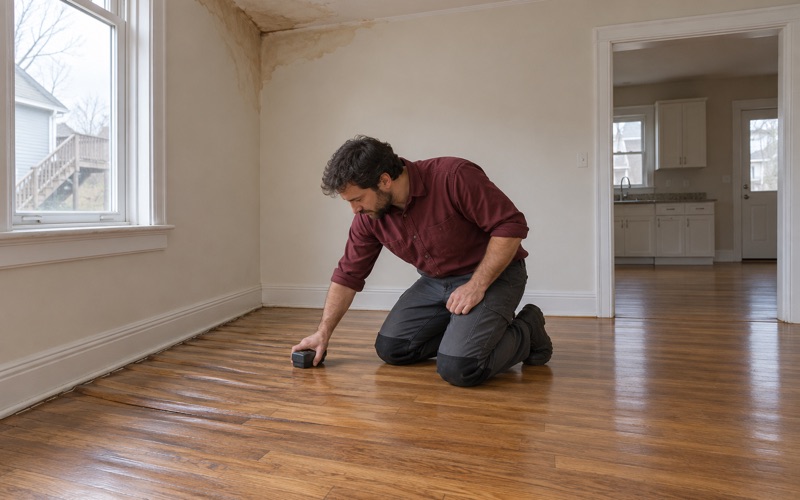
Water from a burst pipe, a leaking appliance or a wet basement can leave cupping, buckling or board gapping well beyond the visible stain. We trace the source, dry the area and take moisture meter readings before replacing any boards. We also document water-damaged floors room by room so an adjuster can follow what happened.
Stairs, Two-Family Houses and Condominiums
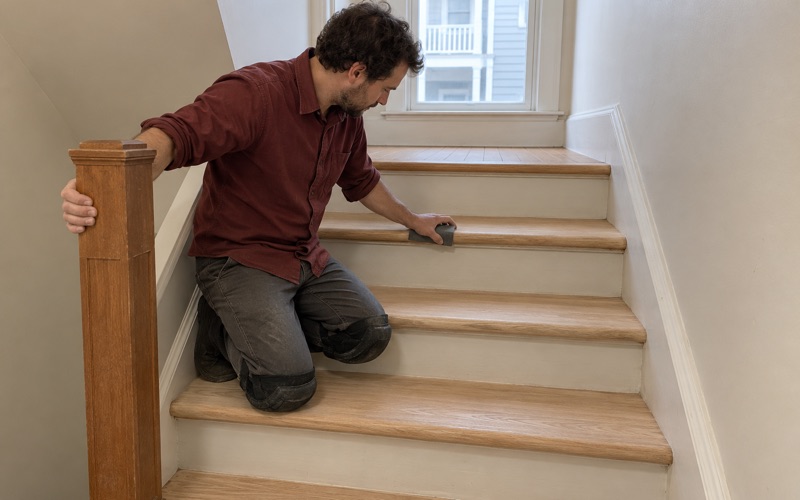
Older staircases are quoted tread by tread, because the condition of stair treads, stair risers and stair nosing varies from step to step and a staircase is not priced by the square foot. Worn treads may sand back well or may need a retread, and we tell you which before the work starts.
Winchester also has two-family houses and condominium buildings, and some owners rent out units. In a two- or three-family house we work one floor at a time so the people on the other floor can stay in the building, and for rentals we can schedule floors between move-out and move-in. Landlords get itemized written estimates, the kind Massachusetts expects before a tenant is charged for floor damage, and for upstairs condominium units we talk through underlayment and impact noise against what the building’s own condominium documents say.
Timing the Work
Wood moves with the seasons, so we plan finishing for conditions that let the floor cure properly, and new boards get time to acclimate before they go down. Dry winter heat tends to open winter gaps that close again in humid months, which is normal movement rather than a defect. If you are planning a larger renovation, schedule floor refinishing near the end, after painting and other trades have finished, so the new finish is not the first thing to get scuffed.
If your Winchester house is older than both master plans, or one of the postwar houses that followed, we can look at the floors, explain what they can take and give you a written estimate that spells out each step. From there, the decision about what to refinish, repair or leave alone is yours.
- 20+ Years on Wood Floors
- Itemized Written Estimates
- Old Pine and Oak Work