Lawrence Wood Flooring brings more than 20 years of sanding, repair and installation to wood-flooring in Winthrop Town, where planning a lower floor often starts with water. A room that has taken salt water once raises different questions from a living room that only needs a fresh coat. We take them in order: what is still wet, what has to come out, how long the structure needs to dry, and what should go back down.
Every visit begins with readings rather than a sales pitch. We trace where the water came from, take moisture meter readings across the subfloor and the boards, and look for cupping, crowning and buckling that tell us how far the damage reached. Nothing gets replaced until those numbers say the structure underneath has dried.
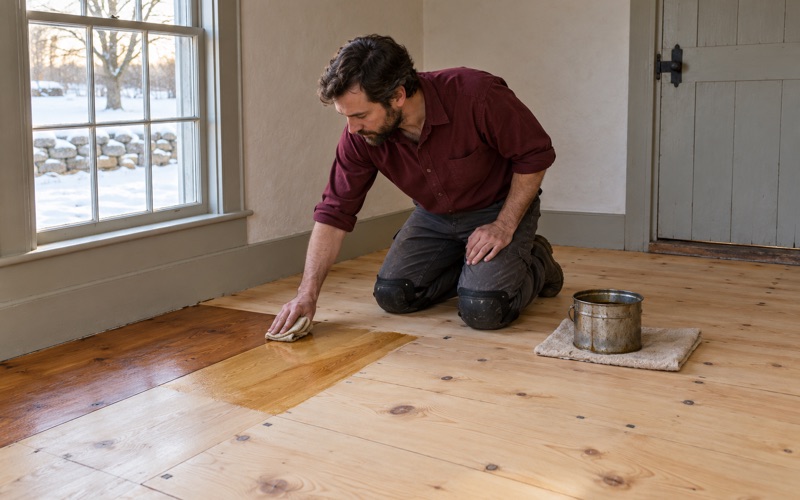
The estimate that follows is written and itemized, room by room, and when a claim is involved we document the damage the same way for the adjuster. For any rebuilt room, we lay stain samples on your actual boards and let you judge them in your own daylight before a color is settled.
The January 2018 Surge and What It Taught About Lower Floors
On January 4, 2018, the bomb-cyclone nor’easter dropped over 13 inches of drifting snow on Winthrop and then pushed a tidal surge into town. The Winthrop Transcript reported on January 11 that about 70 buildings flooded and power had to be cut, under a headline calling it weather not seen since the Blizzard of ’78. Fire officials told the paper they were pumping basements around the clock, with water anywhere from three to seven feet deep.
Where the Water Went
The flooded areas named in that coverage included Pico Avenue, the Grandview and Bayview areas of Point Shirley, Morton Street, Pleasant Park, Pleasant Court, the Belle Isle Marsh edge and the area around the Atlantis Marina. Along Short Beach, Route 145 closed as waves came over the sea wall, and Shirley Street flooded as well.
The paper did not itemize which buildings flooded or what happened to their floors, and we do not fill that gap with guesses. What the record does show is that salt water reached lower levels in several parts of town at once, and that some of those levels held feet of it rather than inches.
Why the Housing Stock Matters Here
Of Winthrop’s 8,361 housing units, 4,608 were built in 1939 or earlier, or 55.1 percent, according to the Census Bureau’s 2024 five-year American Community Survey. Houses that old were framed and floored long before anyone planned a lower level around flood water. When surge water reaches one of them, the floor is often only the visible part of what got wet.
Looking for wood-flooring closer to Methuen? See Wood-Flooring in Methuen.
What Salt Water Does to Wood, and What Comes Out
Wood takes on water through its end grain and its edges first, so a surge that sits on a floor for hours swells each board from the sides inward. Tongue and groove joints lock up, the edges rise into cupping, and where the boards have nowhere left to go, the floor buckles off the subfloor. Salt adds a second problem, because it stays in the wood after the water leaves and keeps drawing moisture back out of damp air.
Reading a Floor That Took Salt Water
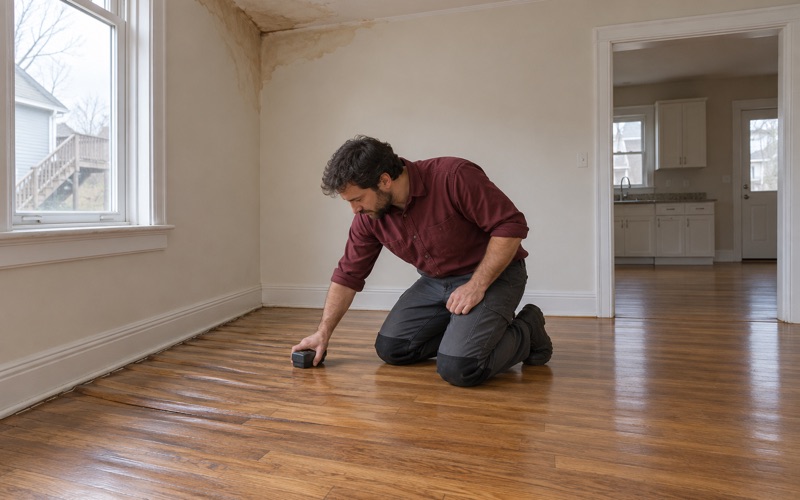
We start by finding the boundary of the wet area with a moisture meter and comparing it against readings from a dry room in the same house. Salt residue can push a pin meter’s readings high, so we read the subfloor and the framing as well as the boards and look for white crust along the seams. Water stains that went dark and deep into the grain tell us the same thing the readings do.
Removal Versus Repair
A floor that only took a shallow, brief wetting can sometimes be saved once it dries, with light cupping that settles before any sanding. Boards that sat under standing salt water for long, or that buckled loose from their fasteners, usually have to come out, along with any underlayment or carpet pad that held the water against them. We tell you which boards fall in which group before cutting anything, and the written estimate separates removal, repair and new material line by line.
Documenting the Damage
If you are working with an adjuster, we record each room separately: photos, moisture readings, the extent of the wet area and which materials failed. That record describes the floor and nothing beyond it, which keeps the claim conversation on what was actually found.
Drying, Rebuilding and Choosing a Floor for a Flooded Level
The worst mistake after a flood is laying new wood over a subfloor that is still wet. Plywood, old board sheathing and the joists beneath them all hold water long after the surface looks dry, and a new floor installed too soon cups the same way the old one did.
How Long the Structure Needs
Drying time depends on how deep the water stood, how long it stayed, whether the space can be ventilated, and the season. A January surge followed by cold, closed-up weeks dries far more slowly than a summer leak with the windows open. We give a range rather than a date, return to take readings as the structure dries, and schedule the rebuild only when the subfloor and framing match the dry rooms of the house.
In a rental unit, Massachusetts’ sanitary code at 105 CMR 410.500 requires the owner to make sure surfaces are dried within 48 hours of being notified of leaks and flooding or of the end of the event, whichever comes sooner. That deadline governs the drying response, which is a different trade’s job; our part follows once the readings show the floor is ready for repair.
Rebuilding What Came Out
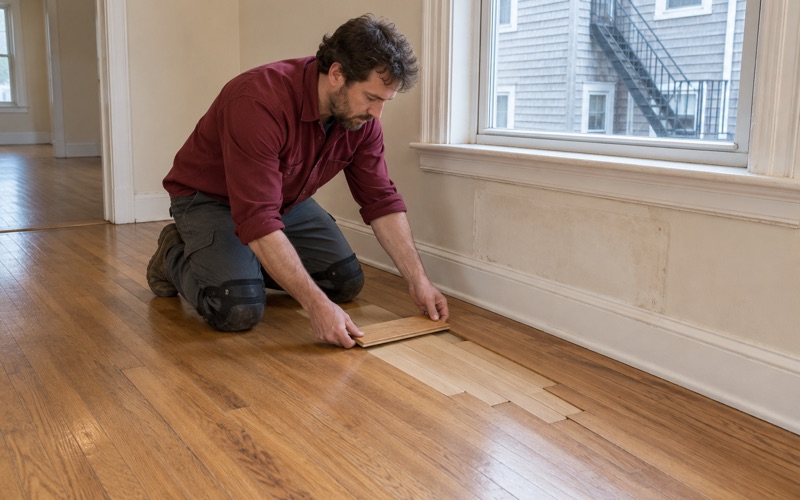
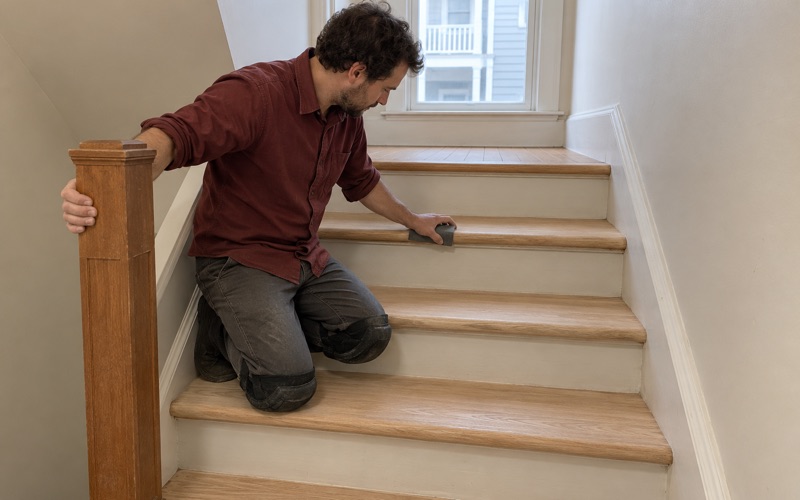
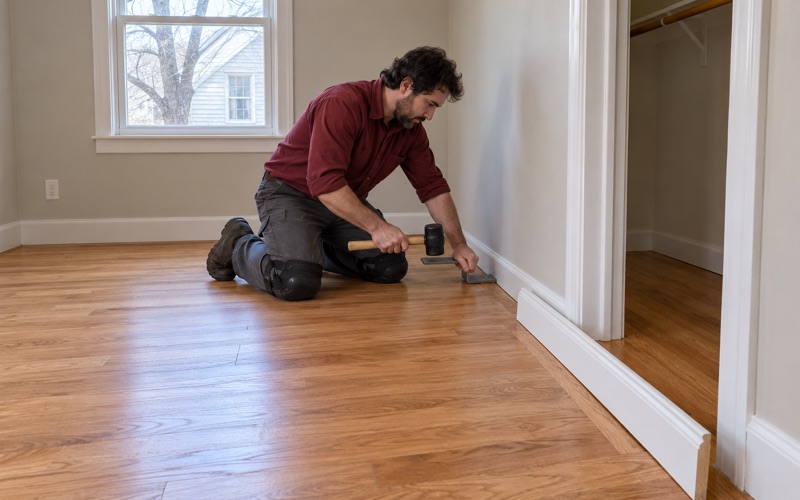
Where only part of a room was lost, new boards are woven into the surviving floor, staggering the end joints to match the original layout. Thresholds, reducers and quarter round come off early and go back last, and stairs down to a flooded level are priced tread by tread, since the bottom treads and risers usually take the worst of it. If a floor bounces or slopes once it dries, we treat that as a question about the joists and refer the structural work out before we lay anything.
Floor Choices for a Level That Has Flooded Once
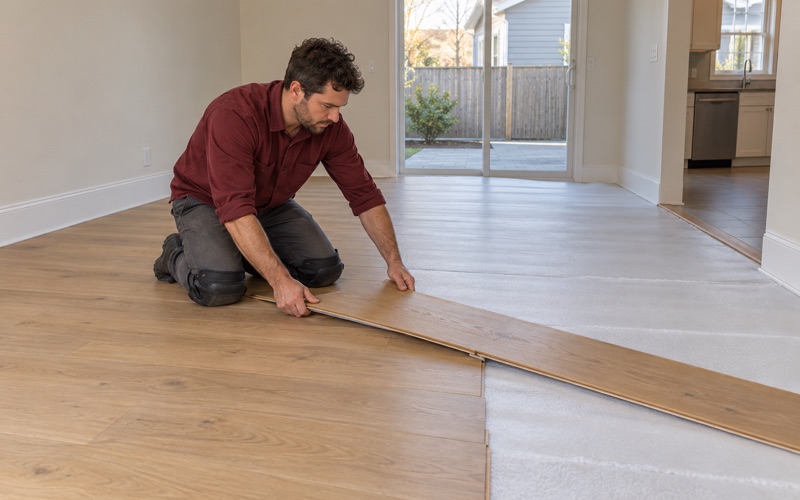
A lower level that has already taken water once deserves a different plan from the rooms upstairs. Solid red oak strip flooring nailed tight to the subfloor is the least forgiving choice there, because it moves the most and comes out in full sections when it fails. Engineered boards with a wear layer thick enough to sand again hold their shape better through humidity swings, and on a below grade level they are often the more sensible wood choice.
No wood floor survives standing salt water unharmed, and we say so plainly. For a room that sits low and has flooded before, we talk through whether wood belongs there at all, and if it does, we choose a vapor retarder, an expansion gap at the walls and a finish that can be spot-repaired, such as hardwax oil, following the NWFA Installation Guidelines. Boards acclimate until their readings match the room, not for a fixed number of days.
Winthrop falls in the National Weather Service’s Suffolk forecast zone, MAZ015, and a coastal flood watch for that zone is a good moment to lift rugs and furniture off a lower floor. When the water has receded and the space can be aired out, we start with readings rather than a sander, and the plan for that level follows from what they show.
Floors in Winthrop’s Older Seaside Houses After a Storm
Winthrop sits on a peninsula at the north entrance to Boston Harbor, joined to Revere by a narrow isthmus, and much of its older housing went up as modest seaside cottages alongside year-round Queen Anne, Shingle Style and Colonial Revival houses. Those houses were not built with a flooded lower level in mind, and their floors show it when water arrives.
Old Pine, Softwood and Patched Floors
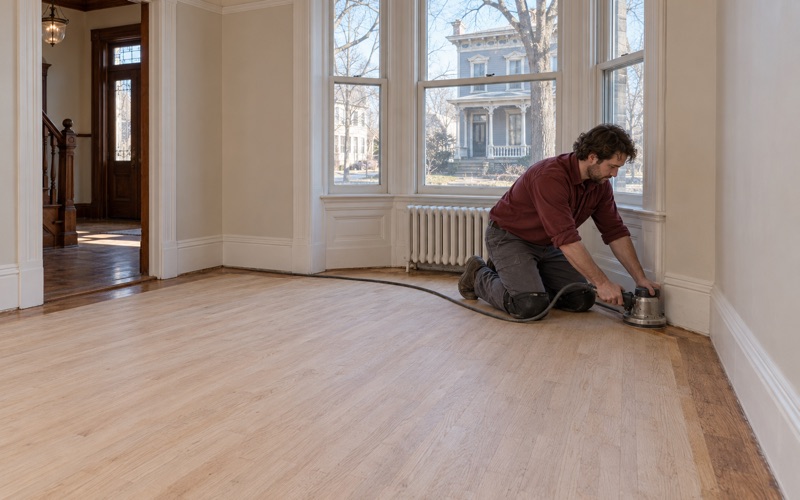
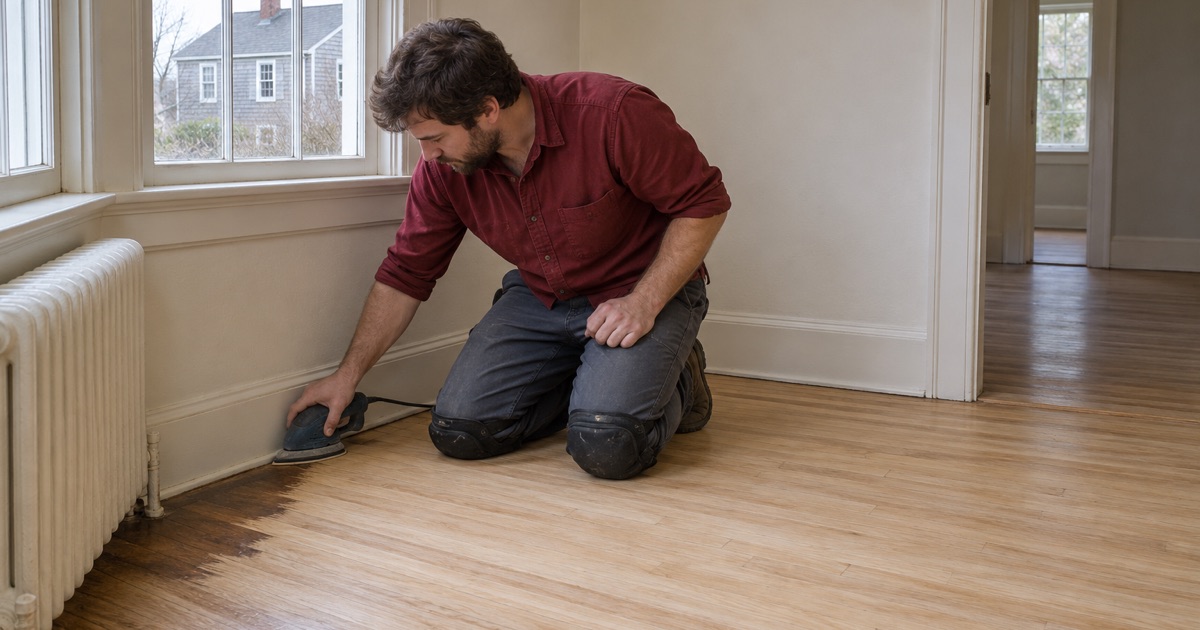
Older cottages and bungalows may carry eastern white pine, southern yellow pine or other softwood flooring rather than oak. Pine dents easily and swells hard when wet, and after a flood it needs a lighter hand: a gentler grit sequence, an orbital sander where a drum sander would gouge, and replacement boards matched for species and width. Where a radiator and its pipes were pulled out of a flooded room, we close the holes with boards that match the floor, woven into the surrounding rows.
What Lies Under the Old Floor
Pulling up flooded flooring in an old house often exposes layers from earlier decades: carpet glue, linoleum glue, old resilient tile and black mastic. We identify that material before anything is sanded or scraped, and if it may be vinyl asbestos tile or asbestos-bearing mastic, the work stops until the right trade has dealt with it. Painted trim and old finishes get similar caution under the Massachusetts Lead Law and the state’s lead-safe renovation rules for homes built before 1978, which we check against the build year.
Two-Family Houses and Rentals After Water
Winthrop has plenty of two-family and three-family buildings, and when water reaches the lowest floor of one, the household upstairs still has to live there. We work one floor at a time, so the other unit keeps its kitchen, its stairs and its routine while the damaged level is repaired. Landlords get an itemized written estimate for each unit, and rental repairs are scheduled around move-out and move-in dates wherever the damage allows.
- 20+ Years on Wood Floors
- Itemized Written Estimates
- Old Pine and Oak Work